


Margaret Zichat Joseph
When Martha Ishaya’s relative was referred to Jos University Teaching Hospital in Plateau Statefor urgent care, there was no ambulance. Instead, they scrambled to find a private vehicle, hoping they would reach the hospital in time.
Martha recalled that Lere, a Local Government Area (LGA) in Kaduna, is also a bordering community with Plateau State and two hours away by road. “We had to find a vehicle ourselves after the referral. Thankfully, our patient survived, but it could have gone differently.”
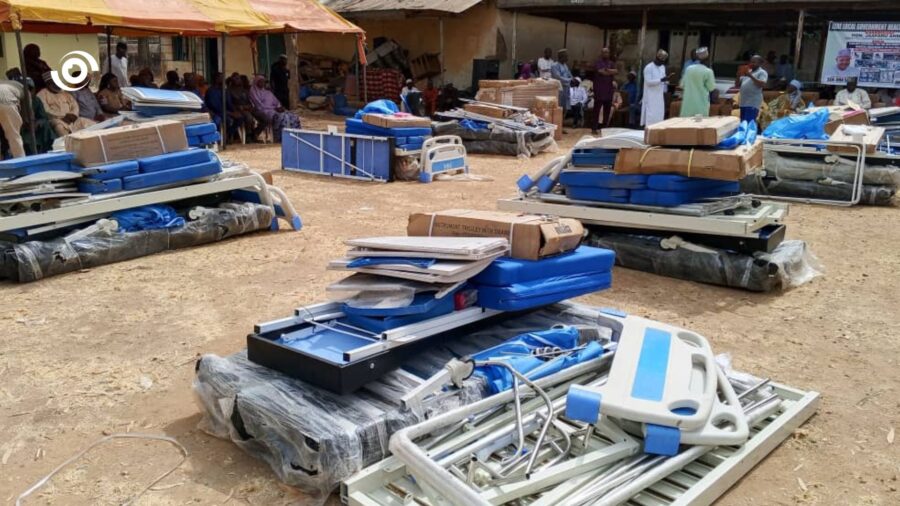
In February 2026, Kaduna State Government took a step towards strengthening healthcare delivery in the Lere LGA by distributing new medical equipment to 10 Primary Health Centres (PHCs). The ceremony of the distribution, held at the LGA secretariat and was attended by the Lere LGA Chairman, Honourable Ja’afaru Ahmed, traditional rulers, officials of the Local Government Health Authority, Ward Development Committee (WDC) members, partners, and community members.

Image credit: Nigeria Health Watch
Many of these facilities, which function as Level 2 PHCs, serve multiple wards and surrounding communities, acting as the first point of care for thousands of residents. Some of these PHCs are supported under the Basic Health Care Provision Fund (BHCPF), improving access to essential services
The LGA has also recruited 85 additional health workers, including nurses, midwives, and Community Health Extension Workers, to address staffing shortages. Despite these improvements, a critical gap remains in emergency transportation. Lere’s strategic location, bordering three states, increases the demand for referrals to higher-level facilities. However, the absence of ambulances means patients must rely on unsafe or unavailable transport options, especially during emergencies.

Image credit: Nigeria Health Watch
Mrs Alice Andrew Yani, the Health Secretary of Lere LGA, appealed to the Kaduna State Government and relevant stakeholders to prioritise the provision of emergency ambulances for the LGA. “We want to appeal to the government to provide Lere LGA with an ambulance,” she said. “If we have a well-equipped ambulance, it will aid in referring our patients to tertiary facilities in case of emergencies.”
According to Alice, ambulances are essential for safe referrals, allowing patients to receive stabilisation and monitoring during transit.

Currently, the absence of ambulances continues to strain the healthcare system in Lere. While investments in infrastructure and workforce are commendable, the inability to transport patients safely undermines these gains. Vulnerable populations, especially those in remote areas, face higher risks during emergencies, widening health inequities.
The second pillar of Nigeria’s Health Sector Renewal Plan emphasises equitable access to quality healthcare as a key priority. Lere’s progress in equipping PHCs aligns with this vision, but the persistent lack of functional emergency transport highlights a critical gap in achieving a fully functional and responsive health system.
Therefore, government, stakeholders, and development partners should:
- Prioritise the provision of ambulances and establish a functional emergency transport system in Lere. Strengthening referral systems will ensure that no patient is left without timely care.
“If we have ambulances,” Alice Yakubu, a resident, reflected, “we won’t have to choose between hope and survival.”