

Mahdi Garba and Chinwendu Tabitha Iroegbu (Lead writers)
For more than six years, Olufunke Bamidele and her family have used the Primary Health Care (PHC) Centre, in Lugbe, a community in Abuja, Nigeria’s Federal Capital Territory (FCT). She recalls a time when access to services at the facility depended entirely on the national electricity grid.

Whenever there was a power interruption, she explained, the clinic administrators would switch to their petrol-powered generator. However, after the fuel subsidy was removed in 2023, the price of petrol increased from about ₦194 to around ₦965 per litre. When there was a power outage at the facility and they could not afford to run the generator, services came to a halt until electricity was restored.
For years, inadequate electricity supply has been one of the major challenges to effective healthcare delivery in Nigeria. Many PHCs, particularly those in rural and peri-urban communities, rely heavily on petrol or diesel generators to power essential services such as vaccine refrigeration, laboratory testing, and childbirth care. With rising fuel prices and operating costs, keeping these facilities running safely has become even more difficult.
To address this gap, eHealth Africa, in collaboration with UNICEF, launched a nationwide initiative to solarise PHCs across the country. The goal is to ensure uninterrupted power for critical services, strengthen routine immunisation and improve maternal and child health outcomes. Under this initiative, 238 health centres in 12 target states across Nigeria were selected for solarisation. “With the installation of this solar power system, if I need a test now, the health workers can conduct it immediately,” saidBamidele, the 37-year-old mother of one.

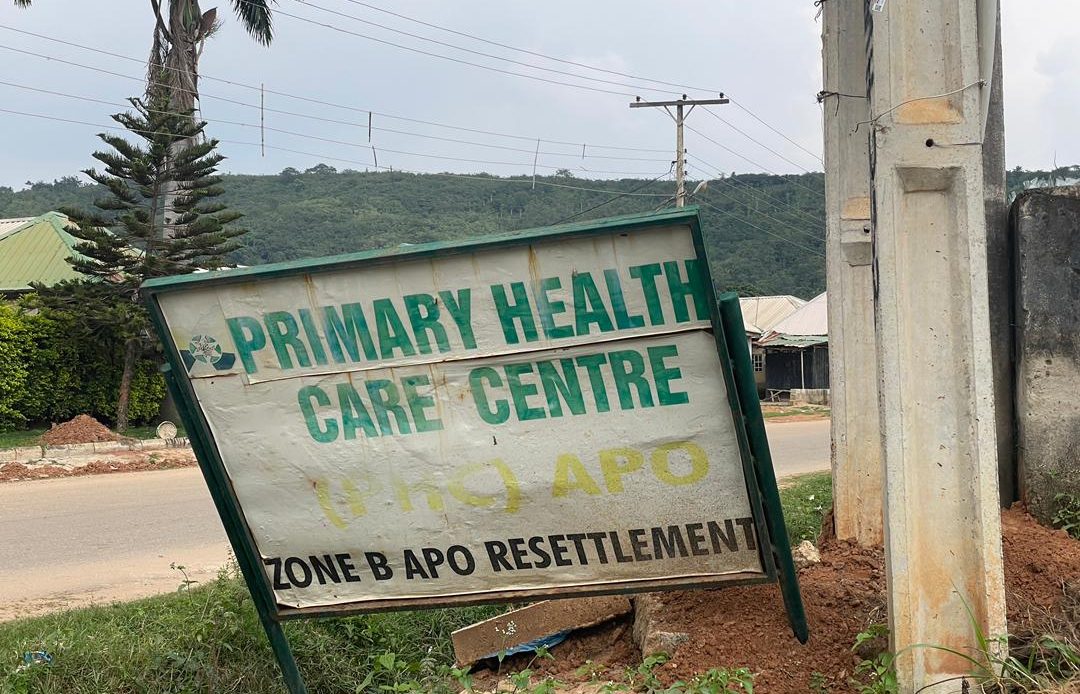
Similarly, Sabiu Ya’u Garba, a resident of Apo Resettlement in the FCT, noted that since the solar power system was installed at the PHC in his community, he now receives his laboratory test results within 15 to 20 minutes, depending on the number of patients ahead of him.
He explained that in the 13 years he has been visiting the facility in Apo, staff have consistently struggled with power outages. In the past, patients often arrived for tests only to be told that the backup generator had broken down and that a mechanic needed to be called before any laboratory services could continue.
Renewable energy for health
According to a 2022 report, nearly 40% of functional PHCs in Nigeria do not have access to electricity, and only about 20% are powered by renewable energy sources such as solar power systems. Even among those connected to the national grid, most PHCs receive only 6 to 10 hours of power a day, forcing many health workers to depend on costly and unreliable fuel generators.
Currently, 238 PHCs across 6 out of 12 states have been solarised under UNICEF-funded implementation. This includes three facilities in the FCT, where the PHCs in Lugbe, Kagini and Apo communities have gone off grid since July 2025. These PHCs have now become fully dependent on solar power.

Mary Omoru, the focal person for antenatal, labour, delivery and family planning services at the Lugbe PHC, recalled times when staff had to rely on their phones, candles and torches to provide light in the labour ward.
Hannita Usman, the focal person for routine immunisation at the Lugbe PHC, described how power cuts used to put vaccines at risk. “When there was no light to freeze our ice packs, the vaccines would get spoilt,” she said. “Now that we have steady light, our vaccines are safe because power is always available.”
Prince Mustapha, a community leader who doubles as the Chairman of the Ward Development Committee (WDC) in Kabusa Ward and Abuja Municipal Area Council (AMAC), said he could no longer remember the last time he had to ask how much the facility was spending on generator fuel.

Image credit: Nigeria Health Watch
“To fuel and service our generator, we used to spend at least ₦25,000,” Mustapha explained. “Even when we recharged our prepaid meter with about ₦50,000 worth of units, there was no assurance we would have light. On average, the solar system has saved us at least ₦100,000 every month.”
The journey so far
According to Toju Ogele, Project Manager at eHealth Africa, facilities were selected based on several criteria. These included local government areas (LGA) with high numbers of zero-dose children (those who have not received any routine vaccines), high patient volumes, the facility’s role in serving underserved communities, lack of reliable grid power, and heavy reliance on costly or polluting generators.
Ogele added that the impact of solarising these facilities is being assessed using both health service delivery indicators and energy performance metrics. The team monitors patient attendance before and after solarisation, maternal outcomes such as safe deliveries and reduced referrals, vaccine cold chain uptime, and the facility’s ability to respond to emergencies at night.

However, he also pointed out several challenges, including poor road access, especially as many of the PHCs are in remote areas. He added that data collection was difficult in some facilities due to weak internet coverage.
Security risks also affected implementation, he said, including farmer–herder clashes, religious tensions and criminal activities such as kidnapping, especially in areas around Plateau State.
Seun Olushola, a records officer at the Apo PHC, said the solar system has enabled staff to provide services without the fear of sudden power cuts or the pressure of spending at least ₦200,000 each month on fuel. He added, however, that during periods of heavy rainfall, the system has often gone off in the evenings.
At the Lugbe PHC, Omoru shared similar concerns about the possibility of system failure. However, she noted that staff have been trained to operate the solar system and to restart it if it goes off. Since installation, she said, the system has only stopped once. Mustapha also pointed out that around 70% of the 64 PHCs in AMAC still struggle with epileptic power supply, with frequent power cuts disrupting services.

Scaling up
Ogele advised individuals and organisations that want to replicate the solarisation project to invest not only in installing the systems but also in operations and maintenance. He emphasised that every project must have a clear plan for sustainability beyond installation.
It is essential to use data to show how reliable energy improves health outcomes. Collaboration across health, energy, and finance sectors is non-negotiable, and data-driven monitoring strengthens accountability and decision-making.
Ogele further noted that the project has shown how reliable energy can act as a catalyst for health system resilience. Community trust in PHCs grows quickly when facilities are functional 24 hours a day, seven days a week.
1 Comment