

Maureen Moneke (Lead writer)
Nigeria’s health system has long faced a critical shortage and inequitable distribution of skilled health care workers, particularly at the primary health care (PHC) level. This shortage of Human Resources for Health (HRH) is worsened by a high burden of disease, health care worker migration, a lack of an enabling work environment, and low staff morale. In maternal health, where timely skilled care is decisive, this workforce gap remains a persistent driver of Nigeria’s high maternal mortality burden.
Task shifting and task sharing (TSTS) has emerged globally as a practical response to health care worker shortages. It reallocates selected tasks from more specialised providers to other appropriately trained and regulated cadres, to optimise the available HRH and expand coverage of essential services. In Nigeria, the National Task Shifting and Task Sharing (NTSTS) policy was established in 2014, recognising that without redistributing tasks, many PHC facilities would struggle to meet the needs of the communities they serve. This was followed by state-level adaptations, including the Federal Capital Territory (FCT) TSTS policy developed in 2021. In 2018 and again in 2022, the national TSTS policy was revised to broaden service delivery roles.

Where the task shifting policy varies from practice
Task shifting in Nigeria has expanded beyond its earlier focus on maternal and reproductive health and infectious diseases. First, it formally included community pharmacists (CPs) and patent and proprietary medicine vendors (PPMVs) for defined family planning information and service roles (with training and oversight). Later, it expanded expectations for community health extension workers (CHEWs) to support selected non-communicable disease (NCD) prevention and screening activities at PHC level, such as hypertension and diabetes screening, counselling, and referral.
In November 2025, the Task Shifting Symposium was convened in Abuja to disseminate findings from the doctoral research of Dr Francis Ayomoh, task shifting for maternal health within Nigeria’s PHC system.

Image credit: Nigeria Health Watch
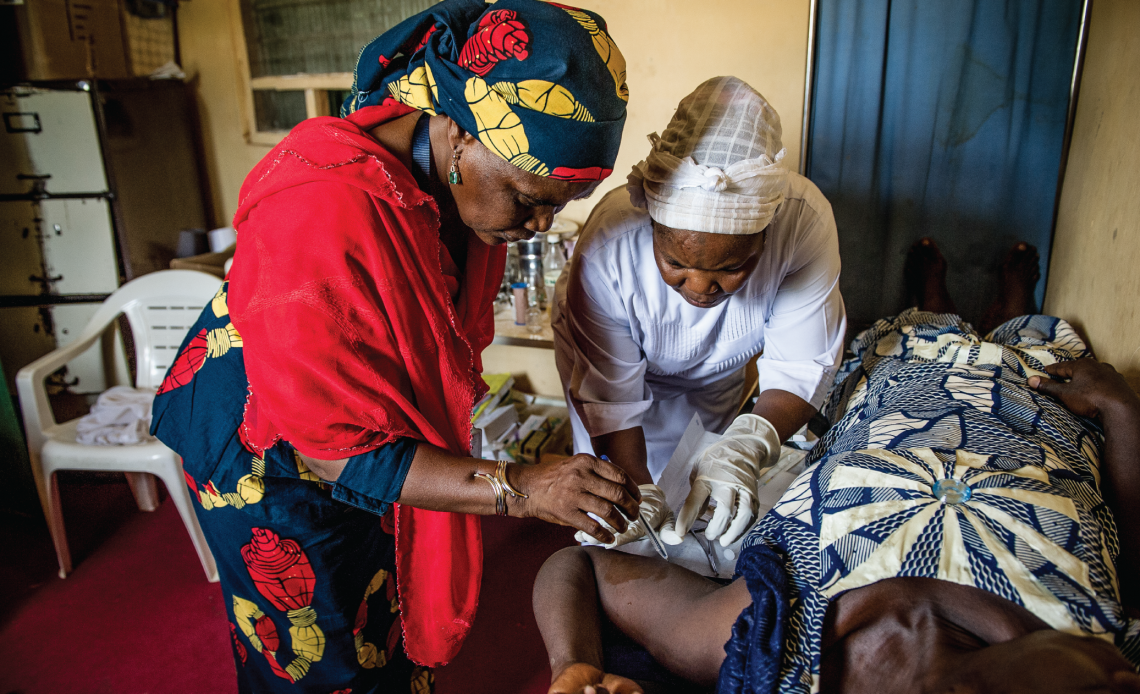
The discussions brought the policy–practice tensions into sharp focus. His study, conducted in PHC facilities across the FCT, used interviews, focus groups, and policy analysis. It revealed that task shifting is being implemented, but often under conditions that undermine access, quality, and equity. Training and supervision, the two non-negotiables for safe task shifting remain inconsistent. Although health care workers are often treated as competent by virtue of their designation, the study found wide disparities in actual capacity to deliver essential tasks. As Dr Ayomoh asserted in his study, “many healthcare workers had not received refresher training for years; facility step-down trainings were often ineffective; and supervision was frequently experienced as punitive rather than supportive, with limited funding for regulatory oversight.”
Task shifting assumes an available pool of other cadres to absorb delegated tasks. In practice, the study found severe shortages, leaving many facilities with no staff capacity to share or shift tasks to. This claim is further supported by another study, which highlighted that a persistent shortage of frontline health care workers means than many facilities simply have no additional staff available to shift or share tasks with. Some PHCs rely heavily on volunteers, many earning little or nothing, creating what Dr Ayomoh terms ‘involuntary volunteerism’, which is frontline work done without stable employment or pay. While their commitment to saving lives remained strong, workers cited lack of formal employment, irregular or unpaid stipends, unsafe facilities, and the absence of basic utilities as major demotivating factors. These frustrations often spilled over into patient interactions, undermining quality of care.
Inter-cadre rivalry and poor awareness of scope-of-practice boundaries continue to hinder TSTS implementation. Dr Ayomoh notes that some midwives were unaware of the tasks CHEWs are authorised to perform in specific PHC contexts, while some providers also exceeded their scope, sometimes to meet patient expectations or to compensate for gaps in staffing. Weak referral pathways meant patients often resisted referral because of perceived higher costs, transport barriers, and fear of poor treatment at higher-level facilities. Health care workers, aware of poor reception at secondary facilities and limited ambulance services, sometimes attempted to manage cases beyond their competence. This fuelled inappropriate task expansion and increased the risk of adverse outcomes.

Image credit: Nigeria Health Watch
A distinctive model of collective social entrepreneurship surfaced. Facility leads have applied social enterprise principles to keep services running despite chronic underfunding. What began as a modest drug revolving fund, (DRF), where patients paid small fees intended to keep essential medicines in stock, has in some facilities expanded into a broader ‘facility sustenance’ fund. This is reportedly used to pay volunteers, cover electricity, and keep basic operations running, sometimes without clear communication or transparent acknowledgment to patients. This improvisation may keep PHCs functioning, but it shifts costs onto patients through higher out-of-pocket payments for services that were never intended to be market driven. As one participant warned, this is why some pregnant women may leave PHCs and seek cheaper care from informal or unlicensed providers, including untrained traditional birth attendants.
These tensions show that task shifting cannot succeed on policy language alone; it needs operational systems that build competence, protect quality, and strengthen referral linkages. One practical case example is IntegratE, which is operationalising TSTS by building the capacity of CPs and PPMVs to deliver expanded family planning services and strengthen referral pathways. This approach extends the reach of essential reproductive health services into underserved communities and strengthens maternal and newborn health service continuity at the primary care level. The lessons are instructive for how TSTS can be made safer and more equitable at PHC level. Building on the lessons from IntegratE, the Promoting Accreditation for Community Health Services (PACS) project further enhances this model by strengthening adherence of PPMVs to accreditation requirements through incentives such as access to loans, quality commodities, and branding support.
Reimagining task shifting through system strengthening
To optimise TSTS in Nigeria’s PHCs, five actions should be prioritised.
- Standardise competency-based training across pre-service, in-service, and facility-level platforms, with accredited curricula and clear assessment. Step-down sessions should be structured, supervised, and evaluated to ensure effective knowledge transfer.
- Institutionalise supportive supervision and mentorship with dedicated budget lines, shifting from fault-finding inspections to coaching, quality improvement, and continuous professional development.
- Address workforce shortages by formalising employment and ensuring equitable remuneration. This will end ‘involuntary volunteerism’ (delivering essential services without stable contracts or pay). Formal employment improves motivation, accountability, and continuity of care.
- Strengthen PHC financing across federal, state, and local levels to cover infrastructure, utilities, essential supplies, and core operations, without relying on informal patient contributions.
- Enforce role clarity and inter-cadre collaboration through facility-level SOPs, clear scope-of-practice communication, and supportive leadership that reduces rivalry and strengthens teamwork among nurses, midwives, and community health practitioners.
Getting TSTS right is not only a workforce issue; it is a test of whether PHCs can deliver safe, affordable care for those who rely on it most. Until Nigeria funds, supervises, and properly staff primary health care, task shifting will remain a temporary measure, not a lasting solution. Collectively, these measures will improve access and quality of care, ensuring that TSTS fulfils its intended role in strengthening maternal health and primary health care outcomes across Nigeria.