

Sonia Biose and Olaoluwa Olatunde (Lead writers)
Earlier this year, the National Agency for Food and Drug Administration and Control (NAFDAC) seized over 3 billion Naira worth of counterfeit medicines. Among them were 10 million doses of antimalarial drugs. NAFDAC estimated that these drugs reaching the market could have endangered over three million lives.
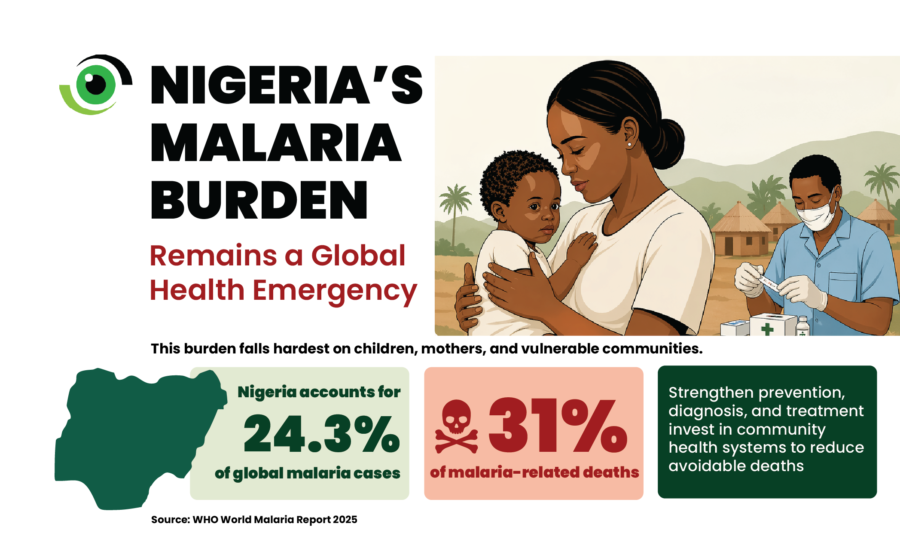
Consider the potential impact in a context where many individuals commonly self-administer anti-malaria medications without prescription for symptoms such as headaches or fever. Nigeria currently bears the highest malaria burden globally, accounting for 24.3% of all global malaria cases and 30.3% of malaria-related deaths.
Nigeria, with support from partners, has long invested in the prevention, diagnosis, and treatment of malaria. In 2023, the Global Fund allocated nearly $US 1 billion to Nigeria’s malaria, HIV and TB programmes. A central component of these efforts is ensuring timely access to care and effective artemisinin-based combination therapies (ACT).
However, substandard or falsified malaria medicines undermine these efforts. While NAFDAC’s interception was widely reported and rightly praised, as the 2026 World Malaria Day approaches under the theme “Driven to End Malaria: Now We Can. Now We Must,” it prompts a more urgent question: “What general measures are currently in place to prevent substandard or falsified medicines from reaching consumers?”
The World Health Organization (WHO) estimates that 1 in 10 medicines circulating in low- and middle-income countries is either substandard or falsified, with antimalarial drugs and antibiotics being the two most targeted products. NAFDAC has also publicly stated that between 13% and 15% of medicines in circulation are either substandard or falsified.
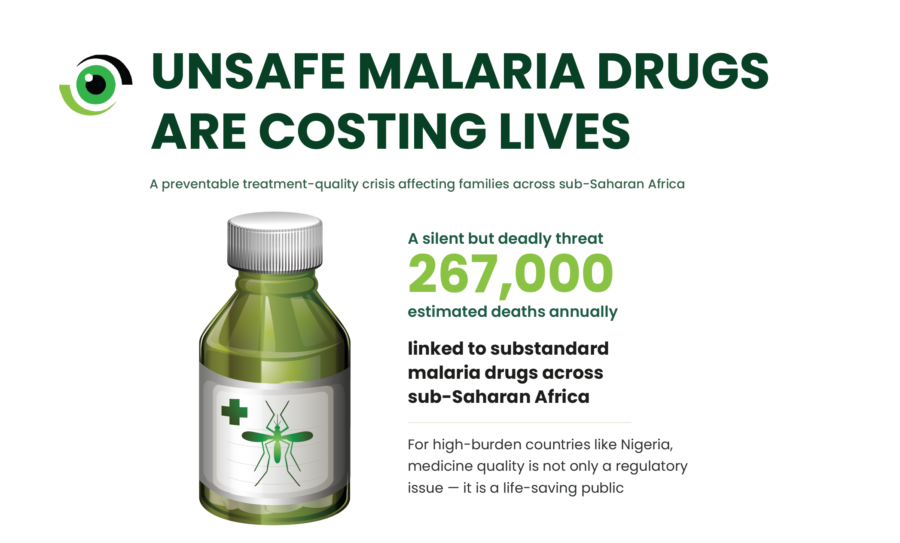
In 2025 alone, the Customs Service handed over counterfeit pharmaceuticals valued at over 9.23 billion Naira to NAFDAC. A separate operation in 2025 by NAFDAC uncovered counterfeit malaria medicines worth over 1.2 billion Naira. The human toll of substandard malaria drugs is an estimated 267,000 deaths annually across sub-Saharan Africa, with Nigeria bearing a disproportionate share.
The report also revealed that between US$ 12 million and US$ 44.7 million is lost each year to care for people who have used substandard or falsified medical products for malaria treatment.
The root causes are not far-fetched
Despite advances in regulatory oversight over the past decade, Nigeria’s pharmaceutical supply chain remains vulnerable to structural weaknesses that counterfeit medicine manufacturers and vendors continue to exploit.
- Regulatory Inefficiencies: Nigeria’s pharmaceutical sector faces challenges due to a lack of essential human, financial, and infrastructural resources needed to effectively monitor and enforce quality standards, resulting in gaps in regulatory oversight.
- Fragmented Drug Distribution: Open drug markets continue to serve as major wholesale hubs despite long-standing policy efforts to formalise and centralise the distribution through the National Drug Distribution Guidelines.
- Unregulated PPMVs and Online Medicine Vendors: PPMVs are often the first point of contact for most Nigerians in rural and underserved communities. Beyond this, the rise of online and digital marketing channels has also led to an increase in unregulated online medicine vendors. As a result, they inadvertently become a pathway for the distribution of substandard or falsified medications, risking people’s health.
- Dependency on Imports: Nigeria depends on foreign manufacturers for 70% of its pharmaceutical products. This dependence creates multiple vulnerability points that can be exploited. Reports have shown that most counterfeit drugs were traced back to illegitimate manufacturers in Asia, particularly from China and India.
- Weak Penalties for Defaulters: In Nigeria, the penalty for dealing with manufacturers/distributors of counterfeit medicines is that the suspect will be liable to a fine not exceeding N500,000 or to imprisonment for a term of not less than five years and not more than fifteen years. This penalty is in no way equivalent to the profits derived from distributing these drugs.
- Affordability Gaps: On the demand side, Nigeria still grapples with high out-of-pocket health expenditure, over 70% of total health expenditure. As a result, patients, particularly in rural communities, often prioritise affordability. Given that substandard or falsified medicines are typically cheaper than legitimate ones, this helps sustain their market.
How this impacts Nigeria’s malaria elimination efforts
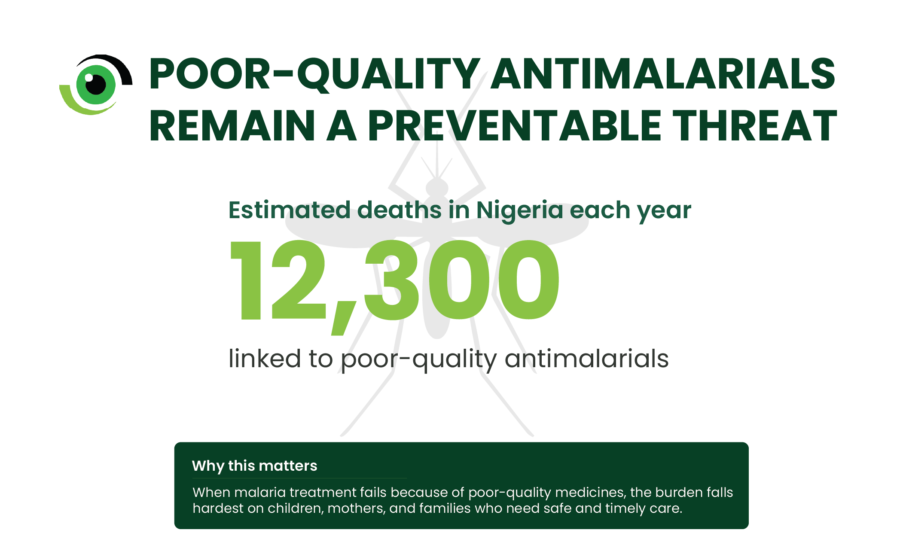
A 2019 study estimated that poor-quality antimalarials are responsible for 12,300 deaths in Nigeria every year. The burden of this crisis affects vulnerable groups, including children under 5, who account for the majority of malaria cases, people in rural areas who mostly depend on Patent and Priority Medicine Vendors (PPMVs), and poor households that often base healthcare decisions on cost and proximity.
When substandard and falsified ACTs enter circulation, the consequences extend far beyond a single patient’s failed treatment. They cause treatment failure, prolong illness and increase the risk of severe disease and death. Worse still, sub-therapeutic drug exposure, where a patient receives a dose too weak to treat the illness, is one of the primary drivers of artemisinin partial resistance.
The WHO has already confirmed artemisinin partial resistance in four African countries, with the potential to spread to more countries. Therefore, every counterfeit ACT that reaches a Nigerian patient directly hampers the eradication of malaria as a public health threat and the actualisation of the malaria elimination targets.
What “Now We Can, Now We Must” requires
As the 2026 World Malaria Day urges global leaders to take action and finance a malaria-free future, Nigeria must recognise that ending malaria in a country that bears the highest burden of cases and deaths requires more than merely scaling up interventions. This therefore calls for urgent systemic approaches such as:
- From Import Dependence to Local Production: The excessive reliance on importing active pharmaceutical ingredients is a major factor contributing to the presence of substandard and falsified medicines in the pharmaceutical supply chain. Encouraging local production through government-backed incentives is essential. This approach will not only mitigate supply chain vulnerabilities but also lower medicine costs, enabling retailers and patients to access high-quality medicines.
- Strengthen Regulatory Mechanisms: NAFDAC has taken measures to enhance its oversight capabilities, such as the Mobile Authentication Service, a system that uses scratch codes and SMS messaging for users to verify the authenticity of medicines. However, it must adopt more proactive approaches, including tightening inspections at ports of entry and intercepting substandard or falsified medicines before they enter the market.
- Stricter Penalties for Counterfeiters: Manufacturers who produce substandard and falsified medicines continue to do so because the profits far outweigh the legal consequences. Legislators must impose harsher penalties and sentences for anyone found guilty. This would deter others.
Nigeria’s malaria response must go beyond increasing access to medicines and equally prioritise quality, safety, and effectiveness. Policymakers, regulators, healthcare providers, and manufacturers need to act swiftly and collaboratively to strengthen the pharmaceutical system, close regulatory gaps, and ensure that all malaria treatments available to Nigerians meet established standards.