

Anwuli Nwankwo and Ibukun Oguntola (Lead writers)
Every year in Nigeria, thousands of newborns die from infections that should have been preventable, yet the microbes responsible have become resistant to treatment. Antimicrobial resistance (AMR), the ability of microorganisms to withstand medicines designed to treat them, is emerging as one of the most serious threats to neonatal survival in Nigeria.
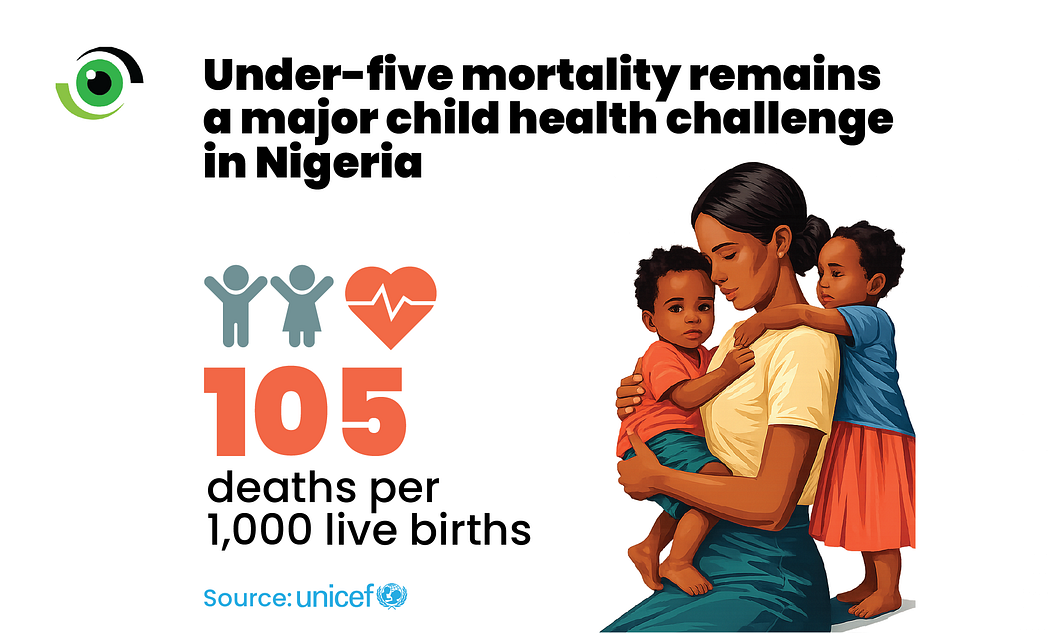
The problem is largely invisible, deeply structural, and accelerating. Globally, approximately 2.3 million children died in the first month of life in 2023, about 6,300 neonatal deaths every day. Nigeria carries a significant share of this burden, with an under-five mortality rate of about 105 deaths per 1,000 live births, a clear reflection of persistent gaps in early-life care.
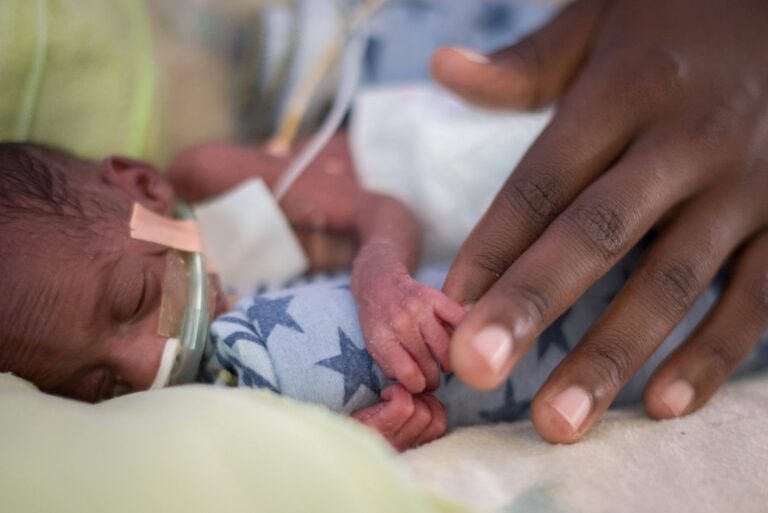
In this context, antimicrobial resistance is reducing an already limited window for survival. A 2025 review documented the rising prevalence of neonatal sepsis in Nigeria, driven predominantly by Gram-negative bacteria that are increasingly resistant to commonly used antibiotics such as ampicillin, gentamicin, and colistin. As resistance grows, treatment options shrink, and infections that should be manageable become far more difficult to treat.
Between 2019 and 2021, extended-spectrum beta-lactamase (ESBL)-producing organisms accounted for 60 to 80% of isolates tested in Nigeria, Methicillin-Resistant Staphylococcus Aureus (MRSA) exceeded 80%, and carbapenem-resistant Enterobacteriaceae ranged from 20 to 30%. These are the pathogens Nigerian clinicians confront at the bedside every day, often with limited treatment options available.
What the research tells us
Clinical data from Nigerian hospitals show that the threat begins at the ward level. A landmark study screened nearly 5,000 samples from mothers and infants under one week old at three Nigerian hospitals, identifying colistin-resistant bacteria. Colistin is a last-resort antibiotic, yet these resistant organisms were already present in newborns within days of birth.
Neither the babies nor their mothers had been treated with colistin. This suggests that mothers may have acquired these resistant bacteria from the environment, with newborns subsequently exposed through the hospital setting, the community, or through direct mother-to-baby transmission.

Another case review at Jos University Teaching Hospital covering 1,984 neonates found that 43% of blood cultures yielded pure bacterial isolates, with clinically significant AMR patterns that directly constrained the empirical treatment options available to clinicians at the bedside. Perhaps most concerning is evidence that Nigerian newborns arrive carrying drug-resistant bacteria before any treatment has been given.
Why Nigerian newborns are especially vulnerable
Several structural factors compound the newborn risk; however, overcrowded neonatal wards with weak infection prevention and control (IPC) practices are creating ideal conditions for resistant organisms to spread between babies and healthcare workers.
Second, limited blood culture and antimicrobial susceptibility testing infrastructure in most facilities means clinicians treat empirically, often using regimens that local resistance patterns have rendered ineffective.
The World Health Organization (WHO) Global Antimicrobial Resistance and Use Surveillance System (GLASS) highlighted that fewer than 0.3% of clinical laboratories across sub-Saharan Africa are equipped to perform both bacteriological testing and automated Antimicrobial Susceptibility Testing (AST), leaving clinicians and policymakers making critical decisions with severely inadequate evidence.
Progresses and persistent gaps in response
The WHO GLASS has identified Nigeria as a priority country for AMR containment, citing weak regulatory systems, insufficient laboratory capacity, and inadequate data reporting as major challenges. Additionally, diagnostic capacity for culture-based pathogen identification remains a privilege rather than a standard of care.
In 2017, the Nigeria Centre for Disease Control and Prevention (NCDC) launched a National Action Plan on AMR aligned with the WHO Global Action Plan. Nigeria also contributed to the United Nations General Assembly (UNGA) high-level meeting political declaration on AMR in September 2024 and has announced it will host the 5th Global High-Level Ministerial Conference on AMR in Abuja in June 2026, the first of such conference to be held in Africa.
Yet, the gap between policy and practice remains wide. A 2025 systematic review of antimicrobial stewardship (AMS) implementation in Nigerian healthcare facilities spanning from 2015 to 2025 found that the main barriers to stewardship of AMR were inadequate training and education, limited diagnostic capacity, and weak institutional policies. The majority of facilities operate without a structured antimicrobial stewardship programme, and stewardship interventions are largely confined to tertiary public hospitals, leaving primary care and private sector settings largely unaddressed.
About 178 countries now have national AMR action plans. Global assessments confirm that only 52% have functional coordinating mechanisms and 68% implement their plans, a pattern mirrored in Nigeria, where surveillance remains limited, and antibiotic sales remain largely unregulated.
What must be done
Protecting Nigerian newborns demands urgent, multi-sectoral action.
1. Policymakers must enforce prescription-only antibiotic regulations.
2. Healthcare institutions must scale up blood culture diagnostics and functional stewardship programmes.
3. Neonatal wards must strengthen IPC practices as a non-negotiable standard. Agricultural antibiotic use, particularly of last-resort drugs in livestock, must be regulated under a One Health framework.
4. Community education for mothers, caregivers, and traditional birth attendants on the dangers of antibiotic misuse must reach the grassroots level.
5. Most of all, Nigeria needs sustained investment in local AMR surveillance to generate the facility-specific resistance data that can guide empirical prescribing and measure the impact of interventions.
The AMR crisis in Nigeria is a threat to the future of the health system. Unless AMR is urgently confronted as a core maternal and child health crisis, these losses will continue quietly, predictably, and at scale. Reversing it requires political will, scientific investment, clinical leadership, and community action, beginning now.