



Prudence Enema and Kenneth Ibe (Lead writers)
Health communication is more than sharing health behaviour, decision-making, and outcomes. For many Nigerian women, access to clear, timely, and understandable health information can influence whether they attend antenatal care, recognise danger signs, enrol in insurance, or seek care early. A cross-sectional study on maternal health literacy found that inadequate maternal health literacy was associated with lower use of maternal healthcare services and poorer pregnancy outcomes. Access to services alone is not enough if women do not understand the information, choices, and warning signs that shape care-seeking.
As Nigeria works to expand universal health coverage (UHC) under the National Health Insurance Authority (NHIA) Act, communication must ensure that women have access to clear, relevant information about the services available to them. Women often face structural barriers to health information, including limited access to services in their local language, gaps in digital connectivity, and social norms that restrict their ability to seek care. These barriers can delay care-seeking and increase the risk of avoidable illness and death.
When UHC Policies Do Not Reach Women
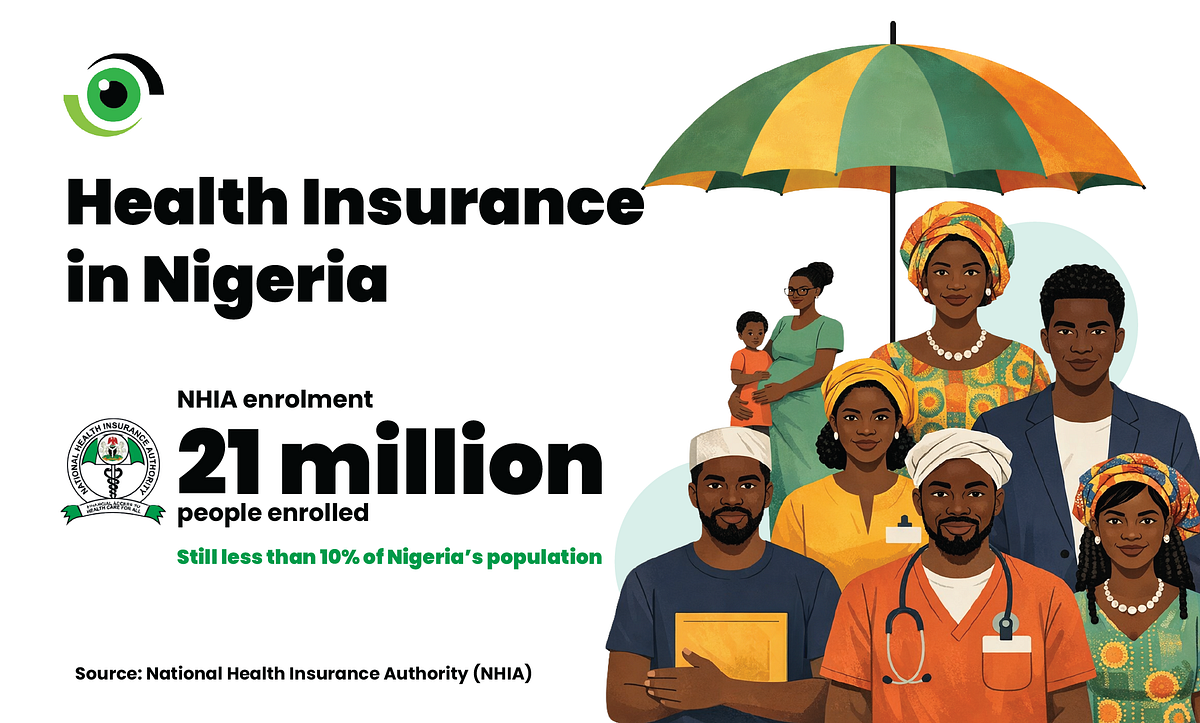
Nigeria has committed to achieving universal health coverage by 2030. The NHIA Act, signed in 2022, strengthened that commitment by making health insurance mandatory for Nigerians, requiring states to establish health insurance schemes, and introducing financing provisions such as the Vulnerable Group Fund (VGF). The Act also reinforces the delivery of essential services through the Basic Minimum Package of Health Services, which defines the core set of services that should be available to all Nigerians. Progress remains slow. As NHIA stated in 2025, enrolment had reached around 21 million people, still less than 10 percent of Nigeria’s population. That leaves most people exposed to direct health spending at the point of care.
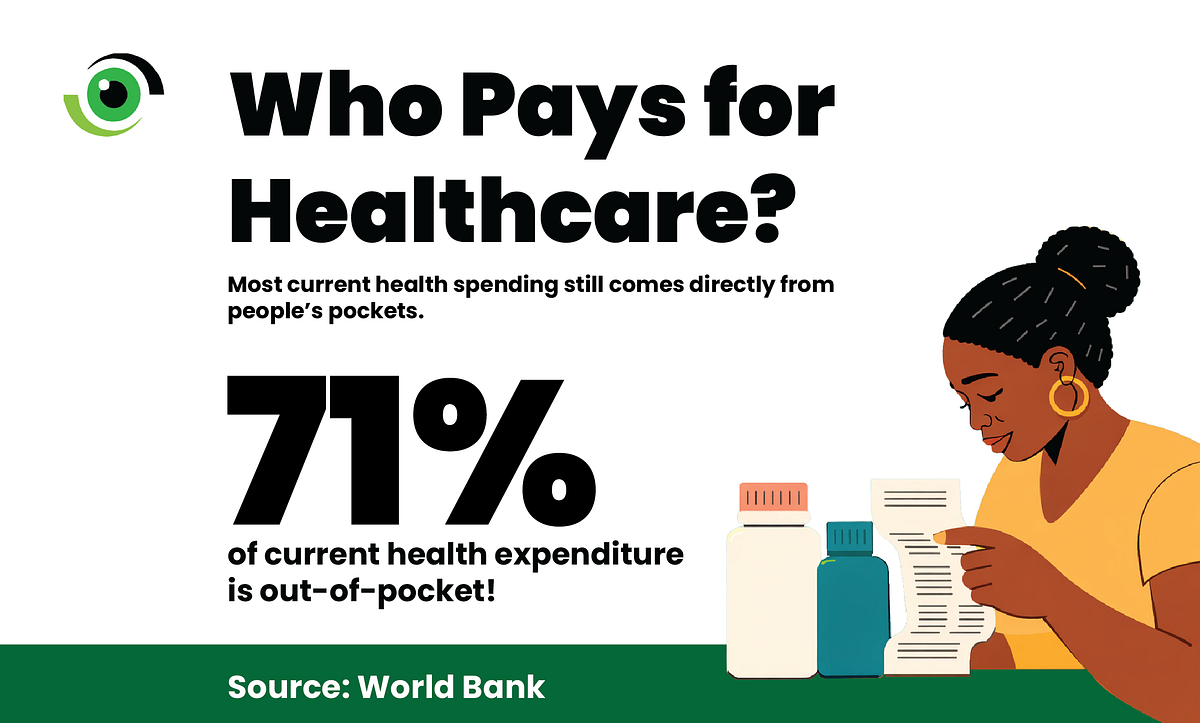
For women, especially those in informal work and low-income households, weak financial protection has serious consequences. Nigeria remains heavily reliant on out-of-pocket spending, which still accounts for 71% of current health expenditure. In practice, that means many families still pay out of pocket for antenatal visits, delivery care, medicines, transport, and emergency treatment. When the costs are too high, women may delay care, attend fewer visits, or deliver outside facilities without skilled providers.
Recent analysis of the 2024 Nigeria Demographic Health Survey (NDHS) data found that women with health insurance were significantly more likely to have eight or more antenatal care visits and to deliver in a health facility. Without financial protection, households may be forced to trade off health spending against food, transport, school fees, and other essentials.

The Information Format Problem
Much public health communication is still designed for people who can read complex text, navigate digital platforms, and interpret formal language. That assumption excludes many women. Evidence from digital maternal-health research in sub-Saharan Africa shows that programmes can reproduce inequality when they do not account for literacy, language, disability, phone-sharing, and uneven digital access.
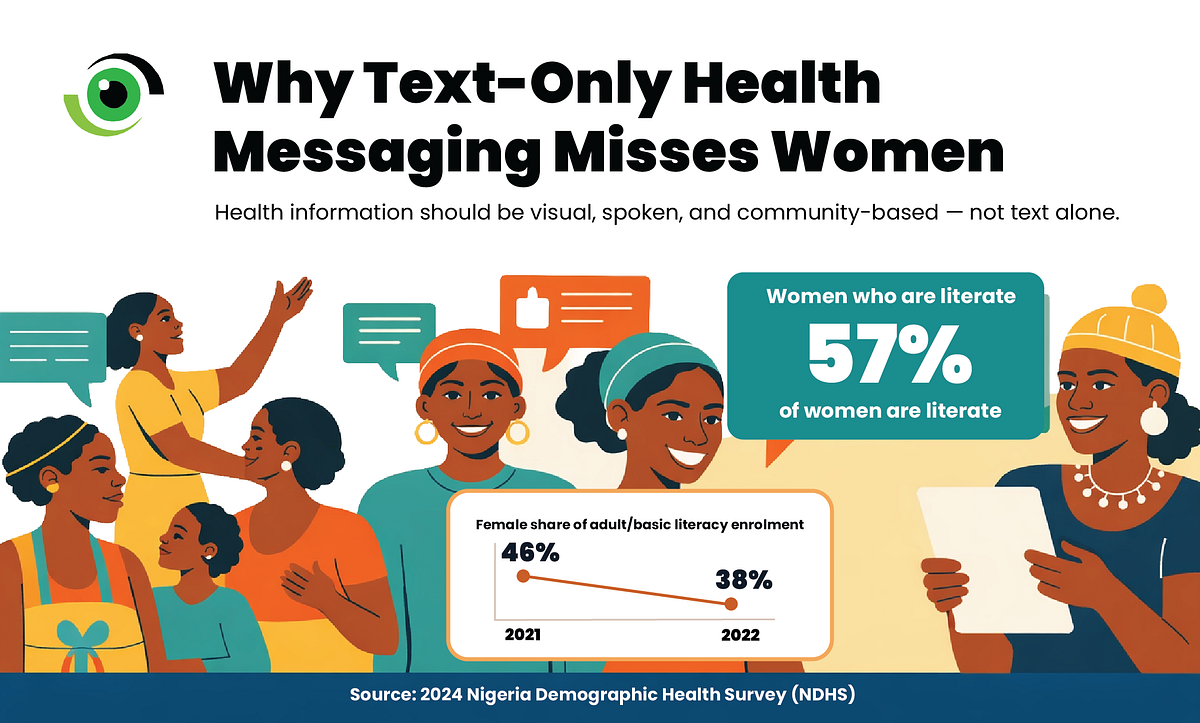
According to the 2024 NDHS, only 57 percent of women in Nigeria are literate. This alone should caution against communication strategies that rely mainly on text. Separate national statistics also show that the female share of enrolment in adult and basic literacy education fell from 46 percent in 2021 to 38 percent in 2022. While this decline does not explain why women are dropping out or being excluded, it suggests the need for closer attention to adult learning, retention, and access. In this context, health messages delivered mainly through written materials, formal language, or internet-based platforms will predictably fail to reach many women, regardless of how accurate the content may be.
Mobile Communication as an Everyday Tool for Health Messaging
Given that basic mobile phones are more widely used than smartphones, broadband, or email use in many settings, mobile communication offers a practical route for inclusive outreach. The World Health Organization (WHO) supports targeted client communication through digital channels for sexual, reproductive, maternal, newborn, and child health when programmes are carefully designed, and privacy is protected. In Nigeria, a systematic review of studies in routine childhood immunisation settings found that 96% of participating mothers and caregivers owned a phone, and 86% were willing to receive reminder messages.
A study in Lagos found that mothers had much greater access to mobile phones than to the internet or email, emphasising the relevance of low-data messaging. In a randomised trial across 33 primary health centres in Lagos, reminder messages increased return visits for childhood vaccination appointments. In northern Nigeria, the Immunisation Reminder and Information SMS System (IRISS) found that mobile outreach is more effective when grounded in local realities. The programme adapted to low literacy and limited phone ownership by engaging traditional leaders and communities, rather than treating messaging as a purely technical exercise.
Digital innovations such as Text4Life have also shown promise. Over an 18-month period in two local government areas, 1,620 pregnant women were registered, and women who reported complications were linked to transport and skilled care. The lesson is not that technology alone solves maternal risk; it is that well-designed communication can shorten the distance between danger and response. Still, mobile communication is not a magic fix. Smartphone ownership, internet access, electricity, digital skills, and control over devices remain uneven. Implementation studies have shown that low phone ownership and low literacy can both limit women’s ability to benefit from SMS-based reminders. That is why a strategy built only around text messages will still miss some of the women most at risk.
Phone-based interventions can also miss deeper social barriers such as language and dialect differences, low trust, disability exclusion, and household power dynamics where men control devices or women cannot answer calls privately. Without adapting delivery to women’s lived realities, digital programmes can widen inequalities rather than narrow them.
A Smarter, Blended Model for Health Communication
If Nigeria is to achieve universal health coverage for women, its communication strategies must be as inclusive as the coverage it seeks to deliver.
1. Health communication should be plain-language, multilingual, and multimodal. Information on health insurance, antenatal care, immunisation, family planning, and patient rights should be available not only in English but also in major local languages and in formats that do not depend entirely on reading.
2. Communication should be voice-friendly and low-data by design. Calls, recorded messages, and interactive voice response can be more effective than SMS for women with low literacy or limited digital skills.
3. Communication must be linked directly to services. A reminder should not end with information alone. It should tell a woman where to go, what is available, what it may cost, whom to call in an emergency, how to enrol, and how to seek help if she is turned away.
4. Trusted local actors must be part of the system. Community health workers, women’s groups, civil society organisations, religious and traditional leaders, and the media all have a role in amplifying accurate information and countering misinformation. For many women, trust is the bridge between hearing a message and acting on it.
Universal health coverage will not be achieved through legislation alone. It will move closer only when women can understand their rights, trust the information they receive, navigate the system, and act on health advice in time. In Nigeria, inclusive health communication is not secondary to UHC. It is one of the conditions that makes UHC possible.