

Dr Adachi Ekeh, Dr Aishat Usman, Dr Achille Batonon, Dr Virgil Lokossou (Lead writers)
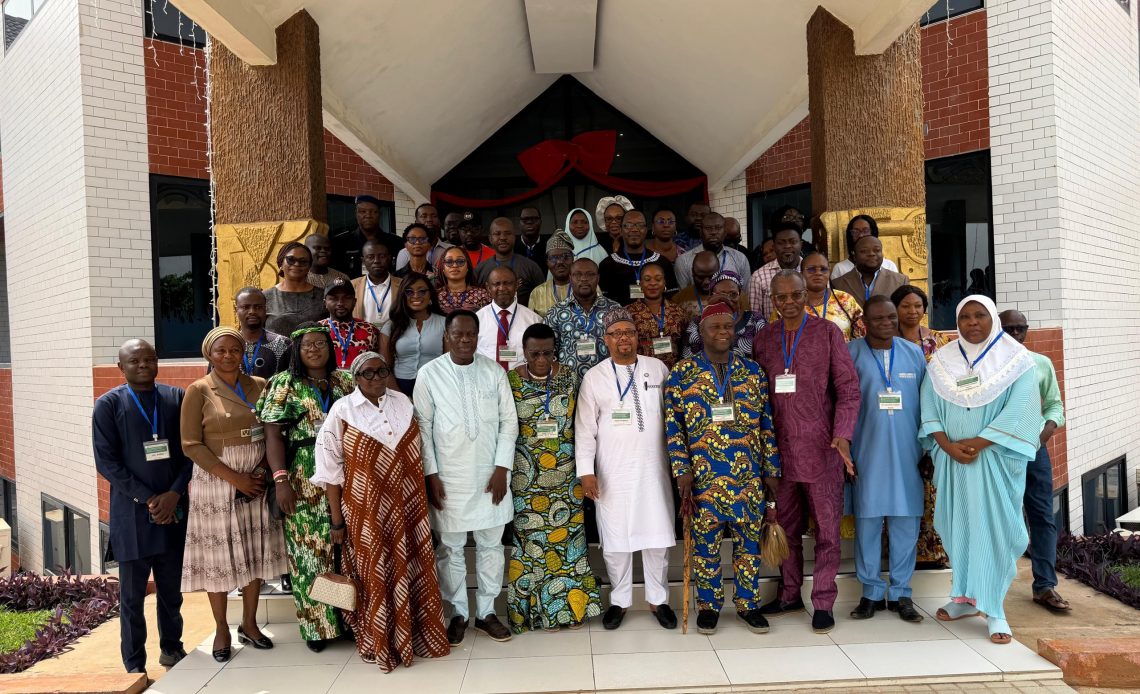
In Grand-Popo, where rivers cut across landscapes without regard for immigration posts, leaders from Benin and Nigeria gathered around a shared truth: Vectors do not recognise borders. Elimination efforts cannot either. Convened by the West African Health Organization (WAHO), the 2026 Benin–Nigeria Cross-Border Meeting on Onchocerciasis was more than a technical convening. It was a strategic reckoning — a moment to confront fragile gains, structural gaps, and the financing realities that will determine whether elimination becomes irreversible or remains aspirational. The meeting opened with clarity and urgency. Representing Benin’s Minister of Health, the opening address declared: “To a cross-border threat, there must be a cross-border response.”
Onchocerciasis (river blindness) continues to burden communities along shared river basins between Benin and Nigeria, particularly in contiguous border districts where population movement is frequent and programme implementation is difficult to synchronise. While both countries have achieved measurable progress, border districts remain exposed to reintroduction due to mobility, unsynchronised interventions, and gaps in coordinated surveillance. The tone was unmistakable: Progress achieved independently can be undone collectively.

The Evidence: Fragile Gains in Shared Transmission Zones
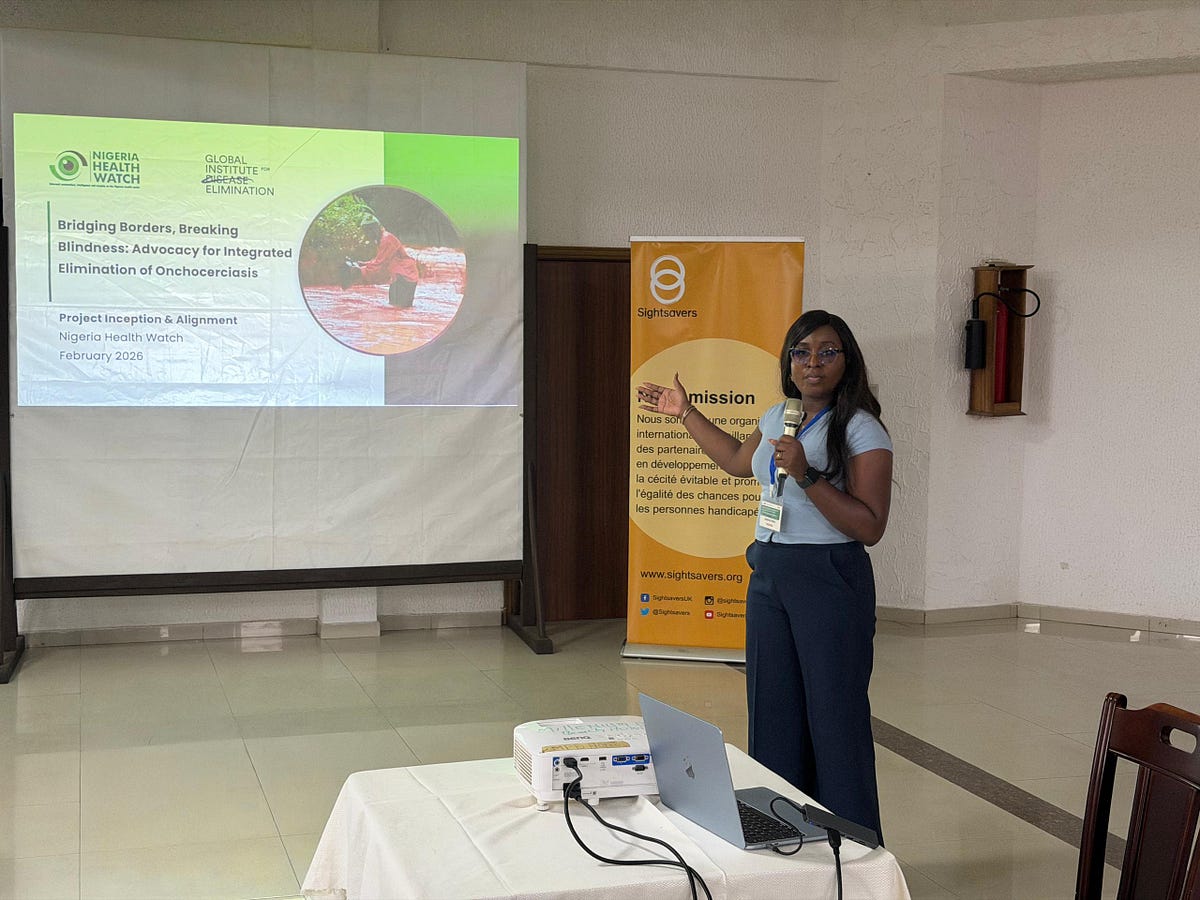
Technical presentations over the first two days painted a complex but hopeful picture. Nigeria reported an interruption of transmission in several transmission zones and confirmed the elimination of onchocerciasis in two states, based on national stop-MDA (mass drug administration) and post-treatment surveillance criteria. Benin highlighted progress in strengthening laboratory capacity, operationalising its National Onchocerciasis Elimination Committee (NOEC), and digitalising mass drug administration (MDA) reporting. Together, the two national programmes and their implementing partners were addressing transmission across multiple contiguous districts along the Benin–Nigeria border, underscoring the scale of the shared elimination challenge and the need for coordinated operational planning.
Yet vulnerabilities remain:
- Transmission zones straddle national borders
- Surveillance systems are not fully harmonised
- Communities need to be engaged, and advocacy to the policymakers is inevitable
- Data sharing is largely event-based rather than routine
- A formal joint implementation memorandum of understanding (MOU) is still pending
- Treatment fatigue and funding gaps persist
The message was clear: elimination is technically feasible — but coordination is non-negotiable.
When Health Becomes an Economic Argument

By Day Three, the conversation shifted decisively from epidemiology to economics. The high-level panel confronted a critical question: How do we secure sustained domestic investment for NTD elimination? Professor Achille reframed the issue with precision: “Health is tied to productivity. It is a key performance indicator for a country’s performance. Elimination requires human resources, training, and strategy. Resources translate into capacity, and capacity translates into elimination.” He cautioned against overdependence on external partners: “We must speak the language decision-makers understand — not just appeal to emotion but make an investment case.” In other words, Ministries of Finance do not respond to moral arguments alone. They respond to numbers, projections, and economic modelling. This discussion highlighted a central policy implication for both countries: elimination strategies must be supported by explicit economic justifications that can be integrated into national development and budget frameworks.
Professor Dorothée reinforced this reality: “When NTDs increase, people abandon affected regions. Farmers produce less food. Productivity declines. GDP decreases.” She urged countries to make elimination a multisectoral issue — linking health, agriculture, welfare, and economic growth. “Direction does not always come from the top. Communicate with the people most affected.” Together, these perspectives underscored the need for cross-ministerial engagement beyond health, especially with ministries responsible for finance, agriculture, and social development.
The Political Economy of Health
Dr Laurent Assogba, Member of the National Experts Technical Committee, delivered a sobering reminder: “No African country has met the 15% Abuja Declaration target for health spending. Health is not yet a political priority. Parliamentarians must be lobbied.” Domestic financing is not simply a budget line. It is a political negotiation. Dr Bassabi Ndeye, Benin’s NTD Coordinator, emphasised practical steps: “We must show the impact of disease on the population and the economy, increase advocacy, diversify partners, and engage the private sector.” These messages clearly point to the need for structured national advocacy strategies that link disease elimination to social and economic outcomes.
Meanwhile, Nigeria’s National Onchocerciasis Programme Manager, Dr Chukwuemeka Makata, challenged conventional thinking on resource mobilisation: “We must challenge the system of allocation.” He proposed expanding tax compliance, strengthening public–private collaboration, embedding corporate social responsibility in health financing, and exploring innovative revenue mechanisms — including telecom contributions and creative industry engagement. Unconventional? Yes. Necessary? Also, yes.
Health Is More Than the Absence of Disease
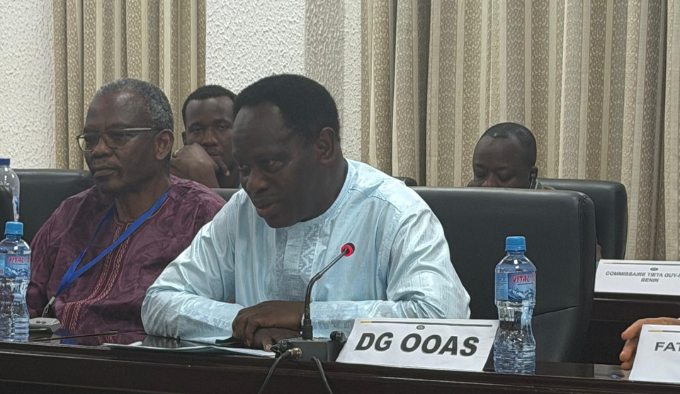
In his closing remarks, Dr Melchior Athanase Aïssi, Director General of WAHO, grounded the discussion in principle: “Health is a state of complete physical, mental, and social well-being and not merely the absence of disease.” He emphasised that determinants of health — environment, livelihoods, infrastructure — must be integrated into elimination strategies. He reaffirmed WAHO’s commitment: “We will use our regional platform to ensure that a multisectoral, integrated approach guides cross-border elimination. We are committed to supporting the recommendations from this meeting, ensuring we make the best impact with the resources we have, leaving no stone unturned, and communicating clearly what the next steps are.” He concluded with conviction: “The spirit of collaboration and cooperation between neighbouring countries is the way forward to eliminate onchocerciasis.”
The Roadmap to Cross-Border Elimination
The meeting concluded with six clear and time-bound priority actions:
1. Fast-track a formal Benin–Nigeria Joint MOU: this involves providing legal and operational clarity for synchronised implementation. A template is provided by the Global Onchocerciasis Network for Elimination (GONE).
2. Develop a costed Cross-Border Action Plan: Aligning mass drug administration (MDA) calendars, entomological surveillance activities, stop-MDA surveys (assessments used to determine when treatment can safely be halted), and data reporting timelines.
3. Establish a permanent binational surveillance mechanism: Including shared digital dashboards and routine data exchange.
4. Synchronise elimination activities in contiguous districts: Reducing the risk of reintroduction and reinfection.
5. Strengthen community engagement and harmonised communication: Combating misinformation and treatment fatigue.
6. Embed elimination into domestic financing frameworks: including health taxes, parliamentary advocacy, and private-sector partnerships.
What Happens Next?
Elimination will depend on whether commitments made in Grand-Popo become institutionalised. Governments must formalise coordination and increase domestic allocations. Parliamentarians must prioritise health beyond electoral cycles. Ministries of Finance must see elimination as a protection of long-term productivity and economic growth. WAHO must continue brokering alignment and multisectoral coordination. Partners must support catalytic innovation while reinforcing country ownership. Communities must remain engaged — because elimination without trust is unsustainable.
A Turning Point
Grand-Popo was not just a meeting location. It was a strategic pivot. Elimination is within reach, but reach requires resources. Resources require advocacy. Advocacy requires evidence. Evidence requires coordination, and coordination requires trust between neighbours. River blindness does not recognise nationality. Our elimination strategy must reflect the same unity.