

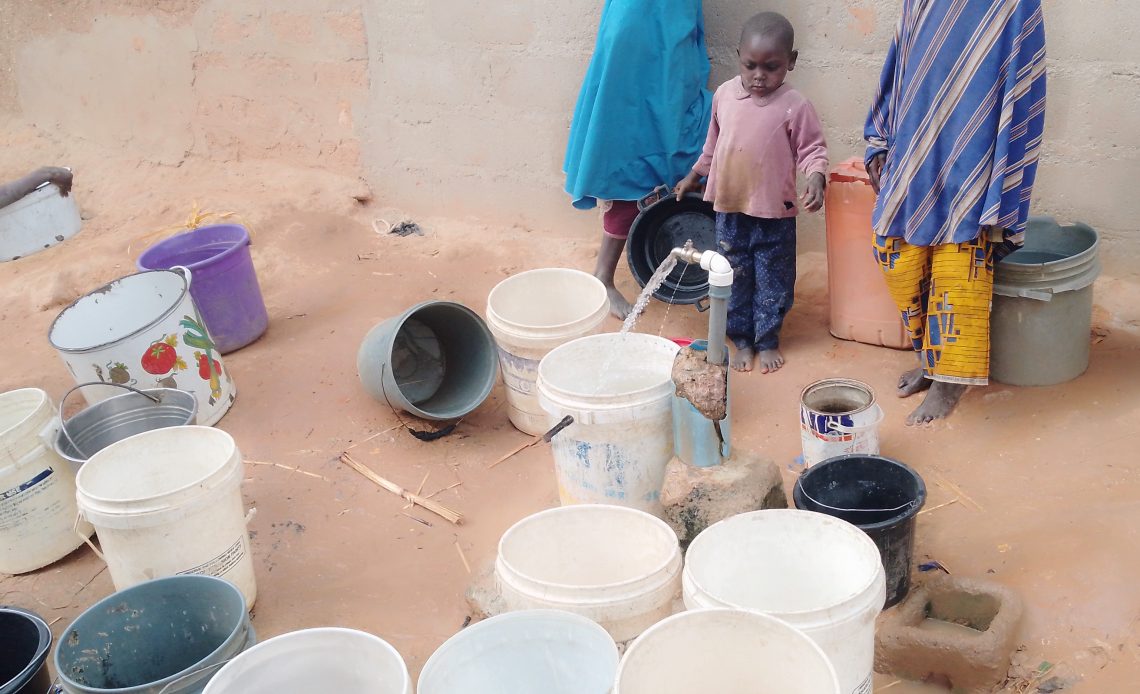
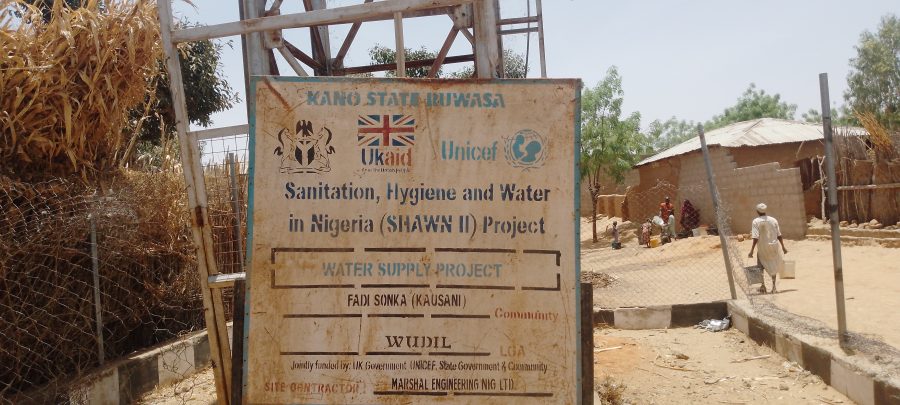
Fadisonka in Wudil Local Government Area (LGA) in Kano State has as the only source of water for the community, a solar-powered borehole located at the centre of the community. The solar-powered borehole, according to Usman Hassan, a youth leader in the community, was constructed and installed eight years ago by Rural Water Supply and Sanitation Agency in partnership with United Kingdom Agency for International Development (UKAID) and UNICEF.
Abdulrahman Garba, a resident of Fadisonka explained that the solar-powered tap is the main source of water supply for members of the community. However, the solar-powered borehole can barely meet the needs of the community currently. “In a day,” explained Garba, “one can get at least one or two buckets from the borehole. And because it’s a big village, if one insists on fetching as much water as he wants from the tap, others may not be able to get some. So, one has no choice but to fetch as little as possible to reserve for others.”
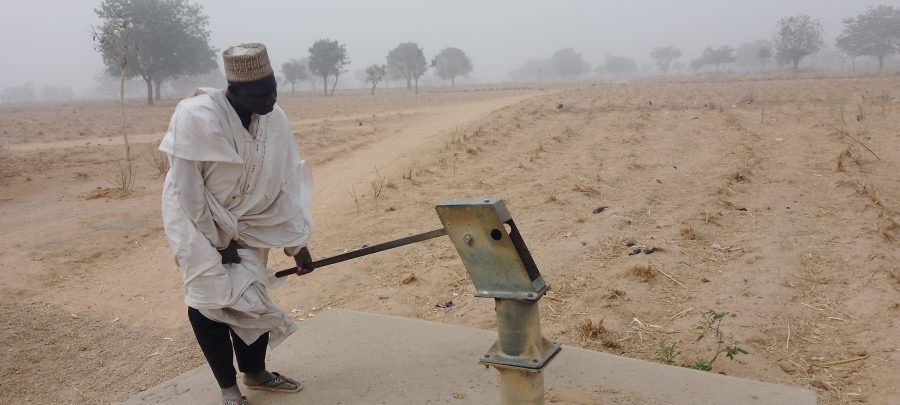
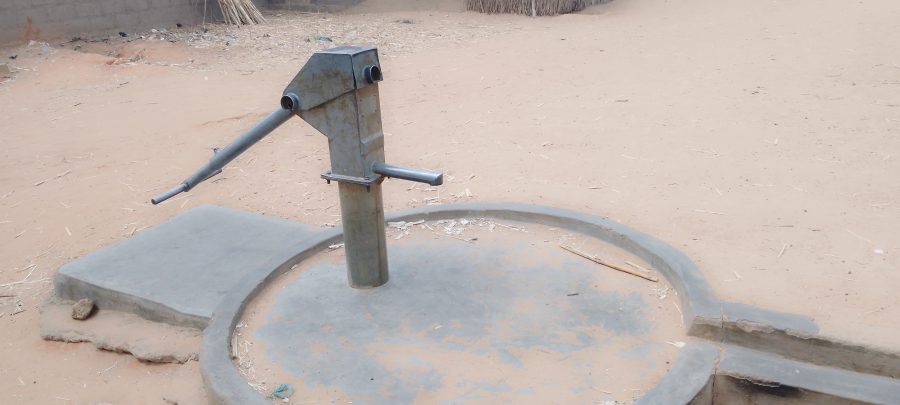
Some years ago, Abdulrahman Garba stated, a non-profit organisation had constructed handpumps in the community, including their health centre and primary school. Unfortunately, none of the handpumps are functioning today. Corroborating further on this, Usman Hassan said that the absence of a functional and reliable water source has greatly affected service delivery in their healthcare facility and children’s attendance in school. “The wells in the community are also in a bad state and need to be fixed, the hand pumps in the community and school surrounding have become a playing ground for children,” Usman said. This leads to open defecation among other health risks in Fadisonka community.
Access to clean and safe water facilities is critical to human health and well-being. It is crucial for stakeholders in Wudil LGA and Kano State to take fast action to address the water crisis in Fadisonka community by:
1. Constructing additional solar-powered boreholes in the community, school and health facility
2. Repairing the existing hand pumps in the community.
3. Sensitising community residents on the dangers of open defecation.