



Christopher Bassey and Favour Solomon-Uwakwe (Lead writers)
Africa’s health sector is facing an unprecedented funding crisis, driven in part by a sharp decline in external health aid, which has fallen by 70% between 2021 and 2025. This shortfall is made worse by a rapidly expanding debt burden in African countries. In 2025, African countries are projected to spend about USD 81 billion on debt repayments, a figure that exceeds anticipated foreign funding inflows. These converging pressures critically undermine the fiscal capacity needed to build resilient health systems, leaving countries exposed to future health security threats.
Many African countries, including Nigeria still fall short of the Abuja Declaration commitment to allocate at least 15% of national budgets to health. With external funding declining and fiscal pressures growing, domestic resource mobilisation has become even more critical. According to the World Health Organization, a viable recommendation is the use of health taxes, which are excise duties levied on products detrimental to public health.
Health taxes on tobacco, alcohol, and sugar-sweetened beverages presents a sustainable and high-impact solution for countries seeking to close widening health-financing gaps. Beyond raising much-needed revenue, these taxes not only generate revenue but are a proven public-health measure that reduces harmful consumption. This approach is particularly urgent as the burden of noncommunicable diseases (NCDs) continues to rise in African countries.
Looking for solutions to these dynamics were at the heart of the recent Health Taxes roundtable in Kenya, convened by Nigeria Health Watch in partnership with Willow Health Media under the theme “Beyond Aid Dependency: Unlocking Domestic Health Financing Through Health Taxes.” The convening brought together policymakers, civil society, and private-sector leaders to explore how health taxes could help close Africa’s widening health-financing gaps.
“We are dealing with many chronic conditions, and we cannot just rely on external funding. NCDs are rising and these are not areas that are typically donor funded,” noted Vivianne Ihekweazu, Managing Director of Nigeria Health Watch, emphasising the urgency of building sustainable domestic financing solutions.
Africa’s Rising Noncommunicable Disease Burden
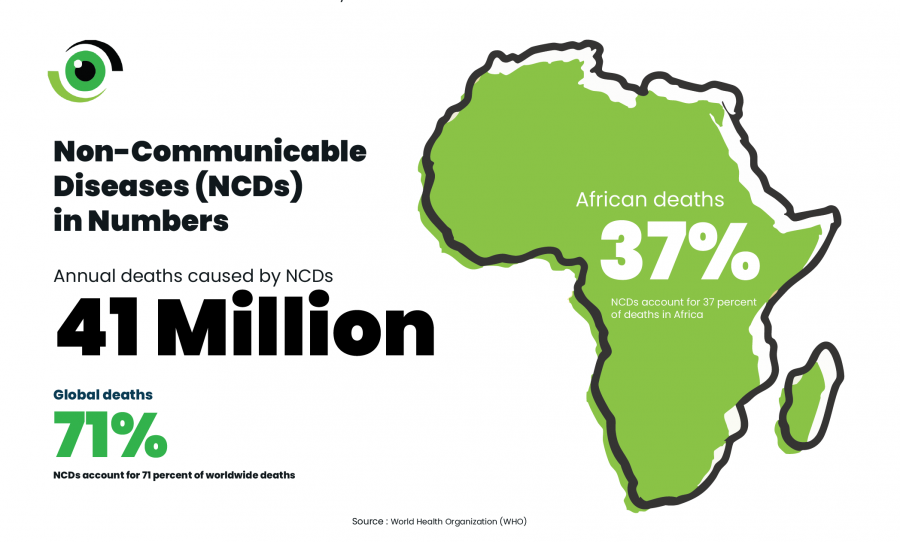
Noncommunicable diseases, such as heart disease, stroke, cancers and diabetes, are increasingly becoming the main cause of mortality in sub-Saharan Africa, where the diseases were responsible for 37% of deaths in 2019, rising from 24% in 2000.

As overseas development assistance continues to decline, African governments must take greater ownership of financing their health systems. Edwin Macharia, Global Managing Partner and Co-Founder, Axum, stressed that effective health financing must be technically sound, politically feasible, and administratively practical. “I think it [health taxes] is the smart thing for Africa to do in the immediate term, so that if money ever comes back, it feels like it is additional rather than core,” he said.
Yet, in countries such as Nigeria, strategic earmarking of health tax revenues for health promotion remains limited. Currently, revenue from these taxes flows into the general government pool with little transparency, rather than being channelled directly into health-sector programmes and initiatives where it could deliver measurable impact.
How African Countries are Using Health Taxes
Across Africa, regional frameworks exist to guide the implementation of health taxes, providing governments with technical direction and minimum standards. Countries such as South Africa, Botswana, and Ghana have demonstrated significant success in reducing consumption of unhealthy products and generating significant revenue. In contrast, many other countries have set excise tax rates too low to meaningful influence consumption patterns or strengthen health financing. Reviewing specific country experiences offers important insights into effective strategies, implementation challenges, and the potential health and fiscal gains of well-designed health taxes
Nigeria illustrates both the opportunities and the gaps. NCDs account for 29% of all deaths and 22% of premature deaths, placing a substantial health and economic burden on households. To address this, Nigeria adapted the WHO Global Action Plan for NCDs into its National Multi-Sectoral Action Plan for the prevention and control of NCDs, which includes interventions such as health taxes on harmful products. Nigeria currently applies both specific and ad valorem excise taxes on tobacco and alcohol, aligned with global practices; however, the current tax rates on these harmful products remain below levels considered effective for reducing consumption or generating robust revenue.
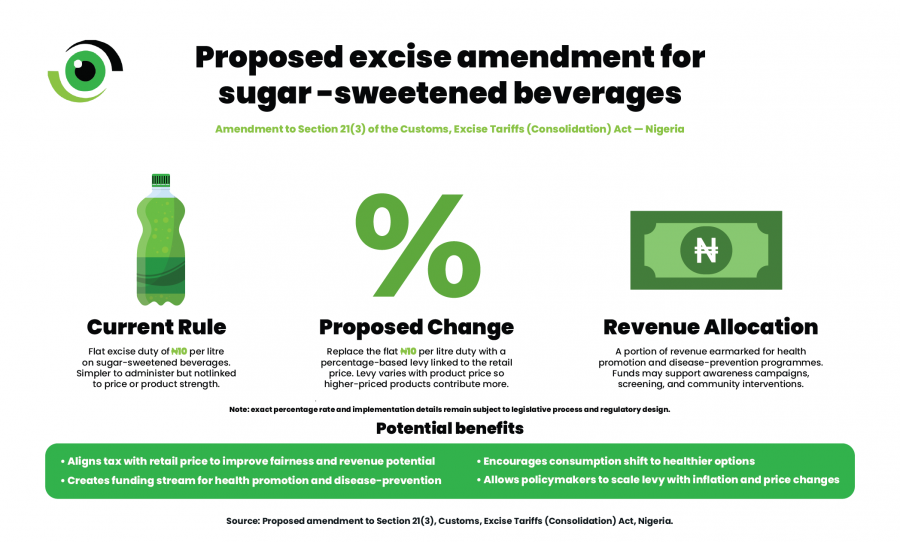
For sugar-sweetened beverages, the Federal Government introduced a ₦10 ($0.02) per litre levy through the Finance Act 2021, implemented in June 2022 and regulated under the Excise Duty Regulations of September 2022. However, the fixed levy has had limited impact due to inflation and market dynamics. In response, the Senate is reviewing a bill to amend Section 21(3) of the Customs, Excise Tariffs (Consolidation) Act, proposing a shift to a percentage-based tax on retail prices and earmarking a portion of the revenue for health promotion and disease prevention programmes. Key stakeholders, including the Federal Ministries of Health and Social Welfare and Finance, presented their positions during the public hearing on the proposed amendment, and broader consultations remain underway.
What Can Health Taxes Deliver?
Health taxes create value on three interconnected fronts: they reduce consumption of harmful products, generate government revenue for priority investments, and ease pressure on health systems by lowering long-term healthcare costs. For African countries, they represent a significant yet largely underutilized fiscal tool. Increasing excise taxes on tobacco, alcohol, and sugar-sweetened beverages could unlock substantial revenue while simultaneously improving population health outcomes, offering a pathway to greater domestic health financing .
During the roundtable discussion on Nigeria’s fiscal reforms and the future of health taxation, Taiwo Oyedele, Chairman of the Nigerian Presidential Fiscal Policy Reforms Committee, outlined how Nigeria can strengthen both the effectiveness and equity of its tax system.

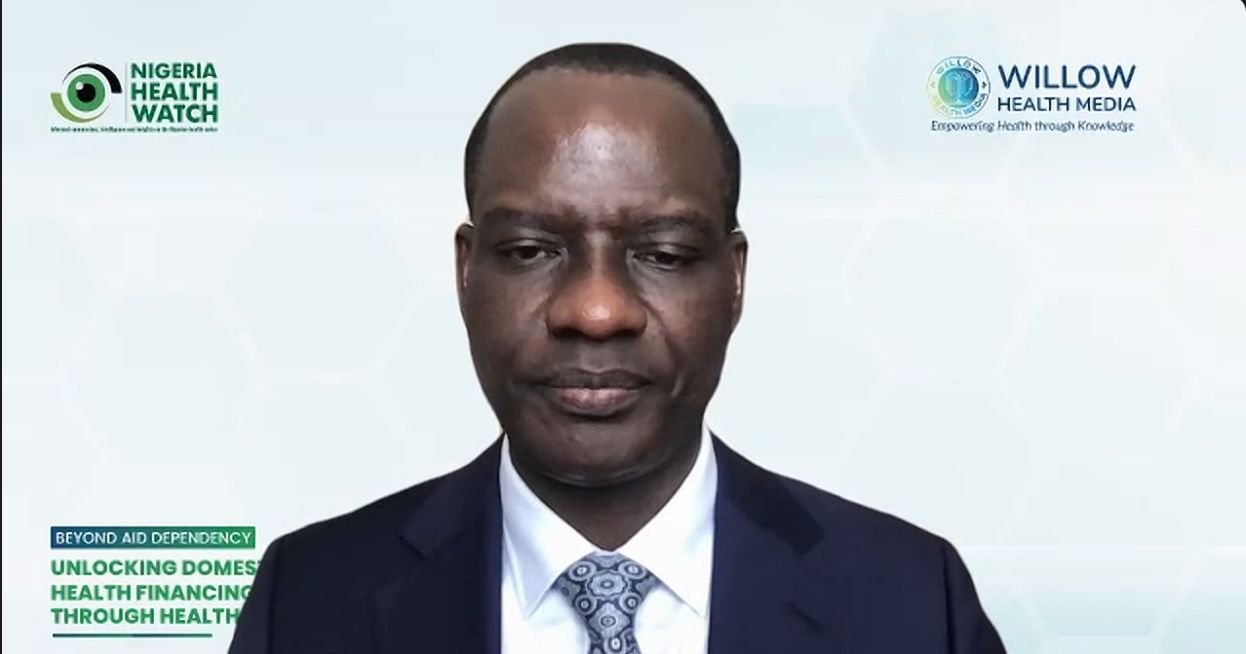
He noted the country’s shift toward a more data-driven and stakeholder-inclusive model, including a transition from taxing product volume to taxing harmful content. This evolution aims to ensure that health taxes more precisely target the behaviours and exposure to health risks. “Nigeria must tax harmful content, not just volumes. That is how we correct perverse incentives,” he noted.
Participants also emphasised the importance of designing health taxes that anticipate and mitigate unintended consequences. Dr. Sultani Matendechero, Deputy Director General at Kenya’s Ministry of Health, noted that higher taxes do not always guarantee the intended public health benefits if consumers shift to dangerous substitutes such as Chang’aa, Swahili for illegal homemade liquor, when beer taxes increase, or kiraiko, black-market cigars, when cigarette taxes rise. These alternatives pose even greater risks. He stressed that the starting point for any health taxes must be the public health objective, with revenue being merely “a side effect”. However, contrary to industry claims, global evidence shows no significant link between higher tobacco taxes and increased illicit trade.


The roundtable reinforced that health taxes are most effective when transparency, data, and public trust are central. Comptroller Musa Omale at the Nigeria Customs Service explained that all revenues, including those from health-related excise taxes, are fully recorded in the Federation Account and monitored by multiple oversight bodies. Dr. William Menson, Director, Health Financing (Africa), ONE Campaign stressed that credible government action, through accountable delivery and visible health improvements, is essential for sustaining public support.
Private-sector engagement is equally critical. Njide Ndili, President Healthcare Federation of Nigeria noted that private providers deliver over 70% of healthcare in many African countries and often absorb costs when patients cannot pay. Their involvement in data collection, prevention campaigns, and insurance enrolment complements public health efforts.

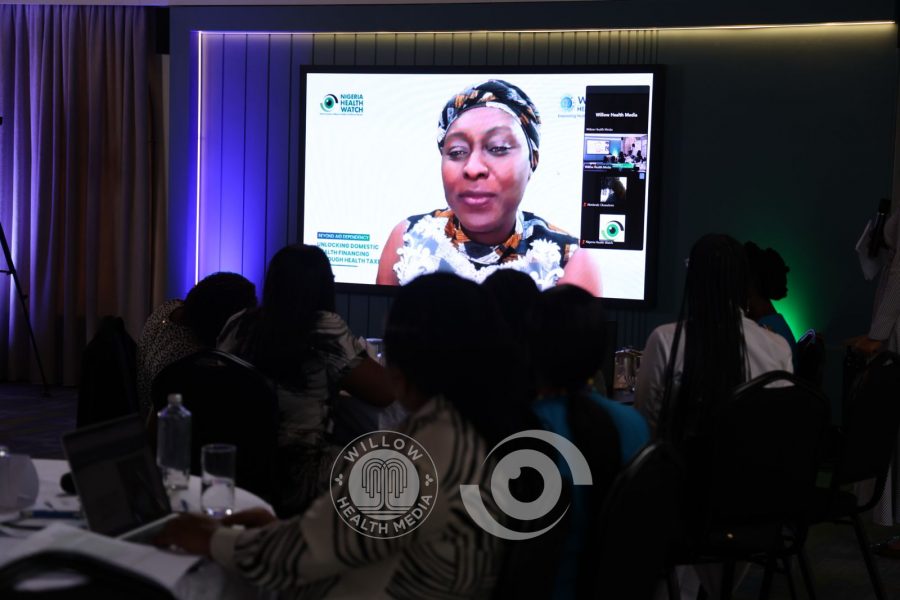
Data-driven policy design ensures health taxes translate into tangible coverage. Dr. Abubakar Kurfi, Director of Planning, Research & Statistics at the National Health Insurance Authority (NHIA) highlighted modelling, revenue projections, and benefit-package design as key tools, citing the Nigeria–Zambia insurance pilot, which linked pooled financing to coverage for both infectious diseases and NCDs, illustrating how health taxes can strengthen financial protection and advance universal health coverage.

The political economy of implementation cannot be overlooked. Dr. Olumide Okunola, Senior Health Specialist at the World Bank noted that industries targeted by health taxes are highly organised, leveraging lobbying, research, and litigation. Public health actors must counter these pressures with evidence-based messaging that addresses economic, employment, and youth-related concerns, ensuring reforms achieve lasting impact.
“Industry actors do not wait for government decisions. They work actively to influence them. Public health actors must be equally prepared,” he stated. These insights highlight the need for careful policy design, transparent revenue allocation and strong regulatory oversight to ensure that health taxes deliver maximum health benefit and fiscal impact.
As external overseas development assistance continues to decline and the burden of noncommunicable diseases rises, Africa cannot delay the transition towards sustainable domestic health financing. Taxes on tobacco, alcohol and sugary drinks offer a powerful, proven mechanism to reduce disease, generate revenue and lessen pressure on overstretched health systems. Making the most of this opportunity will be essential for building resilient health systems capable of meeting the continent’s growing health challenges.