

Mukhtar Ya’u Madobi (Lead writer)
When labour pains began at midnight, 38-year-old Aisha Sunusi from Koya village faced a familiar fear. The nearest hospital in Shanono Local Government Area (LGA) was several kilometres away, and the roads were dark, rough, and unsafe. Her husband tried to find a motorcycle to take her there, but by dawn, Aisha had delivered twins at home, both born lifeless.
“My labour started at midnight, but because the hospital in Shanono was so far away, I could not get there until morning. By the time I delivered my twins, they did not survive; I had been in labour too long without any medical help,” she recalled, her voice trembling. “Now, with this renovated clinic here, we finally have some relief.”

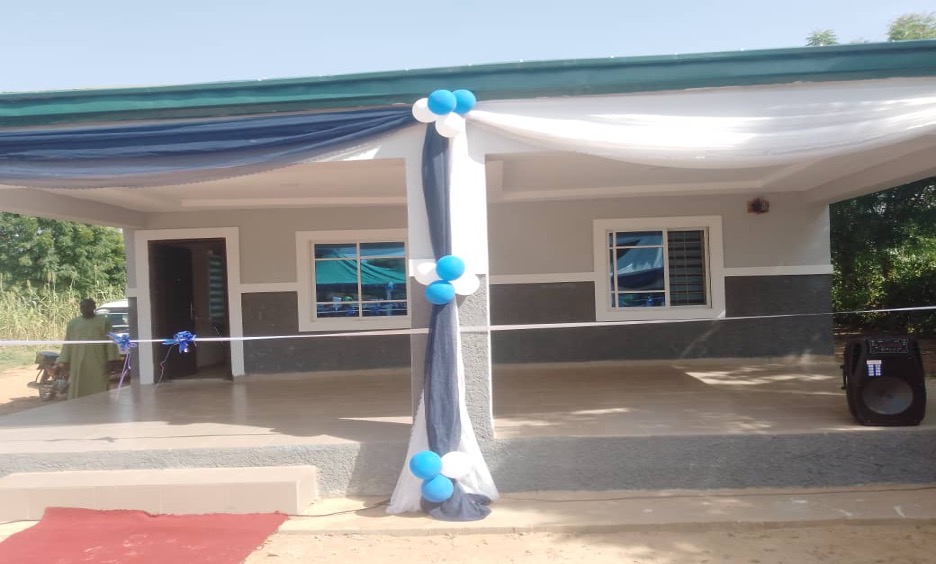
renovation of Koya PHC. Image credit: Nigeria Health Watch
Today, that same facility, Koya Primary Health Centre (PHC) in Shanono LGA of Kano State, has become a place of life and hope. The renovated building is newly painted, stocked with essential medicines, and staffed with health workers who now attend to dozens of patients each day.
Another woman, 34-year-old Safiya Mustapha, arrived at the facility with her baby strapped to her back. “I came here because I had been having chest pain, and I received treatment,” she said. “Before now, this place was so bad that its appearance alone discouraged people. The doors and windows were damaged. Now everything has changed, and this will ease the suffering we have lived with for years.”
For Aisha, Safiya and hundreds of women in the community, it begins to close a gap shaped by more than 15 years of suffering caused by neglect and the decay in their primary health care.
Nigeria’s rural health crisis
Koya’s story reflects a wider reality across rural Nigeria. According to the Federal Ministry of Health’s Facility Registry, the country has nearly 33,000 operational PHC facilities, making up about 85% of all health facilities. However, many remain under-resourced, particularly in the northern states.
In Kano State, these challenges are especially severe. Maternal mortality in the state is among the highest in the country, with 502.2 deaths per 100,000 live births, far above the national target of 288 per 100,000.

Furthermore, studies show that in some rural parts of the state, PHCs operate for only eight hours a day because of shortages of nurses, medical equipment, and reliable infrastructure. Women often travel more than 30 kilometres to urban hospitals during labour, sometimes at night, on unsafe roads, leading to tragic and preventable deaths.
From ruin to relief
For more than a decade, Koya’s PHC was a shadow of a health facility. The walls were cracked, the roof leaked, chairs were broken, and there were no health workers. Villagers said the only available medicines were simple painkillers. “In those days, you only came here to collect Panadol and go home,” recalled Malam Musa Usman, the Officer-in-Charge.

Image credit: Nigeria Health Watch
Expectant mothers were forced to travel to Shanono town, which is more than 5km away, for childbirth and emergencies, often at great risk. “The place was dirty and in a dilapidated condition, no chairs, no beds. But now, we have all the necessary equipment and supplies, beds, mattresses, and a functional laboratory. Expectant mothers can now give birth here with skilled support,” Malam Musa explained.
The transformation of Koya PHC which included full renovation of the entire facility, furnishing, equipping and essential medicines was made possible through the Chief of Naval Staff’s Special Intervention Quick Impact Projects (QIPs). The initiative designed to honour senior officers of the Nigerian Navy by enabling them to contribute to their home communities.
The Koya project was facilitated by Rear Admiral Abdullahi Ahmed, who chose his native village as the beneficiary of the intervention. He explained that the Nigerian Navy’s Quick Impact Projects (QIPs) are not only symbolic recognitions of officers’ service but also tangible community-focused investments in education, healthcare, and infrastructure. The initiative aims to strengthen civil-military relations and improve the quality of life in underserved areas.
According to Malam Musa, “we have recorded a positive change. People now trust the facility again. Women who used to travel far to Shanono for childbirth now come here instead. Many obstetric and child health emergencies can now be stabilised quickly before referral.”
For many residents, the impact of the renovation goes beyond convenience; it is about survival. Khadija Ahmad, a housewife in her thirties, recalled the agony of travelling to Shanono on bad roads in labour. “Before, I used to travel very far, several miles to Shanono, to seek medical attention whenever I fell sick. During labour, we used motorcycles, even with the pain and bad roads,” she said, smiling as she gestured toward the new facility. “Those struggles are now in the past due to this new development.”

Sustainability and next steps
While the Koya community celebrates, there are calls for sustainability and expansion. The Chief Imam’s appeal for more female health personnel highlights the intersection of healthcare access and cultural sensitivity, particularly in northern Nigeria, where gender norms influence care-seeking behaviour. Public health experts note that investments in human resources for health (HRH), not just physical infrastructure, are vital. Without sufficient nurses, midwives, and doctors, renovated buildings may still fall short of meeting healthcare needs.
Local leaders have already begun discussions with the Shanono Local Government Council and the Kano State Primary Health Care Management Board to ensure consistent drug supply and staff deployment. “Renovation is just the beginning,” said Malam Abdurrazaq Ibrahim. “We need continuous government supervision so that this progress is not reversed.”
Koya’s revitalised Primary Health Centre offers lessons for similar communities across Nigeria, where about 70% of the population depends on public PHCs. The success of this Navy-backed intervention demonstrates that community-level progress is possible through partnerships that combine military logistics, local engagement, and public accountability.
If replicated across the 44 LGAs of Kano State, such interventions could help reduce maternal and infant mortality, ease pressure on urban hospitals, and restore confidence in Nigeria’s PHC system.
For Aisha, who once faced the unimaginable loss of her newborn twins in silence, there is now a renewed sense of hope. “Now, when I see other women giving birth safely here, I feel joy,” she said. “We suffered for years, but now, God has answered our prayers.”