

Abjata Khalif and Abdullahi Muritala (Lead writers)
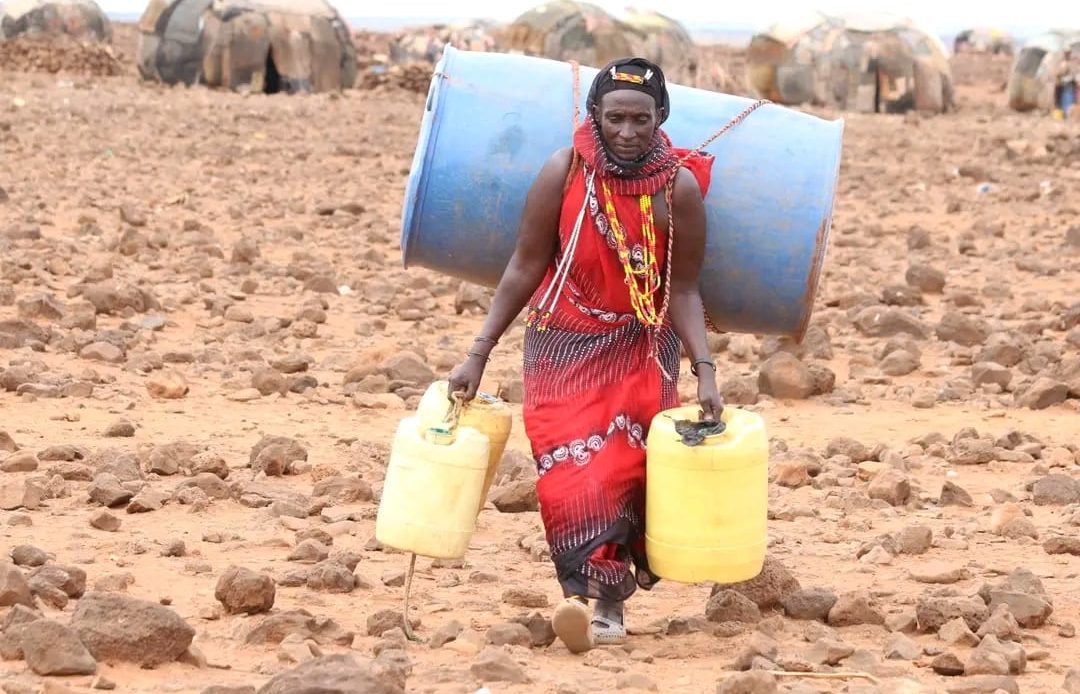
In the remote drylands of Isiolo County in northern Kenya, Chuqlisa Arero and her fellow livestock keepers have borne the brunt of prolonged droughts that have devastated their herds and livelihoods.
The dryland region in Kenya is characterised by frequent droughts and harsh climatic conditions. However, the 2021–2023 drought cycle was unlike any before: three consecutive years with very little rainfall, despite conflicting forecasts from the community’s traditional weather system. “It was the worst drought we have ever encountered,” Arero explained. “I lost up to 30 cattle and 100 goats. The traditional weather system gave us the wrong information; we waited for rains that never came.”
Communities living in remote settlements across northern Kenya still rely on traditional institutions led by local chiefs for guidance on cultural and environmental matters. The indigenous forecasting system, passed down for generations, relies on observing natural signs such as wind direction, the movement of certain birds linked with either rain or drought, and even the reading the intestines of goats after slaughter. Specific intestinal patterns are believed to reveal signs of coming rain, conflict, or disaster.

Central to this system is a traditional calendar, an indigenous knowledge tool developed over generations to help people interpret and respond to changing weather patterns. The calendar divides the year into distinct periods of cold and hot seasons, marking times of abundance and scarcity of pasture and water.
Through these methods, nomadic families can anticipate short and long rains, identify months of severe or mild drought, and prepare migration plans accordingly. But today, climate change is pushing the seasons outside the patterns these calendars were built for, making it harder even for the most experienced elders to read the weather and protect their families in time.
When the forecast failed, hundreds of families were left at the mercy of the relief food programme managed by the Kenyan government, which offered drought-stricken communities food rations of beans, cooking oil, rice, sugar and maize flour.
Although the Kenyan government disbursed more than 13 billion Kenya shillings (about US$ 129 million), targeting eight dryland counties in northern Kenya, Arero and other members of her community were not among those who benefitted from the programme.
“It’s hard to rely on relief food because it offers only short-term relief and you don’t get back your lost assets. Families are left traumatised and in shock,” she explained.
With the disruption of the indigenous knowledge system that supports the traditional weather forecasting, communities started to rethink their traditional approach to food security, leading to the establishment of community food banks.
A food bank for all
The food bank initiative became a collective climate action plan aimed at tackling food insecurity, preventing health crises linked to hunger, reducing the loss of livestock assets, and responding to severe malnutrition and starvation.
“The three years of severe droughts forced my community in Gotu, Isiolo, to recalibrate our indigenous knowledge and come up with a model that would help us get more reliable weather information, build food assets, and respond better to climatic shocks,” said Mumina Sabalis, a community member who took part in the process.
Today, traditional food banks in dry, sparsely vegetated Isiolo County are serving about 180,000 people across 200 villages, up from 50,000 people in 65 villages in 2020. “From early 2023, community members donated 2,000 cattle and 1,800 goats to various Isiolo community food banks,” explained liaison officer Qumbicha Abadubi.
The food bank offered Arero a food ration kit consisting of dried meat, wild fruits, cereals and cooking fat made from tallow. “I was given 5 kilograms of dried meat, 7 kilograms of wild fruits, 5 kilograms of maize flour and cooking fat. After 15 days I will go for another supply,” she stated.

In addition, traditional herbalists play a vital role in the food bank system by collecting and preserving traditional medicines derived from tree leaves, barks, roots, and berries.
These remedies are stored alongside food reserves in the community bank and are administered by certified traditional healers, especially during health emergencies such as disease outbreaks or drought-induced malnutrition. Integrating herbal medicine into the food bank not only helps communities manage health crises when access to modern healthcare is limited but also strengthens their self-reliance in times of climate-related or medical distress. Where formal health facilities are available, these remedies complement rather than replace clinical care, building a more complete safety net for people on the margins of the health system.
A local traditional herbalist, Charfi Halkano, explained that the food bank plays a key role in safeguarding availability of the traditional medicines and herbs. “Now I have enough traditional medicine and herbs to last for three years,” said Halkano, “unlike in the past when traditional medicines were wiped out by the raging drought.”
Nigeria’s food storage under siege by unpredictable weather
Nutritious food that meets people’s dietary needs for a healthy life is a cornerstone of food security. Yet, the crises of food insecurity in Nigeria continues to deepen as weather patterns become more erratic. In Ikwokwu, a farming community in Oju Local Government Area (LGA) of Benue State, 35-year-old farmer Andy Acha remembers when food could be stored safely in outfield barns.

“We did not just keep yams there,” Andy explained. “Groundnuts too, and anything from the same farm. We gathered them all in one place.”
In 2023, Andy harvested his yam and Bambara groundnut from his farmland, a fertile strip along the Oye-Oba riverbank. Before he could move them home, heavy rains came earlier than expected, and floodwaters swept through the field, scattering his crops. “I only saw a few yams later, some clinging to trees. The rest were gone,” he recalled.
Between 4 and 9 September 2024, the Displacement Tracking Matrix (DTM) and the Benue State Emergency Management Agency (BENSEMA) reported that 22 LGAs were affected by flooding. In these areas, approximately 7,092 people, across 1,089 households, were displaced, and crop farming was the primary source of income in 45% of locations. Such displacement disrupts diets, access to clean water and essential health services, increasing the risk of malnutrition and disease.

This year, to avoid another loss, he brought some of his produce home as soon as he could. However, that meant more labour, higher costs and constant worry. “Before, I could keep them on the farm until the next season. These days, if rain falls, I fear it will pack my yams away again,” Andy noted.
Nigerian farmers struggle to adapt without safety nets
Nigeria’s adaptation to erratic weather is fragmented, and farmers are surviving through personal effort, household baskets, or yam barns, with no community reserves or government support systems similar to those in Kenya.
“We only know what our fathers taught us,” Andy said. “If God blesses us with a good harvest, we sell some and keep some. But these days, we just pray the rain will not come when it is not supposed to.”
Experts warn that traditional food storage systems such as open-field barns, baskets and clay pots are no longer reliable, because extreme rains, floods and heatwaves now overwhelm them. Reflecting this concern, Afolayan, a lecturer at the Institute for Sustainable Development, Abiola Ajimobi Technical University, Ibadan, Oyo State, noted in an analysis that, “Nigeria’s food reserve system is not functioning or working as it ought to be.”
The Nigerian Stored Product Research Institute (NSPRI) warns that the country must adopt modern storage and processing innovations if it hopes to reduce food loss and strengthen food security, However, this transition is not cheap. These technologies require upfront investment, government support, farmer training, and stable electricity. Without these, the burden of adopting modern systems falls back on smallholder farmers, many of whom cannot bear the cost. The result is continued post-harvest loss and higher food prices, pushing healthy food further out of reach for low-income families and directly undermining household nutrition and health.

For 62-year-old farmer Mascilina Agocha, who once relied on a large woven basket, irregular rains and flooding forced her to rush crops home before they are ready for harvests in the fields. In 2024, her sesame seed harvest turned dark and unsellable after an unexpected downpour. “I no longer wait on the farm to dry them,” she says. “But with my children gone, the work is harder. I have reduced my farm to what I can manage alone.”
For Patience Abi, the community’s women leader, the shift is stark. “Before, our fathers could leave yam in the soil until January. Now, floods or heat from the soil spoil them. We bring them home immediately after the rain stops.” She remembers how elders used to bury yam or seal in clay pots and baskets for months. “These days, we must sell quickly to avoid losses, keeping only a little for the next planting season.”
Across Ikwokwu, climate extremes have pushed farmers to adjust in ways their parents never had to. Yet many here believe this turning point could open the door to something bigger. With stronger government support and a more coordinated community storage system, similar to the food-bank model transforming dryland villages in Kenya, Benue’s farmers say they could move beyond survival and finally build a storage system resilient enough to withstand repeated climate shocks and protect families’ food and health.