


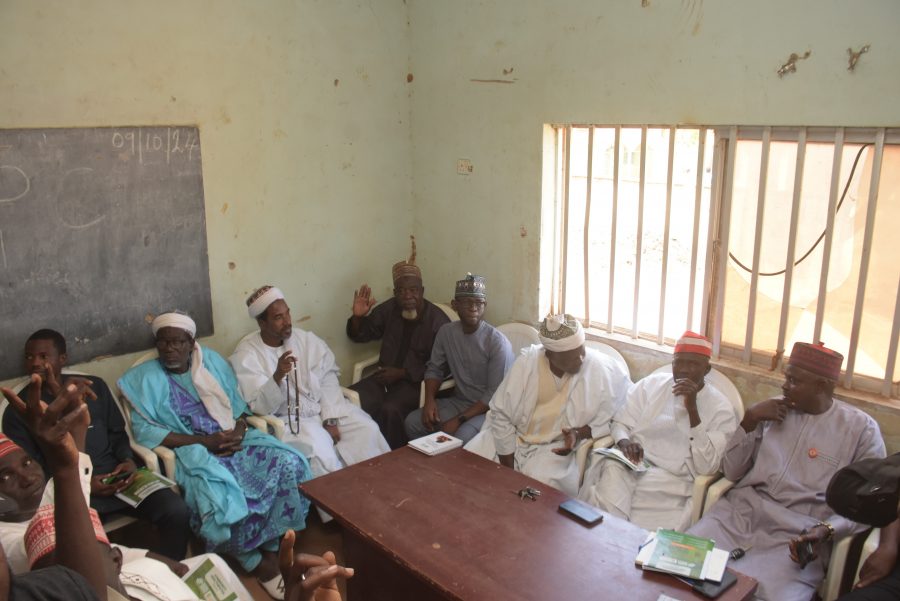
Accessing basic healthcare in Gwarzo, Kano State, accessing basic healthcare often begins with a long walk. This was among the concerns raised by residents over the lack of accessible primary healthcare (PHC) facilities during a town hall meeting organised by Nigeria Health Watch in collaboration with Akin Savvy Awareness and Initiative for Africans.
During the town hall, held in October 2025 at the Islamic Centre, Gwarzo, Tukur Makama, the Head of Department of Health in Gwarzo, the LGA has a total of 26 health posts and 10 apex PHCs spread across its communities but most of the facilities require urgent revitalisation, staffing, and consistent drug supply.
Additionally, several communities like Riji still lack a health facility, forcing residents, especially pregnant women, to travel long distances to access health care.
Yusuf Muhammad, the traditional leader of Riji community, stated that, “we walk for hours before getting help. Even a small health post here would reduce pressure on the general hospital and save lives. His words echoing the frustration of many residents who delay care due to distance and cost.
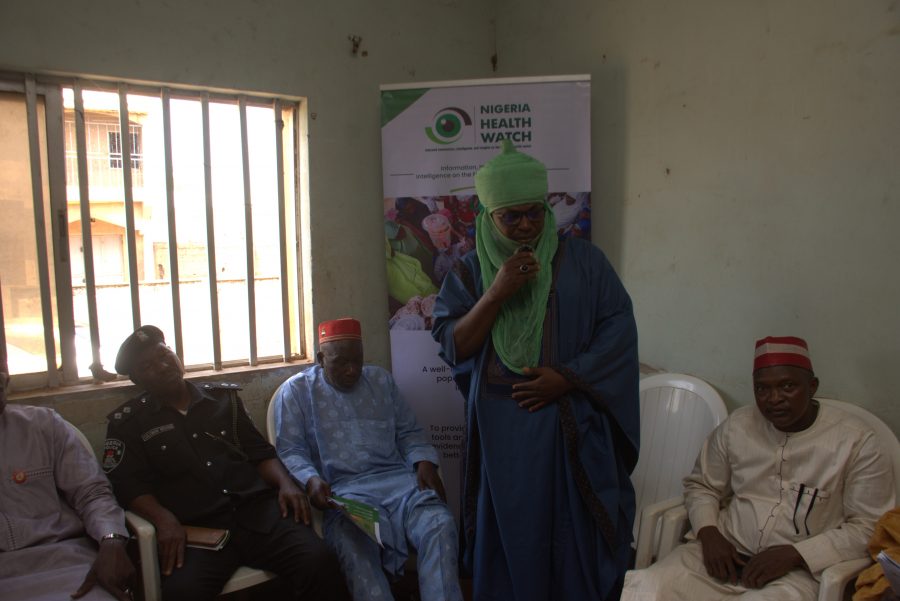
Salisu Musa Muhammed from Nigeria Health Watch stated that an effective town hall meeting brings everyone together, including community members, stakeholders, and policymakers, to talk about health challenges and find lasting solutions for improved health outcomes.
“This is a strategy which aims to capture and amplify citizens’ voices for action, which is a goal of the Global Policy and Advocacy Project,” Salisu said. The Town hall also brought together community leaders, Ward Development Committees (WDCs), traditional rulers, women, youth groups, health officials from both the Kano State Primary Health Care Board (KSPHCB), the Kano State Contributory HealthCare Management Agency (KSCHMA), and local government representatives to discuss challenges affecting access to healthcare, particularly the difficulties of enrolment into the Basic Health Care Provision Fund (BHCPF).

Participants were encouraged to speak and provide insight into the state of the health facilities in their communities. “Some issues can be solved here, while others may be taken to the state or even the National level,” Salisu added.
Nazifi Gambo, the Supervisory Councillor for Health in Gwarzo, reiterated that the local government is committed to improving healthcare delivery and acknowledged the gaps raised by the communities.
“Although BHCPF funding has strengthened some centres, low enrolment is largely due to National Identification Number (NIN) challenges, a requirement for the enrolment, limits health-seeking behaviour and impacts the maternal and child health outcomes,” Gambo stated.
The realities in Gwarzo highlight the urgency of translating the vision of Nigeria’s Health Sector Renewal Plan into action, specifically its second pillar, which seeks to ensure an efficient, equitable, and quality health system by expanding PHC coverage, strengthening accountability, and ensuring no community is left behind.
Stakeholders must prioritise
- PHC revitalisation,
- Expand NIN registration to facilitate health insurance enrolment,
- Recruitment and deployment of trained health workers, and
- Provide emergency transportation solutions for pregnant women.
“Access to healthcare should not depend on how far one can walk,” Yusuf Muhammad noted. “Government must ensure that functional PHCs are within reach of its people, especially in underserved communities.”