



Mahdi Garba and Hadiza Mohammed (Lead writers)
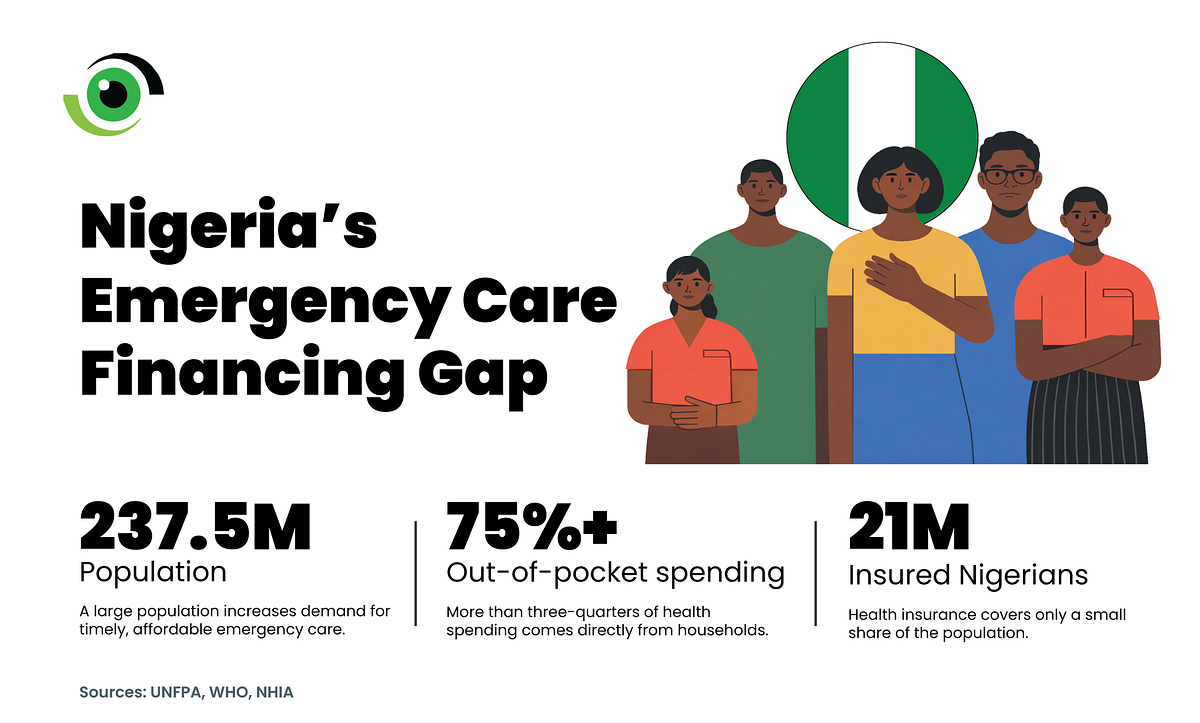
Nigeria’s population is projected to exceed 237.5 million by 2025. However, the country’s health financing system still leaves many households vulnerable at the point of care. Recent estimates show that out-of-pocket spending accounts for more than 75% of total health expenditure in Nigeria.
Although health insurance coverage has increased, only around 21 million Nigerians are currently enrolled, leaving the majority without financial protection when accessing care. This means that while some progress is evident, financial protection remains far out of reach for most Nigerians. For many families, this shapes real decisions about whether they can seek healthcare when they fall ill.
When Justina noticed her three-year-old son was having difficulty passing urine, she took him to the hospital. After several checks, she was told his kidneys were swollen because urine was not draining properly, a condition known as hydronephrosis. The surgery he needed was eventually covered by the charity Helpster. For many Nigerian families, that kind of support can mean the difference between receiving timely treatment and facing dangerous delays.
Closing the gap between emergency need and ability to pay
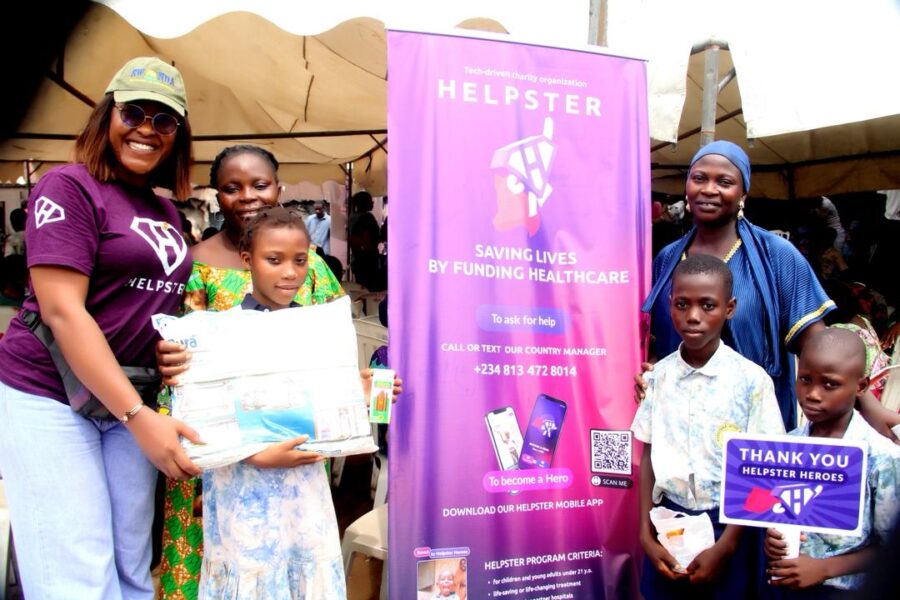
This is the gap Helpster Charity is trying to fill for Justina, her son, and many other families facing urgent medical bills they cannot pay. Helpster Charity is a tech-enabled nonprofit that uses a website and app to fund treatment for vulnerable children, young adults, and pregnant women in underserved communities. Cases are identified through volunteers, hospitals, parents, and local partners, assessed for urgency, poverty status, and cost, and then uploaded for fundraising if they meet admission criteria. Donations are paid directly to hospitals for approved cases.

That matters because speed is crucial in emergency care. Helpster’s volunteers often serve as the first point of contact when patients arrive at facilities but cannot afford treatment. From there, the organisation collaborates with doctors, families, and community actors to confirm the case and respond swiftly. In a system where families can lose valuable time raising funds before treatment begins, such rapid coordination can be lifesaving.
According to Dr Perpetua Mbanefo, Helpster’s Nigeria Country Manager, the organisation frequently supports cases involving malaria, sickle cell anaemia, respiratory tract infections, congenital deformities, and some kidney conditions. Many cases involve children under five or patients whose conditions worsened due to delayed care. Helpster Nigeria states that the organisation has admitted more than 500 children and pregnant women in the country and has conducted several free medical outreaches in remote communities.

How community verification and rapid coordination move patients into care
The emergency insurance pilot relies heavily on community participation and real-time coordination. Volunteers at partner health facilities serve as the initial point of contact for patients who arrive with urgent conditions but cannot afford treatment. These volunteers liaise with community leaders to verify cases and promote transparency. In-country managers within the organisation then coordinate with doctors and families to approve treatment and ensure the necessary care is provided promptly.
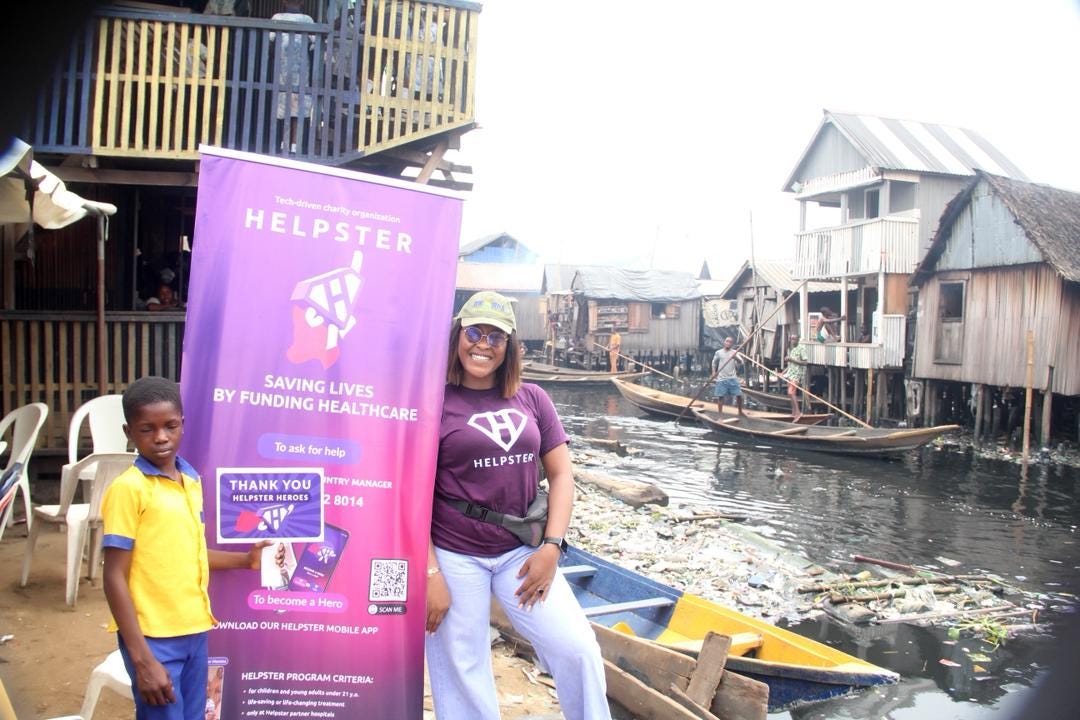
In addition to attending hospital cases, Helpster also conducts community outreach visits to the areas where patients reside. These visits help increase awareness of the programme and build stronger relationships with local residents. In some instances, families facing urgent medical emergencies also reach out directly via social media platforms to request help. Donations on Helpster’s website go to the places where they are most needed and where the system matches cases with available funds. Additionally, to ensure accountability, every donation, treatment, and life saved is documented, allowing donors to see the child’s name, age, and treatment outcome.
The organisation also collaborates directly with health facilities while fostering close ties with community leaders who help verify cases and alert the team when urgent care is needed. Last year alone, the initiative helped facilitate treatment for over 2,000 cases in Nigeria, Kenya, and Bangladesh, including children suffering from severe illnesses linked to undernutrition and sickle cell disease, with the average bill for 2025 being $209 per case.
Why trust remains a major challenge
However, the model still faces challenges. “One of our biggest challenges is building trust,” said Kate Lysykh, the CEO of Helpster Charity. “Sometimes stakeholders, hospitals, and even volunteers assume we have a financial benefit in every case. They try to inflate costs or claim services we did not provide because they think we are coming from a wealthy country. A large part of our work is demonstrating that we are here to support patients, not to make a profit.”
Trust is also fragile in Nigeria. In recent years, public controversies around online medical fundraising have made many people more cautious about appeals for help. When claims are disputed and accountability becomes an issue, it creates wider suspicion. That kind of environment can make it harder for organisations working on genuine emergency cases to build trust quickly, even when patients need urgent care.
Volunteers described other barriers that are easy to overlook. Stephen Ojiogo, a health educator who has volunteered with Helpster since December 2022, said communication can be difficult in multilingual settings. “Effective communication has been a problem for us because sometimes we meet people with whom we do not speak the same language. Sometimes I use interpreters to help convey the messages we want to.”

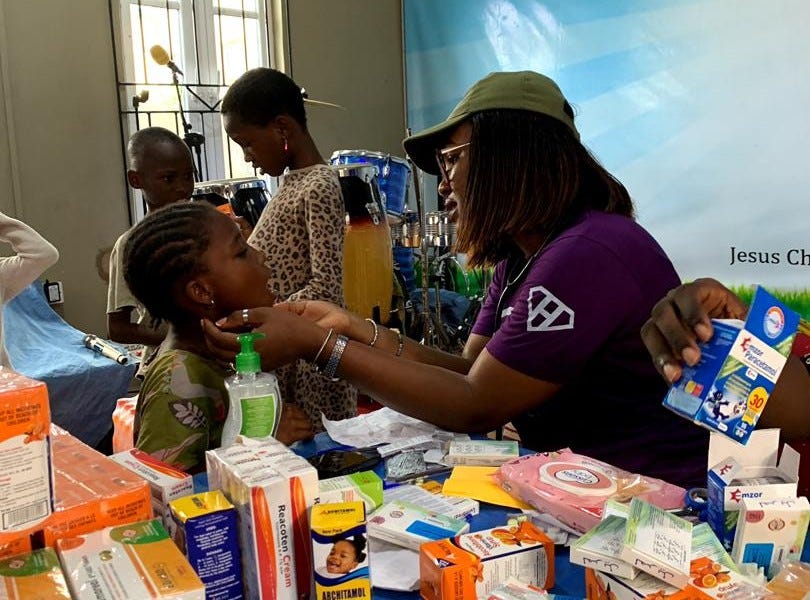
Image credit: Helpster Charity
Another volunteer, Grema Usman Digimari, said the lack of phones can complicate identification and follow-up. “Most patients do not have phones, which makes identification a problem for us. They sometimes [use] their parents’ or neighbours’ phones [to reach us].” In Yobe, volunteer Usman Alhaji Tijjani also pointed to the age limit as a practical concern, noting that some people arrive needing care but fall outside the organisation’s eligibility criteria.
What Nigeria’s health financing system can learn
In 2025, President Tinubu issued a directive mandating health insurance, while the Basic Health Care Provision Fund (BHCPF) aims to expand access to a basic minimum package of care, especially for poor and vulnerable groups. Evidence from state-level insurance schemes, such as those in Imo State, shows that when implemented effectively, they can protect poor families from financial hardship.
Rather than relying only on one-off donations to settle hospital bills, models like Helpster suggest a more sustainable path: linking vulnerable families to state-backed health insurance while strengthening rapid verification, direct provider payments, referral coordination, and trusted community-based emergency response.
The organisation’s cross-country work also points to where such learning could matter most. In Kenya and Bangladesh, Helpster has supported maternal and child health cases and emergency outreach. That matters because severe bleeding after childbirth remains the leading cause of maternal mortality worldwide. In low-resource settings, delays in getting care are often deadly.
The value of this pilot does not lie in offering a complete solution to Nigeria’s healthcare funding crisis. Instead, its significance is in demonstrating, in practical terms, what poor families need when illness becomes urgent, such as speed, verification, referral, and protection from “cash-first” care. If Nigeria is to move closer to universal health coverage, health insurance must reduce out-of-pocket emergency spending and help families access treatment more quickly.
When urgent care depends on whether a family can quickly raise funds, even small, well-organised financing models can save lives. But the true test of Nigeria’s health reforms is whether health insurance can protect poor and vulnerable families from the kind of emergency costs that still push care out of reach.