


Hafsat Bello
Just weeks after the Gurjiya Primary Health Care (PHC) renovation, a newly installed solar battery, which helped power the facility, was stolen, raising a troubling question: Can improved facilities truly function without adequate security?
For residents, this single incident now threatens essential services meant to save lives and it was the major discussion during a town hall meeting at Gurjiya community in Bunkure Local Government Area (LGA) in Kano, which held on 29th January 2026 organised by Nigeria Health Watch in collaboration with Akin Savvy Awareness initiative.
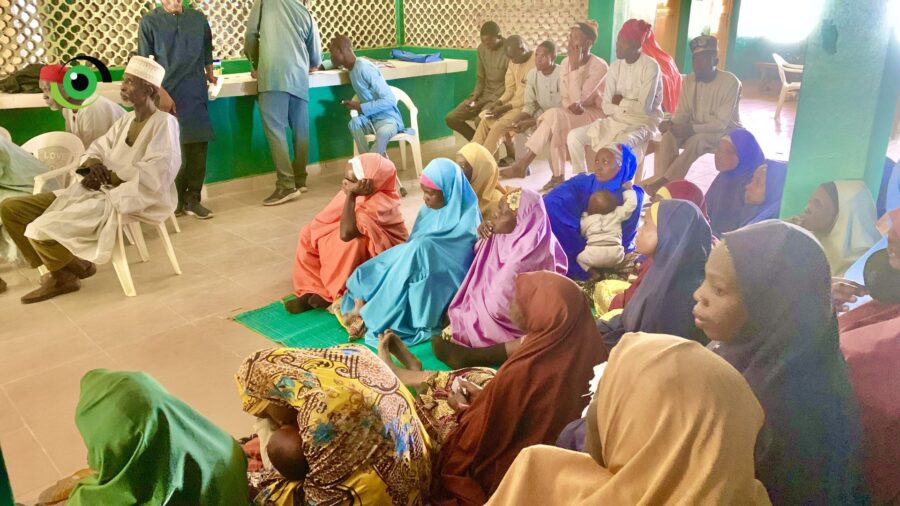
Community members and stakeholders including Village Head, the Ward Development Committee (WDC) Chairman, Bunkure LGA’s vice chairman, , and the representative of the Kano State Primary Health Care Management Board gathered to review progress and challenges at Gurjiya PHC.
“At first, we were very happy about the renovation,” a community member, Abdullahi Garba Muhammad, shared during the town hall meeting. “But when the solar battery was stolen, it felt like we lost everything again.”
Another resident, Shehu Umar, added that “we bring our children here for immunisation, but now we are worried that when there is no steady [electricity], are the vaccines still safe?”

Their concerns reflect growing anxiety about whether the facility can reliably serve the community without adequate security mechanisms as the theft now exposes an often-unseen vulnerability in PHC investments. Despite improvements in infrastructure, gaps in protection has threatened long-term positive outcomes.
During the town hall meeting, participants also used a community scorecard to assess the performance of the health centre and identify areas that require attention, including the deployment of more trained personnel, regular supply of drugs, and a weak community accountability structure. The process allowed residents to speak openly about their concerns and suggest practical solutions.
Some community members also called for improved communication between the WDC and residents. While many are aware of the committee’s role, they said they would like to be more informed and involved in decisions affecting the health centre.

The situation in Gurjiya highlights that infrastructure upgrades alone are insufficient. Strengthening accountability, safeguarding investments, and ensuring functional systems are critical to achieving better maternal and child health outcomes. This aligns with Nigeria’s Health Sector Renewal Investment Initiative (NHSRII), which seeks to ensure an efficient, equitable, and quality health system.
Stakeholders and policymakers must therefore:
- Strengthen security systems around the PHC
- Promote community ownership and vigilance
- Increase staffing and ensure consistent power solutions
- Enhance accountability structures at the ward level
“Our health centre belongs to all of us,” a community leader, Yakubu Ibrahim, reflected. “If we protect it together, it will continue to protect our mothers and children.”