

Asari Ndem (Lead writer)
Rights are not real until they can be enforced, until a woman can report abuse without stigma, a survivor can access care and legal aid, and a girl can seek health and protection services without discrimination, cost barriers, or shame. International Women’s Day (IWD) 2026 is a justice moment that calls for “Rights. Justice. Action. For ALL women and girls.” This theme echoes a global promise that all persons are equal before the law and are entitled, without discrimination, to equal protection of the law.
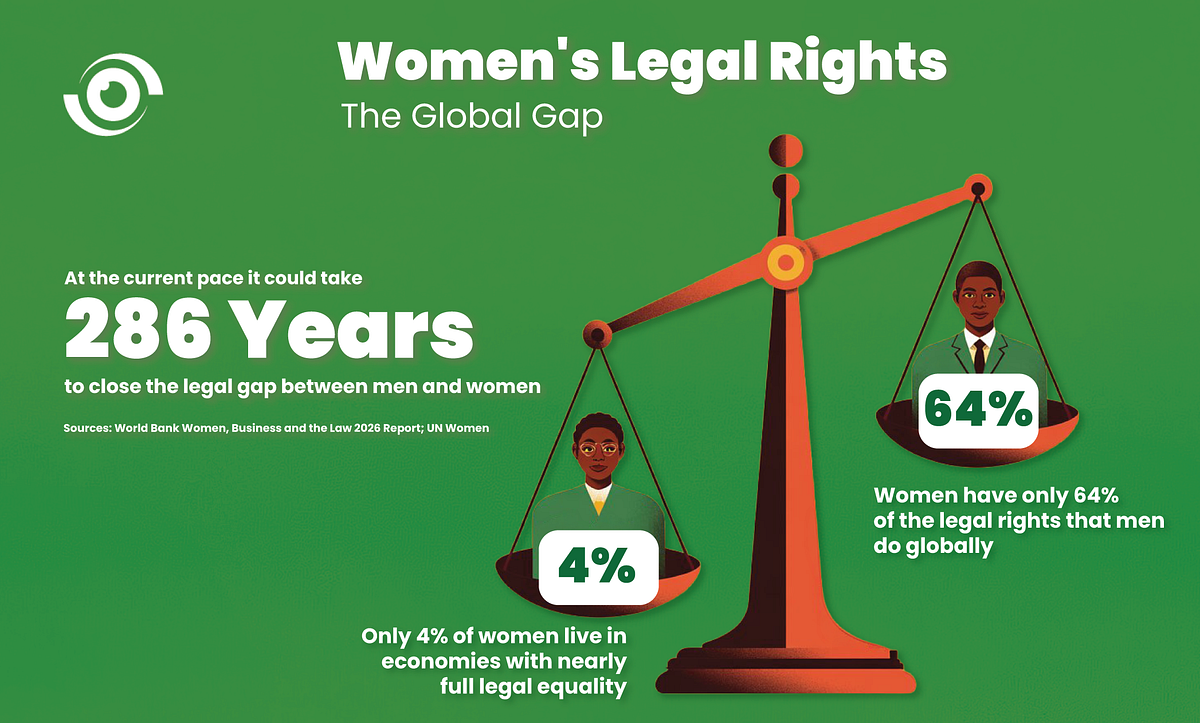
Yet the global picture is gloomy. Only 4% of women worldwide live in economies that provide nearly full legal equality, and at the current pace, it could take 286 years to close legal protection gaps between men and women. Even where gender-equal laws exist, implementation systems are missing globally, and fewer than half of the policies and institutions women need to exercise their rights are in place. IWD 2026 lands in a moment when justice systems are being tested by conflict, repression, and political tension, conditions that weaken the rule of law and widen impunity. According to UN Women, 676 million women and girls live within 50 km of deadly conflict, the highest level since the 1990s.
Nigeria is not immune to this global squeeze on justice. IWD 2026 is urgent in Nigeria for one simple demographic reason: the country is young. UNICEF estimates over 110 million Nigerians are under 18, meaning the protection of girls and the health, safety, and economic rights of women are not niche concerns; they shape the nation’s future workforce and productivity. But Nigeria’s rights conversation too often stops at policy documents and public statements. The real test is whether a woman can access justice without being priced out, whether survivors receive support without being blamed, and whether girls and women can access essential health care without stigma or gatekeeping.
When justice fails, women pay the price in safety, health, and income
Justice cannot be neutral in unequal systems. Survivors can be ignored, disbelieved, revictimised, or pushed out by legal fees, transport, childcare, and lost income. Women face greater obstacles to justice than men in nearly 70% of surveyed countries. In Nigeria, these obstacles collide with real capacity limits. The Legal Aid Council exists to provide free legal assistance and representation, legal advice, and alternative dispute resolution, yet demand is enormous, and access is uneven across geography and income. If justice is meant to be equal protection, then legal aid cannot remain a side note, but must be treated as part of the infrastructure of rights.
And because violence is a rights issue and a health issue, health systems also become part of justice. The World Health Organization (WHO) estimates that nearly 1 in 3 women globally have experienced physical and/or sexual violence. That violence drives injuries, trauma, depression, unwanted pregnancy, sexually transmitted infections, and long-term health complications, yet many countries still lack comprehensive post-rape care policies. WHO’s global policy status review found that less than half of countries include a complete package of key post-rape services (emergency contraception, HIV PEP, and STI prophylaxis) in policy.
Women’s health is not SRHR only; it is a life-course equity issue
Sexual and Reproductive Health and Rights (SRHR) is a critical part of the rights conversation, but it cannot be the whole of it. Women’s rights include the right to the highest attainable standard of physical and mental health across the life course, including pregnancy and childbirth, yes, but also noncommunicable diseases, cancer, mental health, disability, ageing, and access to care.
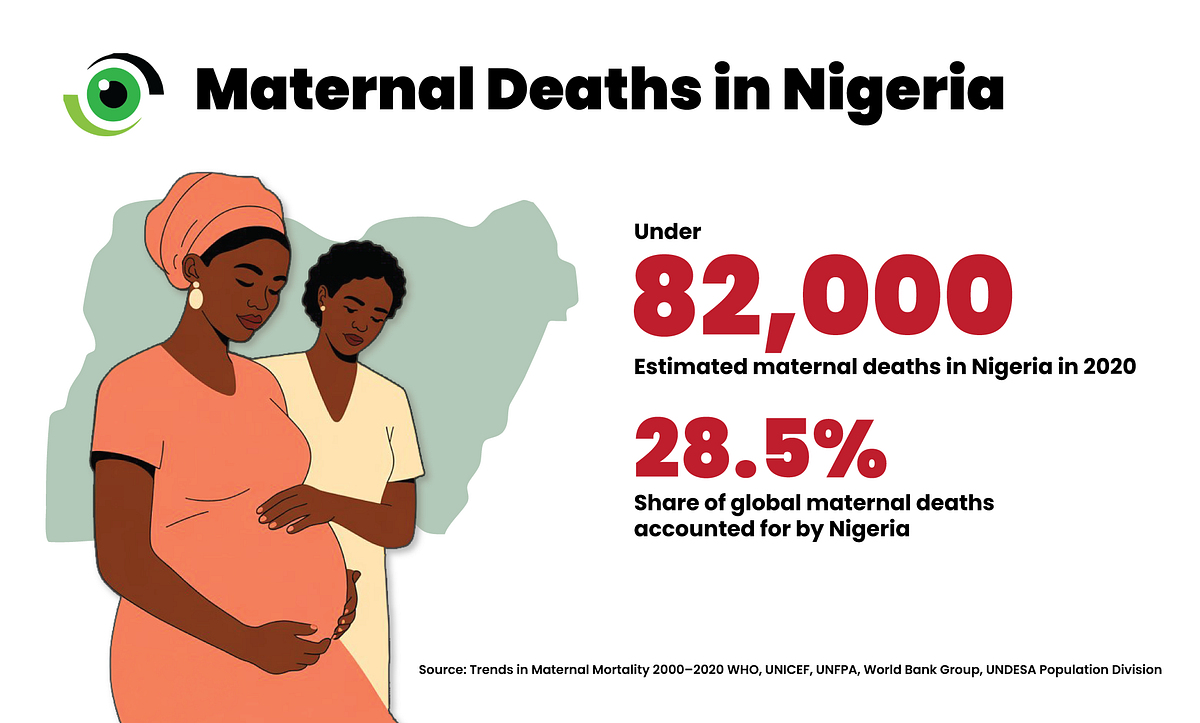
Still, SRHR remain one of the clearest windows into how law, services, and justice either protect women or fail them. Nigeria carries one of the highest maternal mortality burdens in the world. In 2020 alone, an estimated 82,000 women died from pregnancy-related causes, accounting for about 28.5% of global maternal deaths. Nigeria’s national clinical guidance have repeatedly reiterated the scale of the challenge and the need to prevent avoidable maternal deaths.
For girls and adolescents, the economic penalty of rights failure is also visible in the data. Nigeria’s adolescent fertility rate remains high at 86.4 births per 1,000 girls aged 15–19, with significant consequences for completing school, skills acquisition, and lifetime income.
Child marriage is still a major structural barrier to girls’ autonomy and women’s long-term wellbeing. UNICEF’s child marriage profile for Nigeria notes that 3 in 10 girls were married before age 18. These are not just “women’s issues” as a sector, they are governance issues that determine who survives, who learns, who earns, and who can participate in society without fear.
Why Nigeria must treat women’s health rights as economic policy and not charity
If Nigeria wants growth with equity, women’s health rights must be treated as economic policy, not charity, not a commemorative slogan, and not an afterthought. There are three policy channels that make the economic case unavoidable:
- When girls are forced into early marriage, pushed out of school by early pregnancy, or denied safe learning environments, the country loses skills, earnings, and productivity.
- Preventable maternal deaths and avoidable complications increase costs for households and strain a health system already facing multiple pressures.
- When women cannot access protection from violence, fair workplace conditions, or remedy through courts and legal aid, they are more likely to lose income, exit work, or remain trapped in cycles of dependency and harm.
Nigeria has legal instruments and institutions to protect women and children. The Violence Against Persons Prohibition (VAPP) Act has been domesticated in many states. Yet adoption does not always translate into implementation, and implementation does not necessarily guarantee access. For child protection, the federal government stated that the Child Rights Act is now law in all states and the FCT, while also admitting that domestication must be matched with gazetting, funding, and implementation.
So, the real question is not “Do we have laws?” It is “Can a woman safely report? Can she access care? Can she get legal support? Can the system protect her from retaliation? Can courts deliver timely justice?”
What “Rights. Justice. Action.” should look like for women and girls in Nigeria
IWD 2026 is a demand for action that is visible in budgets, systems, and enforcement. Nigeria’s response should be cross-sector and include:
- Treat legal aid, survivor support, and case management as public goods, not optional projects. Expand and strengthen access to Legal Aid Council services, especially outside major urban centres.
- Standardise survivor pathways across health, police, social welfare, and justice. Reduce the risk of survivors being retraumatised when seeking help through consistent protocols, privacy protections, and clear referral systems. Use state-level response platforms and reporting channels more transparently (with safeguards).
- Post-rape care must be available and complete. Ensure facilities can provide the full minimum package, supported by national/state protocols and training.
- Use Nigeria’s own clinical guidance as a delivery benchmark by strengthening PHC referral networks, emergency transport readiness, blood availability, respectful maternity care, and quality improvement.
- Scale prevention of child marriage and keep girls in school, using evidence-led approaches and local leadership. Pair this with women-focused interventions, such as economic protection, workplace safeguards, and health access beyond reproductive health.
International Women’s Day 2026 is calling on Nigeria to establish enforceable rights for women and girls. Rights without justice are just words. Nigeria cannot build a productive, stable, and healthy society while women are priced out of justice, while survivors face stigma, and while preventable deaths remain normalised.
The Nigerian government must defend women’s rights as a matter of governance, fund justice and health systems as infrastructure, and deliver measurable action for all women and girls.