


Yero S. Bah (Lead writer)
For decades, health facilities across The Gambia have relied on paper registers to record antenatal, delivery, postnatal, immunisation, and child health data. The handwritten logs, often incomplete, inconsistent, or illegible, formed the backbone of the country’s Health Management Information System (HMIS). This manual system came with serious limitations, such as fragmented records, duplicate entries, delayed reporting, and an inability to link data between mothers and their children.
The consequences were severe. Missing or inconsistent data made it difficult for health workers to track patient histories, follow-up with mothers and newborns, or detect disease outbreaks in time. At the national level, policymakers struggled to allocate resources accurately, while donors and programme planners lacked the data needed to design responsive interventions.
In response, a quiet revolution is underway at Bundung Maternal and Child Hospital (BMCH) in Serekunda, The Gambia’s largest city. The introduction of Smart Paper Technology (SPT), a hybrid system that bridges familiar paper workflows with automated data digitisation, has transformed the country’s approach to health information management. Launched in 2017, the SPT project was a collaborative initiative involving The Gambia’s Ministry of Health, the Medical Research Council of The Gambia (MRCG) at the London School of Hygiene & Tropical Medicine, the Shifo Foundation, the United States Centers for Disease Control and Prevention (US CDC), and Bundung Hospital.

The Smart Paper Technology
Initially piloted at Bundung and Fajikunda health facilities, the system focused on strengthening immunisation and primary healthcare services. It is now being expanded to cover the full range of maternal and child health services, including antenatal, delivery, and postnatal care. The technology works by assigning unique patient identification numbers, barcodes, and QR codes to every mother and child. Health workers fill out structured paper forms at the point of care, just as they always have, but instead of being copied into bulky registers and tallied by hand, the forms are scanned, digitised, and synchronised with District Health Information Software 2 (DHIS2), an open-source data platform used globally for health reporting. This innovation preserves the simplicity of paper-based recording while eliminating its inefficiencies.
“Smart Paper Technology has improved our data entry, collection, and storage,” said Fatoumatta Saidykhan, Medical Records Supervisor at Bundung Hospital. “We use far fewer registers now, and records are easier to retrieve.” She further revealed that through the SPT solution, patients receive SMS alerts two days before their scheduled hospital visits to notify them of their immunisation appointments, antenatal/postnatal visits, and check-ups for themselves and their babies. On data security, the system has not only reduced paperwork, but also enhanced data accuracy and security. “Permissions are restricted based on staff roles, ensuring only authorised personnel can access specific data within the platform,” she added.
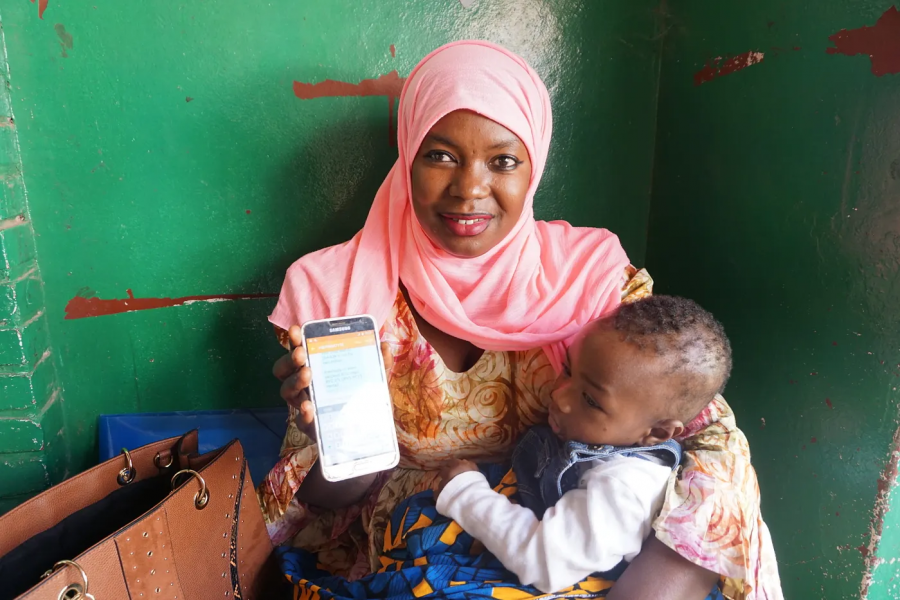
Image credit: Shifo Foundation
According to Joseph S. Mendy, an Immunisation and Public Health Officer at the Bundung Maternal and Child Hospital, paper records were familiar, but the Smart Paper Technology solution is more reliable, saves time, and prevents data loss, as experienced with the manual system. He added that, “It gives us real-time stock levels of vaccines, it is great in stock management, and nurses appreciate it. Printing manual papers is no longer an issue, and we can track the number of patients seen per day. Like today, we have seen 200 patients,” Mendy revealed.
For Famara Fofana, a cashier at the Bundung Maternal and Child Hospital’s registration desk, the SPT solution works perfectly during emergencies, as nurses can easily go through the records and data of patients by just slotting in their phone numbers into the system to access their medical history in no time. “The system keeps all relevant details of patients’ medical histories, including medication history, outpatient notes, and maternal and newborn records. We can share records with nurses without leaving our desks,” he said.

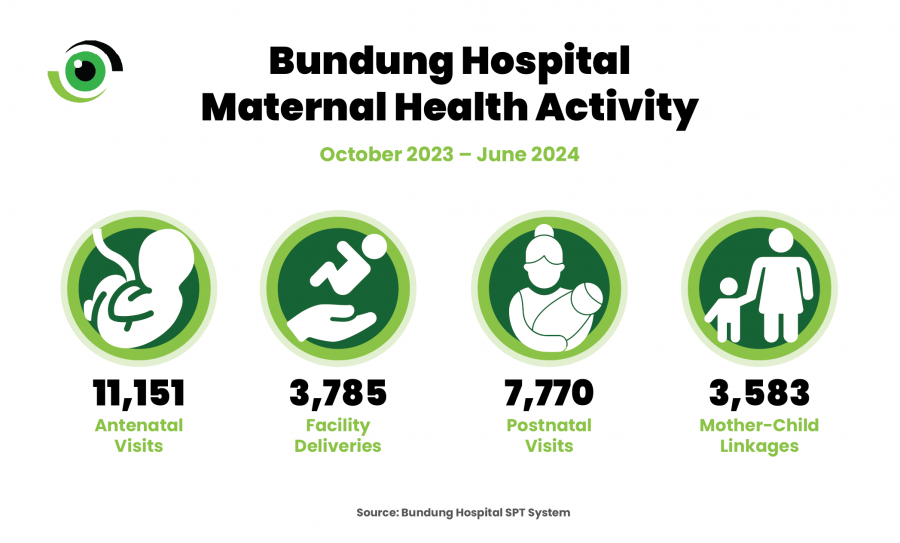
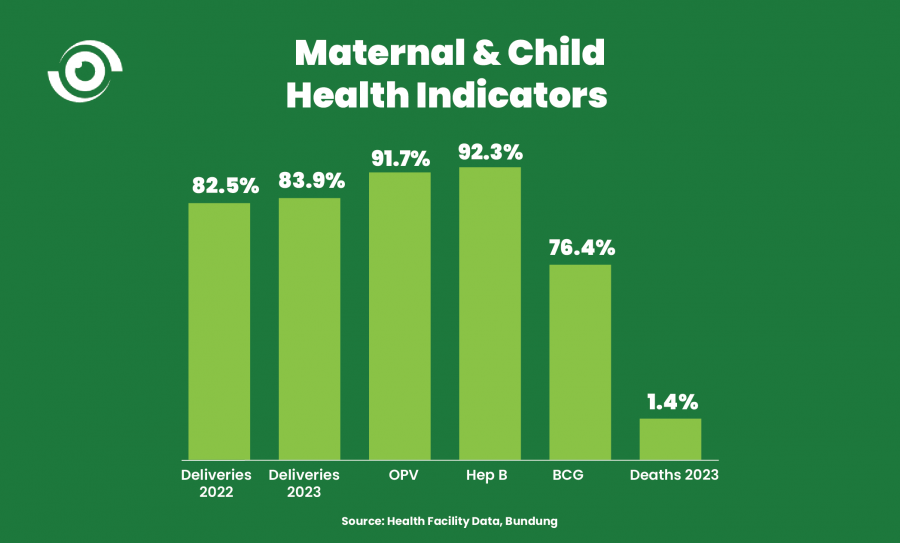
Data accuracy and timeliness have improved, reducing reporting lags from months to days. This has given health authorities near real-time visibility of maternal and child health indicators, a game-changer for surveillance and planning. Facility records show changes over the same period as the SPT rollout. Facility-based deliveries in Bundung’s catchment area rose from 82.5% in 2022 to 83.9% in 2023, while immunisation coverage for birth doses reached impressive levels. Oral Polio Vaccine (OPV) at 91.7%, Hepatitis B at 92.3%, and Bacillus Calmette–Guérin (BCG) at 76.4%. At the same time, institutional deaths declined from 2.1% in 2022 to 1.4% in 2023. “The data quality, timeliness, and linkage achieved through SPT mean we can now monitor health outcomes more accurately and respond faster,” noted a senior official at the Ministry of Health who requested anonymity.
Implementation challenges and trade-offs
Despite its success, implementing SPT has not been without challenges. Stable electricity, adequate scanning equipment, and reliable internet connectivity remain critical bottlenecks, especially in rural areas. In addition, healthcare workers need continuous training not only in clinical care but also in accurate form completion, scanning protocols, and data management.
To address these gaps, the Shifo Foundation contracted Dipika Roy, an international public health consultant, to oversee the digitisation solution, and guide the transition process. Roy described the early days as demanding but transformative. “Bundung Hospital was chosen for its tech-savvy staff and the ability to pilot such solutions effectively,” Roy explained.

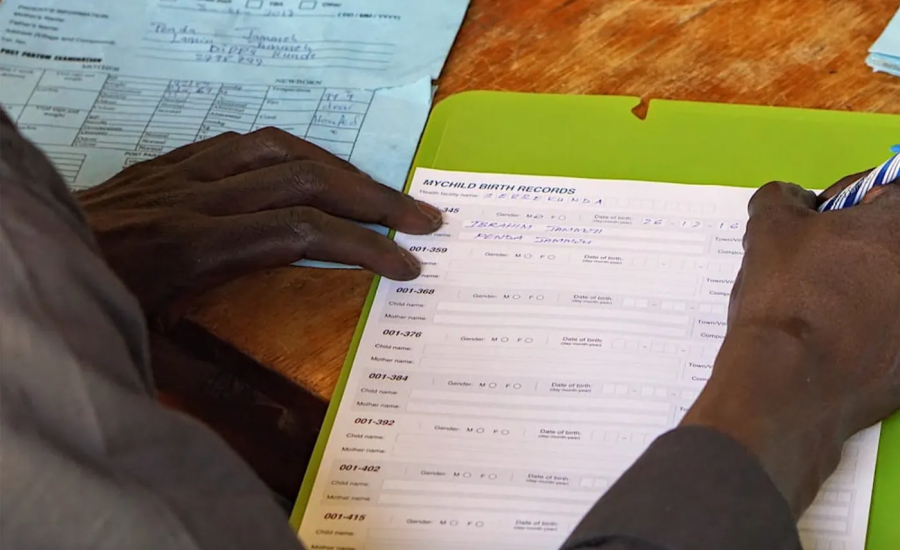
Roy emphasised that the system represents more than just a digital upgrade; it is a paradigm shift in health system accountability and efficiency. “By linking maternal and child records, SPT helps ensure continuity of care. It also supports universal health coverage by improving data quality, equity, efficiency, and transparency,” she said.
More than record-keeping
The success of the Bundung pilot has drawn the attention of national stakeholders eager to replicate its impact elsewhere, which led to the Expanded Programme on Immunisation (EPI) across the country. Evaluators noted that the system allows health planners to monitor key indicators in near real-time, enabling faster responses to vaccine safety signals, improved supply chain management, better tracking of defaulting mothers or infants, and more precise resource allocation.

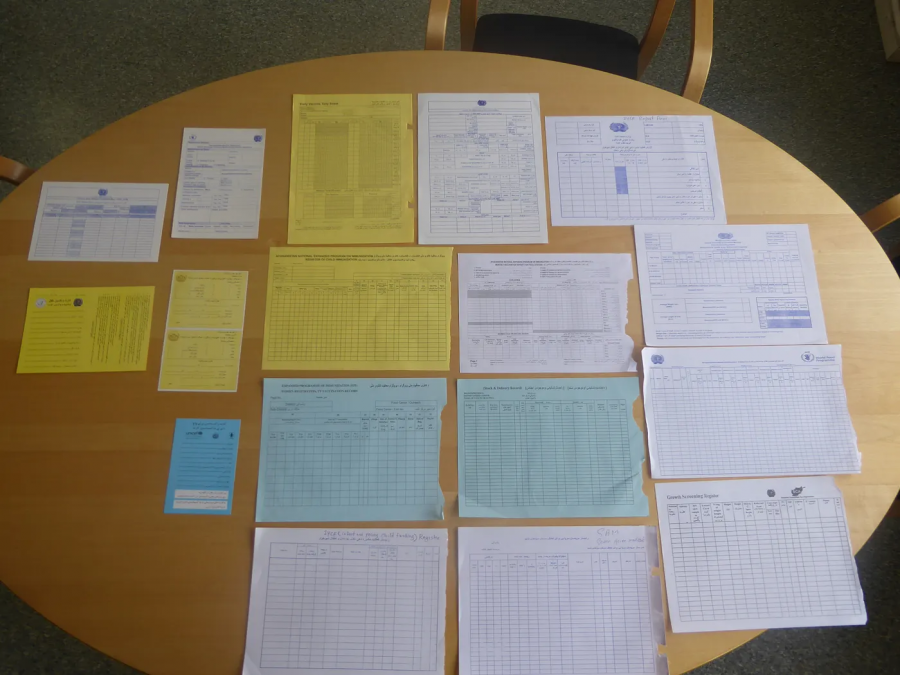
Image credit: Shifo Foundation
As the system scales, the Bundung Hospital and its partners are exploring new frontiers, including digital stock management (tracking medicines, vaccines, and consumables) to prevent shortages and wastage. “The successful SPT solution in immunisation and primary care has encouraged the project to expand to stock management in all facilities,” said Roy. “It will allow us to effectively trace, control, and manage medical supplies across the country.”
Beyond efficiency, SPT also frees health workers from the heavy administrative burden of paperwork, allowing them to focus more on patient care, according to Fatoumatta Saidykhan, the Medical Records Supervisor.