



Uche Kennedy and Sunday Oko (Lead writers)
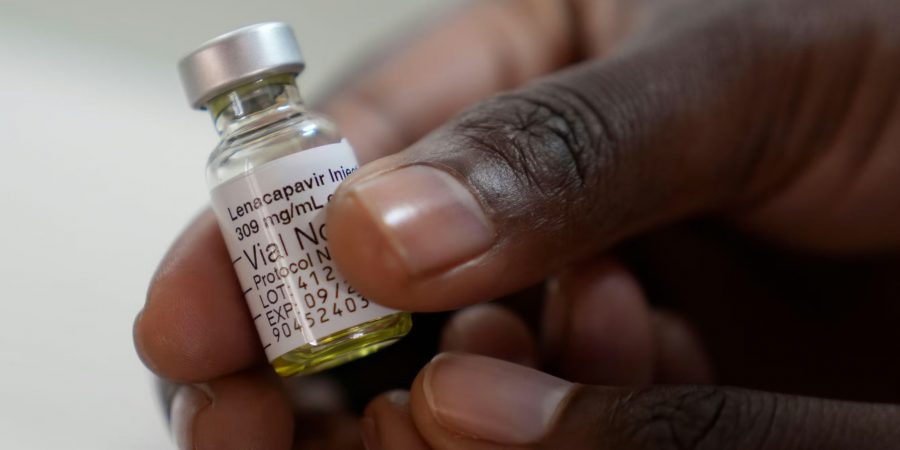
On 14 July 2025, the World Health Organization (WHO) issued new guidelines recommending twice-yearly injectable lenacapavir as an additional pre-exposure prophylaxis (PrEP) option for HIV prevention. In large trials, twice-yearly lenacapavir delivered near-complete protection against HIV, including zero infections in one major study and very few in another. The guidance brings new momentum to a prevention response that has slowed, but it also raises hard questions about access, equity, and delivery readiness. For Nigeria, these questions are immediate. With an estimated 1.9 million people living with HIV, progress is real, but new infections continue, especially among young people and key populations.

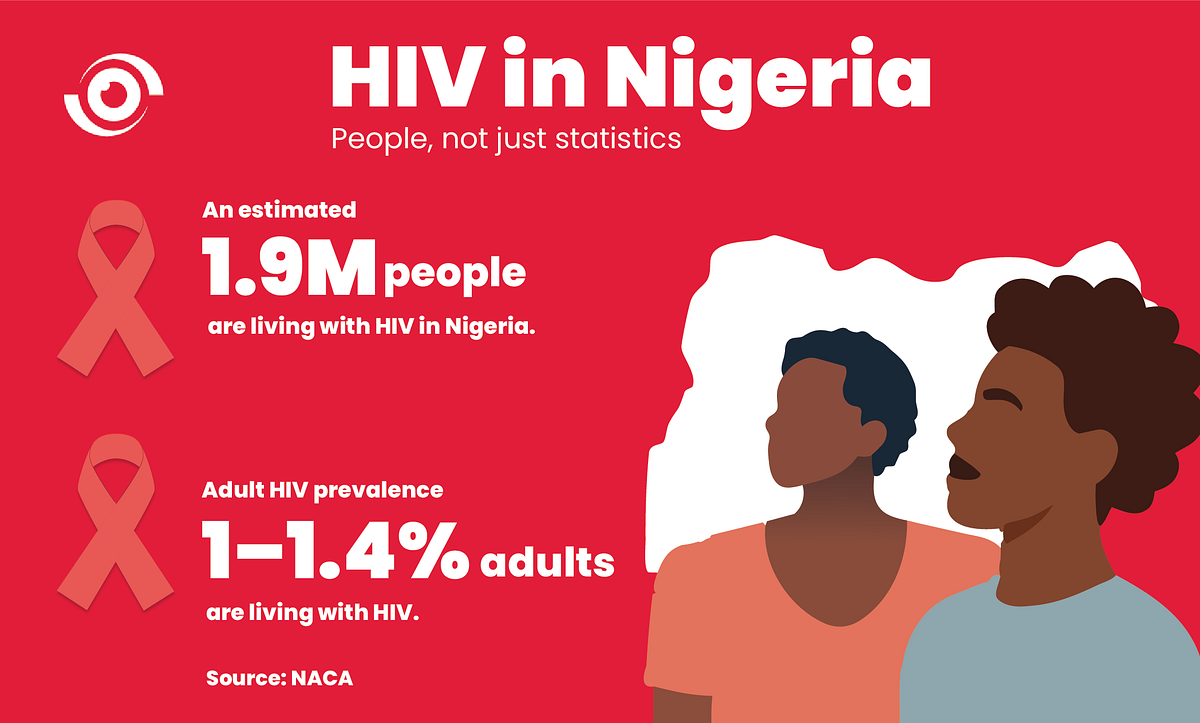
Nigeria’s HIV epidemic shows wide variation and remains a significant public health challenge. National adult prevalence is estimated at around 1–1.4% among adults aged 15–49 years, but risk varies sharply by age, gender, and geography. Young women aged 20–24 are more than three times as likely to be living with HIV as young men of the same age. Across states, prevalence is higher in the South-South and North Central zones and much lower in parts of the North-West, with high-burden states including Akwa Ibom, Benue, and Rivers. Despite progress in expanding treatment access, prevention gaps persist. Nigeria remains among the countries with the highest numbers of new paediatric HIV infections, indicating that prevention for pregnant women, retention in care, and early infant diagnosis are still not reaching enough families.
What makes lenacapavir different?
As Nigeria considers how to sustain momentum in HIV prevention, lenacapavir represents a potential shift in how protection can be delivered to those most at risk. Unlike daily oral PrEP, which can be hard to sustain where stigma, disclosure risks, and pill fatigue are real, lenacapavir is given as a subcutaneous injection every six months. In the PURPOSE 1 clinical trial, there were no infections in the lenacapavir group; in the PURPOSE 2 trial, there were two, far fewer than in the comparison arms. These results place lenacapavir among the most effective HIV prevention tools currently available.
The real test, however, is not whether lenacapavir works; it does. The test is whether it can be delivered at scale, equitably and sustainably, within real-world health systems. For Nigeria, this means whether lenacapavir can be made accessible, priced within available budgets, delivered through trusted, confidential services, and targeted to people at the highest risk without stigma or delay. Lenacapavir offers a practical advantage where twice-yearly dosing can improve adherence, protect privacy, and reduce reliance on daily pill-taking; constraints that have limited the scale-up of oral PrEP.
WHO positions lenacapavir as an additional choice alongside oral PrEP, long-acting cabotegravir, and the dapivirine vaginal ring, within a combination prevention approach. Choice matters, particularly for populations that have not been well served by existing options. Its six-monthly schedule could boost uptake and persistence, but it also introduces new delivery demands. Each visit must include testing, counselling, safe injection delivery, and follow-up. For Nigeria, this presents both an opportunity and a systems test. Impact will depend on policy choices, including political commitment, domestic funding, community trust, and delivery systems that meet the needs of key and priority populations.
From promise to access
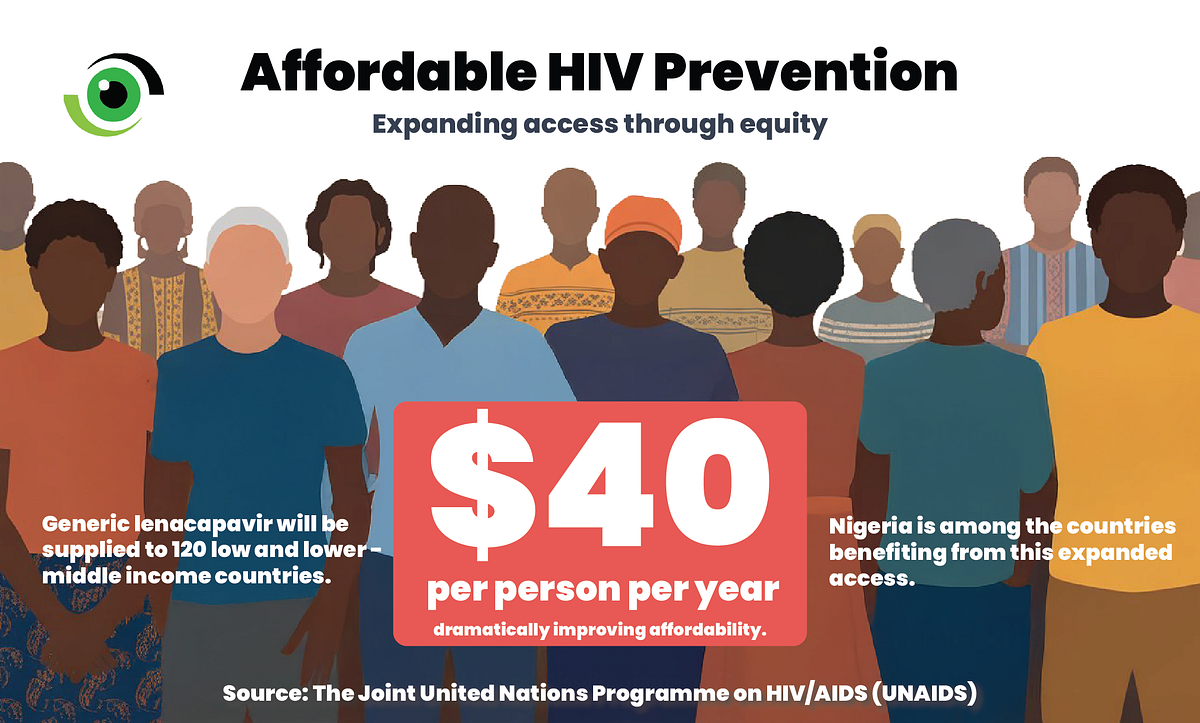
If lenacapavir is to move from clinical success to population impact, affordability will be key. The biggest barrier to reaching Nigerians who need lenacapavir is cost, and until prices fall, access will remain a promise, not a reality. In the United States, list pricing for lenacapavir has been reported at roughly $28,000 per person per year, a level entirely misaligned with Nigeria’s largely donor-financed HIV response and current prevention budgets. Recent developments, however, offer cautious optimism. In September 2025, UNAIDS and partners, including the Gates Foundation, outlined a pathway for generic lenacapavir at about $40 per person per year for 120 low- and lower-middle-income countries, under Gilead’s voluntary licences with six generic manufacturers. This price point, while not yet guaranteed, would fundamentally change the feasibility of large-scale PrEP delivery in countries such as Nigeria.
Nigeria is among the countries expected to benefit from these licensing and access arrangements, subject to regulatory approvals and procurement decisions. Yet timing remains a challenge. Large-scale generic availability is expected from 2027 at the earliest, depending on regulatory approvals and manufacturing scale-up. In the interim, a limited ‘not-for-profit’ supply arrangement supported by the Global Fund aims to reach up to two million people globally over three years, which is helpful. This represents a way to fill the gap, but one that remains far below the global and national need. Therefore, decisions taken now on policy alignment, regulatory readiness, delivery platforms, and financing will determine whether lenacapavir becomes another high-impact innovation that arrives late and at limited scale, or one that is integrated early into a sustainable and equitable prevention response.
Other implementation challenges
Affordability, while necessary, will not on its own deliver impact. Nigeria will need to address practical implementation challenges to translate access into effective use.
- NAFDAC will require an efficient and predictable review pathway, clear product labelling for PrEP use, and early alignment with national HIV prevention guidelines so procurement and rollout can move fast once approved is granted.
- Long-acting PrEP needs trained health workers for safe injections, infection prevention and control (IPC), and waste management, alongside reliable stock control, and simple systems to track six-monthly return visits, especially in PHC and community-based delivery settings where PrEP scale-up will need to occur.
- WHO recommends the use of HIV rapid diagnostic tests for people starting or continuing long-acting injectable PrEP. Nigeria will need to implement this guidance in a way that still detects acute infection, as starting long-acting PrEP during undiagnosed infection can drive resistance and harm future treatment options.
- Supply will not equal uptake. Nigeria will need sustained community-led engagement that protects privacy, builds youth-friendly and key population-safe services, and actively addresses stigma and fear of exposure, especially where criminalisation and discrimination drive people away from care.
- Lenacapavir should strengthen, not disintegrate, combination prevention. It should be delivered alongside condoms, oral PrEP, long-acting cabotegravir where available, and treatment-as-prevention (U=U). It must also be offered with STI services and contraception, because PrEP does not prevent other STIs or unintended pregnancy.
- Nigeria must design delivery for adolescent girls and young women in high-burden states and key populations, those most at risk, while resolving confidentiality barriers, consent concerns for adolescents, and reducing the indirect costs of care, including transport, time away from work or school, and fear of being seen accessing services.
Funding the future
Nigeria’s HIV response relies heavily on external funding, and recent funding uncertainty has already disrupted prevention services, exactly when scale-up of newer tools demands fresh investment. Domestic commitments have increased in some areas. In February 2025, the Federal Executive Council approved $1.07 billion for health sector reforms under the HOPE programme and a separate N4.8 billion for HIV treatment expansion, but funding for prevention and commodity security still lacks clear domestic budget lines. For value for money, Nigeria should prioritise lenacapavir for adolescent girls and young women in high-burden states, and key populations, paired with strong testing, follow-up systems, and community-led delivery.
Early experience with long-acting PrEP roll-outs in Southern Africa shows the value of community-based delivery, strong demand creation, and systems that bring people back on time. For Nigeria, success will depend on early preparation, strategic targeting, deep community engagement, and increased domestic investment. Lenacapavir should expand choice, not displace what works. In prevention, options are not a luxury; they are an adherence strategy. If Nigeria pairs this innovation with equity-first delivery, reliable financing, and real accountability for access, lenacapavir could be a turning point, not just in technology, but in who finally gets protected.