



Onyinye Oranezi (Lead writer)
On a recent Saturday afternoon at a neighbourhood hair salon, a casual conversation with two secondary school girls revealed something telling. Both are boarders in junior secondary school, aged 14 and 16. When asked if water shortages or unusable toilets affected their experience at school, they did not hesitate to respond.
One explained that when the hostel bathrooms run out of water, girls go to other rooms to find stored water just to wash or use the toilet. The other said that during water shortages, some girls skip bathing, as she put it, “girls don’t take a bath before changing”, so they can save what little water they have saved for the next morning before class.
As the conversation continued, a young mother joined in. She had recently delivered twins at a primary health care (PHC) facility and said her mother had to bring bags of sachet water because the facility’s water supply was unreliable. She kept buying water to bathe and clean herself and her babies, and sometimes, the tap water smelled unpleasant.
These stories are common in Nigeria, but they should not be dismissed as routine. Access to safe water, sanitation, and hygiene (WASH) is not just a service issue. It influences whether girls can stay in school, whether women live with dignity and safety, and whether mothers and newborns survive childbirth.
If Nigeria is serious about education, gender equality, and maternal health, gender-responsive WASH must be treated as essential infrastructure for both development and health system performance.
Why This Matters in Nigeria
The scale of the challenge is clear. According to the 2024 Nigeria Demographic and Health Survey (NDHS), only about 49% of households have access to basic sanitation, and only 37% have a handwashing facility with soap and water. WASHNORM data also shows that 23% of the population still practises open defecation, while only 17% of households have access to basic hygiene services. These are not small gaps. They shape daily life, health risks, and opportunities, especially for women and girls.
The consequences are time lost, higher health risks, and reduced productivity, all of which fall heavily on women and girls. The impact is visible across homes, schools, and health facilities. When water and sanitation systems fail in these places, the consequences are on girls, who miss school, women lose privacy, and risks during pregnancy and childbirth increase.
Each year on 22 March, the world marks World Water Day to highlight the role of water in development and wellbeing. The 2026 theme, Water and Gender — Where Water Flows, Equality Grows, highlights how access to safe water and sanitation shapes gender equality.
Girls’ Schooling Depends on Water, Toilets, and Menstrual Health
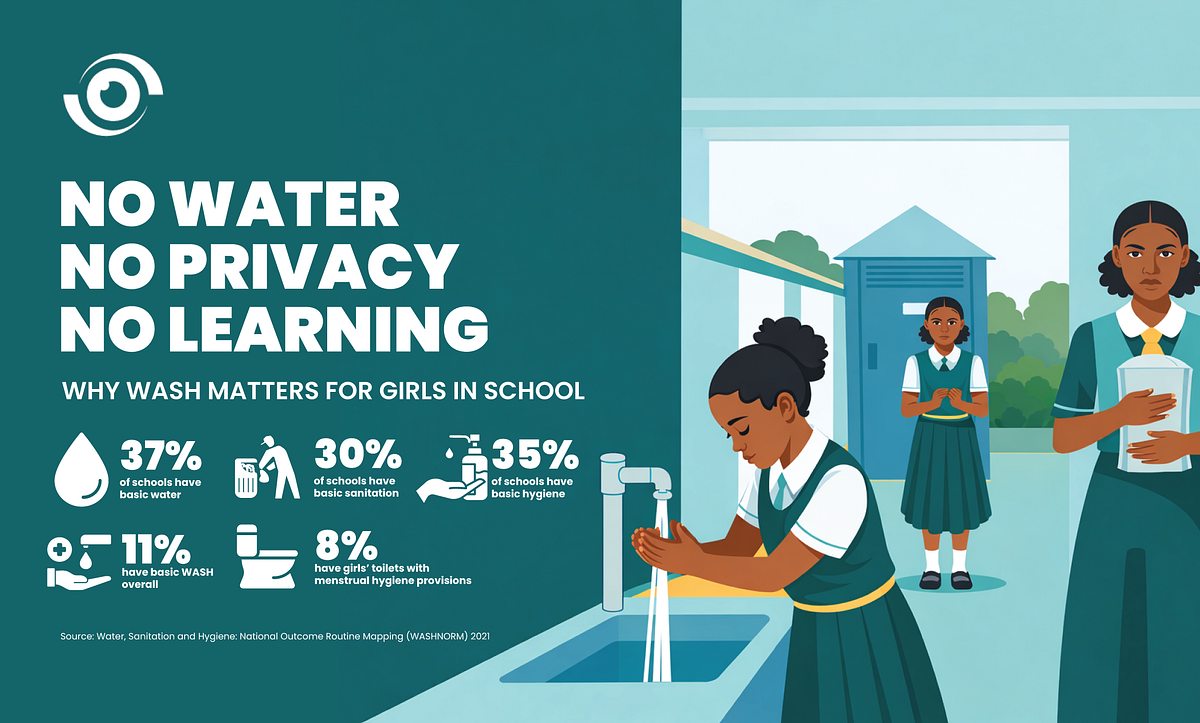
For girls, water and sanitation are closely linked to their ability to stay in school. WASHNORM data shows that only 37% of schools have basic water services, 30% have basic sanitation, and 35% have basic hygiene services. Just 11% meet basic WASH standards overall, and only 8% have toilets that support girls’ menstrual hygiene. These figures point to a serious gap.
When schools lack reliable water, usable toilets, soap, and private spaces for managing menstruation, girls are the ones most affected. It shows up in missed school days; the burden does not fall equally on all students. WASH is just as essential as classrooms and teachers. Nigeria cannot expect to keep girls in school and improve learning while treating school WASH as optional.


Women’s Dignity and Safety Depend on Privacy and Time
The burden is not shared equally. UNICEF and WHO report that in households without water, women and girls are responsible for water collection in 7 out of 10 households globally. That time comes at a cost because time spent fetching water is time taken from school, paid work, rest, and care. When safe water is not available at home, gender inequality deepens every day, often in unseen ways.
The issue goes beyond schools. Privacy, safety, and basic care are basic human needs, not luxuries. Women should not have to delay urination, manage menstruation without privacy, or navigate unsafe sanitation conditions in a public place. Access to water and sanitation is part of what enables women and girls to navigate daily life with dignity, safety, and respect.
WASH as Infection Prevention and Respectful Care
The implications for the health system are serious. WHO and UNICEF emphasise that functioning WASH services in health facilities are essential for preventing infections, ensuring patient safety, improving the quality of care, and promoting maternal and newborn health, especially during childbirth. Safe delivery is not only about skilled hands. It also depends on clean water, hand hygiene, safe toilets, clean surfaces, and proper waste management.
Yet the gaps in Nigeria are significant. About 59% of health facilities have basic water services, 12% have basic sanitation, and 30% have basic hygiene services. Only 6% have all three basic WASH services. Just 31% have handwashing facilities with soap and water accessible to both staff and patients, and in use.
This matters even more because many births still take place in settings that are poorly equipped. The 2024 NDHS summary shows that 56% of live births happen at home, 43% in health facilities, and 46% are attended by skilled providers. That means the conditions around childbirth, whether at home or in facilities, remain critical to the safety of mothers and newborns.
What Policies and Budgets Are Missing
Nigeria needs to stop treating WASH as a side programme and start treating it as core social and health infrastructure. The issue is not just whether taps, toilets, and handwashing outlets are installed, but whether they work every day. Only about 15% of schools have budgeted funds to maintain WASH facilities, and just 31% of health facilities with WASH facilities keep a dedicated budget for cleaning and maintenance. That is the functionality gap that policy must address.
Nigeria has national guidelines for WASH in health-care facilities, and the World Bank-supported Sustainable Urban and Rural Water Supply, Sanitation, and Hygiene (SURWASH) programme aims to reach about 6 million people with basic drinking water services, 1.4 million with improved sanitation services, and 2,000 schools and health-care facilities with better WASH services. The challenge now is implementation, maintenance, and accountability.
Actions That Nigeria Can Deliver in the Next 12–24 Months
Progress can move faster if gender-responsive WASH is prioritised across education and health systems. Three actions should come first:
1. Nigeria should enforce minimum WASH standards in every primary health centre that provides maternity services and in all public schools, with clear attention to girls’ toilets, soap, handwashing points, waste management, and menstrual hygiene.
2. Nigeria should fund operations and maintenance as a routine service cost, not as an afterthought once construction is complete.
3. Nigeria should publish regular state and LGA scorecards on WASH in schools and health facilities so that gaps are visible and progress is measurable.
A Simple Test for Nigeria
The test over the next two years is straightforward. Can Nigeria ensure that schools have water, safe toilets, and hygiene services that work for girls? Can it ensure that primary health centres and maternity wards have the water, sanitation, hand hygiene, and waste systems needed for safe and respectful care? If the answer is yes, the results will show. More girls will stay in school with dignity. More women will move through daily life with privacy and safety. More mothers and newborns will receive care in cleaner, safer conditions.
These reforms should include women not just as beneficiaries, but as decision-makers in school WASH committees, community water structures, and facility oversight. That is what it means to take Water and Gender seriously.