



Habibat Lawal Ohunene and Chinwendu Iroegbu (Lead writers)
Across Nigeria, beauty products are part of everyday life. A woman might buy eyeliner from an open market, body cream from a neighbourhood chemist, powder from an online vendor, or a so-called “organic” mixture from a beauty seller recommended by a friend. For many families, products such as tìróò, creams, powders, and some skin-lightening products are familiar, affordable, and trusted. But trust is not the same as safety.
What goes into these products is rarely questioned or tested. Nigeria Health Watch’s March 2026 Lead Poisoning Social Listening Insights Report revealed that some local eyeliners, commonly known as tìróò, and certain skin-lightening creams contain lead. The findings highlight that beauty products can repeatedly expose women and children to lead, a dangerous yet often ignored risk.
When cosmetics are unlabelled, repackaged, informally mixed, poorly regulated, or contaminated with lead and other toxic substances, an ordinary beauty routine can pose a silent health risk. This is especially significant for women of reproductive age, pregnant women, babies, and young children, because lead exposure can damage the body even without obvious symptoms.
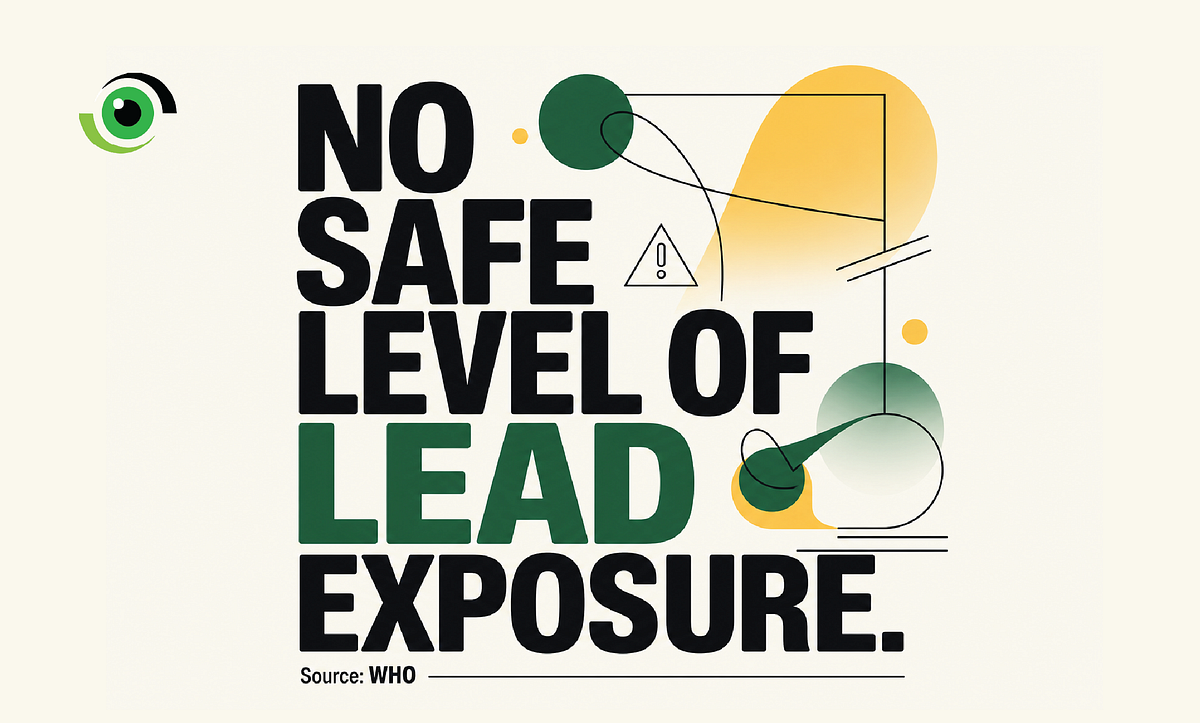
There is no safe level of lead exposure. Lead can harm multiple body systems, and is especially dangerous for young children and women of childbearing age. It can accumulate in the bones, where it may later be released into the bloodstreamduring pregnancy, exposing the developing foetus. Nigeria’s lead poisoning discussions have often focused on mining, battery recycling, paint, and industrial pollution. These are the main significant risks.

Nigeria’s National Policy and Action Plan on Lead Poisoning Elimination acknowledges that lead exposure can also originate from household and consumer products, including cosmetics, toys, medicines, and other everyday items. This is why cosmetics safety must now become a stronger part of Nigeria’s lead poisoning prevention agenda.
The problem is not beauty. The problem is unsafe products
Cosmetics are not the enemy. Women’s beauty routines are not the problem. Cultural products are not the problem. The real problem is a market where consumers are often expected to make safety decisions without reliable information. A woman cannot see lead in a cream. A mother cannot smell lead in eyeliner. A trader may not know that a product they are selling contains toxic metals. A pregnant woman may be careful about food and medicines, yet never be told that an unlabelled cosmetic product could also be a risk.
This is where regulation matters. Safety should not rely solely on consumer caution. It must be integrated into manufacturing, importation, labelling, distribution, retail, market surveillance, and health education. Some traditional eye cosmetics, including products sold as tìróò, tozali, kohl, kajal, or kwalli, have been found to contain high levels of lead. In one Centers for Disease Control and Prevention (CDC) investigation, a Nigerian tìróò product linked to increased blood lead levels in an infant was found to contain 82.6% lead.
A study in Anambra State found lead contamination in 62% of tested cosmetic products, with concentrations ranging from 0.10 to 42.12 mg/kg. The same report notes that investigations in Ibadan and Lagos found cadmium, lead, and nickel above international safety limits in some personal care products. These findings do not mean every cosmetic product is unsafe. They mean Nigeria cannot afford weak surveillance in a fast-growing cosmetics market.
Nigeria has policy momentum. The test is implementation
The Cosmetics Products Registration Regulations 2023 by the National Agency for Food and Drug Administration and Control (NAFDAC) require that cosmetic products must not be manufactured, imported, exported, advertised, sold, distributed, or used in Nigeria unless they are registered. NAFDAC regulations on bleaching agents also prohibit the sale and use of unsafe cosmetic products.
In March 2026, Nigeria approved its first National Policy on Cosmetics Safety and Health, nearly twenty years after previous attempts. According to the World Health Organization (WHO) Nigeria, the policy establishes a system to regulate the manufacture, importation, sale, use, and disposal of cosmetic products, with implementation expected across all 36 states and the Federal Capital Territory.
This is a critical policy moment. But policies written on paper will not protect the woman purchasing a repackaged cream in an open market. Nor will they safeguard a baby whose eyelids are lined with a lead-containing product. They also will not shield a pregnant woman who is never questioned about her cosmetic use during antenatal consultations. The next challenge is to implement solutions that genuinely reach the last mile.
What must change
1. Nigeria needs more robust market surveillance. NAFDAC, through its zonal and regional offices, should conduct regular, risk-based testing of cosmetics sold in open markets, supermarkets, pharmacies, beauty stores, salons, and online platforms. Surveillance should especially target unlabelled products, repackaged creams, informal mixtures, imported products lacking clear traceability, and traditional eye cosmetics marketed for use on children.
2. Public communication must become practical. “Lead is dangerous” is true, but it is not enough. People need simple instructions they can follow. Messages should be clear. “Do not use unlabelled tìróò on babies or young children”, “avoid repackaged creams without ingredient lists”, “check for proper labelling and NAFDAC registration”. This communication should not be limited to government websites. It should be heard in antenatal clinics, immunisation sessions, primary health care (PHC) facilities, markets, radio programmes, religious spaces, and community meetings.
3. Cosmetic safety should be integrated into maternal and child health services. Antenatal care should include simple questions about possible lead exposure, including use of unlabelled cosmetics, traditional eye products, some skin-lightening products, occupational exposure, household exposure, and products used on babies. Child welfare clinics and immunisation visits can also provide short safety messages to caregivers.
4. Enforcement must include the informal beauty economy. Many small traders and mixers operate due to demand, weak oversight, and limited compliance support. Nigeria needs strong enforcement against unsafe products, but it also needs practical guidance for small businesses, including how to register products, which ingredients are banned or restricted, how to label products correctly, and the penalties for putting consumers at risk.
5. Testing must also lead to care. Where exposure is suspected or confirmed, health workers need a clear pathway for confirmatory testing, exposure history, source investigation, nutrition counselling, follow-up testing, and referral for specialist care where blood lead levels are high.
Safe beauty is a women’s health issue
The burden of ensuring cosmetic safety should not rest solely on women. It should not be up to a pregnant woman to guess which products contain lead. It should not be left to just the mother to realise too late that a product she used on her child was unsafe.
Nigeria’s new cosmetics safety policy offers an opportunity to take action. However, success will not be measured by the launch of a policy document alone. It will be determined by whether harmful products are removed from the market, whether consumers receive clear warnings, and whether health workers know what to inquire about.
Lead poisoning and cosmetic-related exposure are preventable. The challenge now is to move from awareness to action, and from regulation to enforcement.