




Favour Solomon-Uwakwe and Maureen Moneke (Lead writers)
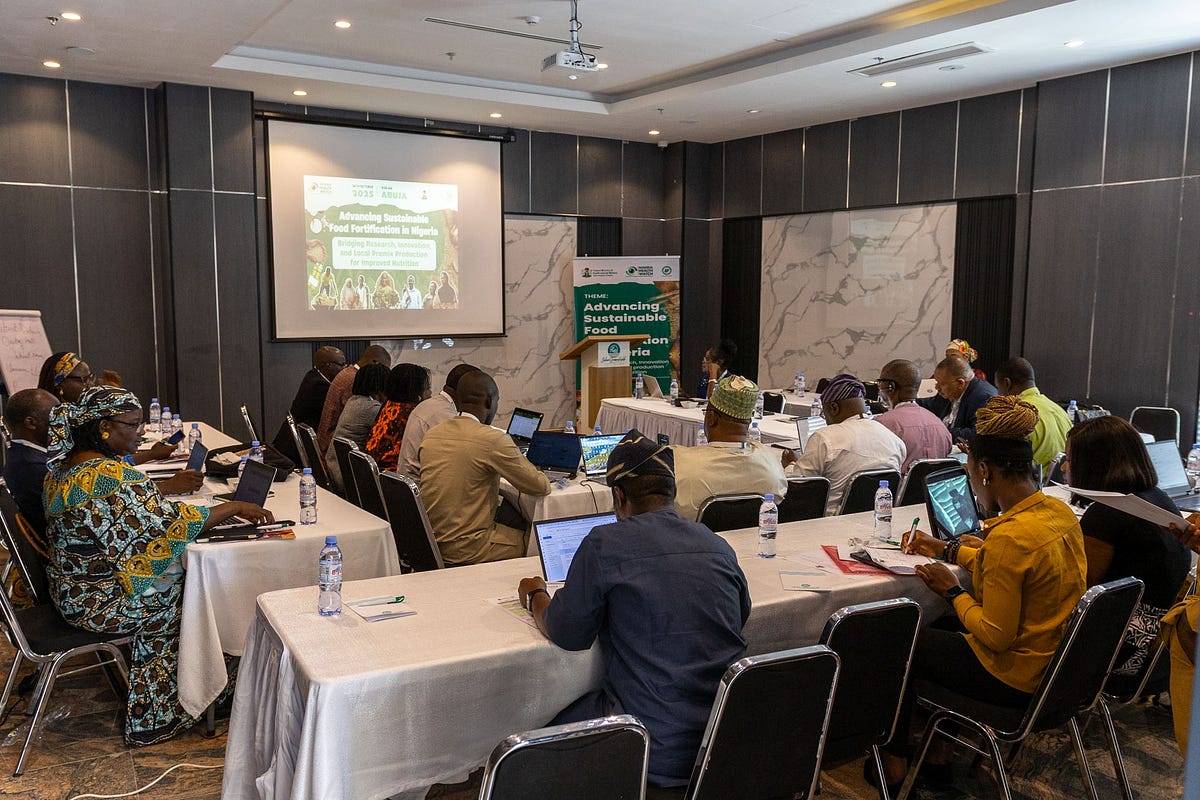
At the Academia–Micronutrient Deficiency Control (MNDC) Committee Roundtable on “Advancing Sustainable Food Fortification in Nigeria: Bridging Research, Innovation and Local Premix Production for Improved Nutrition,” one message was made clear. Nigeria cannot continue treating food fortification as a national priority while the evidence, industry coordination, and regulatory systems required to deliver it at scale are still being strengthened.
The roundtable highlighted a fundamental structural problem at the heart of Nigeria’s nutritional response. Food-related micronutrient deficiencies persist in Nigeria, and fortification coverage and implementation remain uneven across regions.
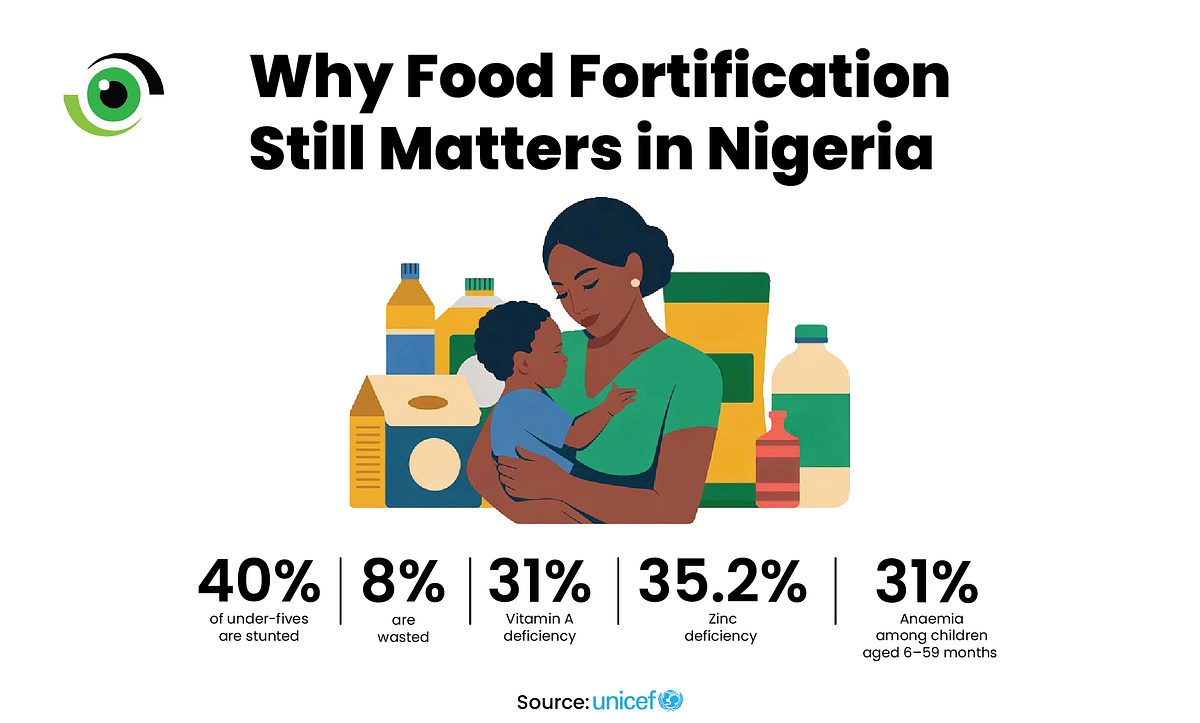
That matters because micronutrient deficiency is a significant issue in Nigeria’s health landscape. It is part of the broader crisis involving maternal and child undernutrition, poor diet quality, and limited access to vital nutrients. UNICEF’s 2024 situation analysis for Nigeria reports that 40% of children under five are stunted and 8% are wasted.
It also highlights that among children aged 6–59 months, vitamin A deficiency is 31%, zinc deficiency is 35.2%, and anaemia is 31%. Meanwhile, the World Health Organization (WHO) continues to describe anaemia as a major public health concern due to its impact on pregnancy outcomes, morbidity, cognition, and productivity.
Policy exists, but compliance remains weak
Food fortification remains one of the most practical tools available to address the anaemia burden on a large scale. WHO describes it as an evidence-based intervention for preventing, reducing, and controlling micronutrient deficiencies. Nigeria already has a regulatory framework for mandatory fortification of key food products.

Under the National Agency for Food and Drug Administration and Control (NAFDAC)’s regulations, table salt must contain iodine, while sugar and vegetable oil must include vitamin A. Related schedules also establish fortification requirements for flour categories used in widely consumed foods. That framework is important because fortification only works when nutrients are added consistently, measured accurately, and regulated effectively.
Nigeria has made progress, but progress should not be mistaken for completion. Data from UNICEF shows that 94% of tested households use iodised salt. That is important. However, it does not mean all iodisation quality issues are resolved, nor does it suggest that broader fortification performance is strong across all food vehicles. A survey in Ebonyi and Sokoto highlights the compliance challenge.
While many brands were fortified, only a small proportion of sampled sugar, oil, and wheat flour brands met the national standard, with significant variation across different vehicles. The lesson is not that fortification has failed. The lesson is that fortification needs better quality systems, improved monitoring, and more reliable domestic capacity.
Local premix is now a strategic national priority
That is why the roundtable’s emphasis on local premix production was so vital. Premix is the vitamin and mineral blend used to enrich foods during processing. If Nigeria aims for a resilient fortification system, it must address the fragility caused by weak local production capacity, limited applied research, and dependence on imported inputs and expertise.
The recent stance of the Federal Ministry of Health and Social Welfare (FMOHSW) already points in that direction. At the 2025 National Micronutrient Conference, the Ministry reaffirmed food fortification and salt iodisation as key priorities and subsequently established a National Advisory Committee on Micronutrient Deficiency and Control to promote a more coordinated, evidence-based approach.
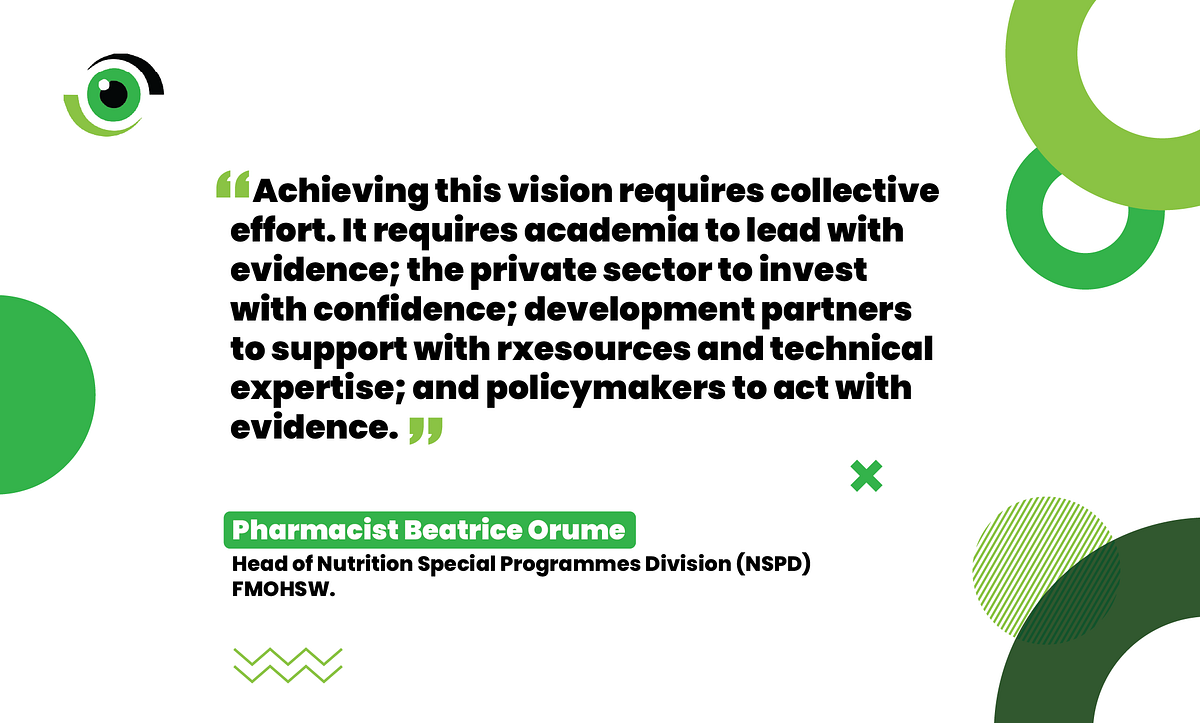
The roundtable also correctly recognised the political dynamics of the issue. As Pharmacist Beatrice Orume, Head of Nutrition Special Programmes Division (NSPD), FMOHSW said, “Achieving this vision requires collective effort. It requires academia to lead with evidence; the private sector to invest with confidence; development partners to support with resources and technical expertise; and policymakers to act with evidence.” That is exactly the right approach. Local premix production will not happen through regulation alone, nor through research alone. Instead, it needs a system where evidence informs products, products meet standards, and standards are enforced credibly.
Evidence should translate into industrial action
Nigeria faces more than just a fortification challenge; it also encounters a translation challenge. Universities, research institutes, and development partners produce studies, data, and technical insights, but much of this work still fails to influence decision-making, manufacturing, or scaling up. As Professor Kola Matthew Anigo, Department of Biochemistry, University of Abuja, stated at the roundtable, “Our decision-makers need evidence to guide them. When decisions are made without evidence, we cannot truly know where we are, where we are going, or whether we are making progress at all.” The issue is not solely the lack of evidence but also the weak institutional bridge between evidence and action.
The roundtable’s discussion on the disconnect between academia and industry was particularly significant. Professor Marshall Azeke of Ambrose Alli University highlighted that “without a clear meeting point, researchers will fail to understand the real needs of industry to translate it into research, but with proper training, even student research, however small, can be tailored to address key industry challenges.”Nigeria does not need more research in the abstract. It needs research that answers real industrial questions around nutrient stability, formulation quality, suitable food vehicles, shelf life, quality control, bioavailability, and cost-effective production processes within local conditions.
The same applies to laboratories and data systems. Without reliable micronutrient testing, traceability, and real-time quality data, neither regulators nor manufacturers can establish trust in a domestic premix ecosystem. That is why investment in modern fortification laboratories and digital monitoring should be regarded as essential industrial infrastructure, not as optional technical additions.
Global Alliance for Improved Nutrition (GAIN)’s digital fortification traceability work in Nigeria highlights this by demonstrating how real-time, traceable data can enhance oversight, improve decision-making, and support quality assurance throughout the value chain.

Local production must uphold standards
Localisation is not a substitute for standards. If Nigeria aims to expand its domestic premix capacity, it must do so in a way that safeguards quality, reassures manufacturers, and enhances enforcement. Stakeholders at the roundtable warned that ongoing reliance on imported premix and inputs makes local fortification vulnerable to supply shocks, foreign exchange pressures, and rising costs. This presents a serious resilience challenge. However, the solution is not merely to produce locally. The solution is to produce locally, regulate effectively, test thoroughly, and establish predictable conditions for investment.
That is why Ridwan Awosanya, Programme Manager at Civil Society-Scaling Up Nutrition in Nigeria (CS-SUNN), was right to argue that localising premix production is essential to Nigeria’s long-term nutrition resilience and self-sufficiency. A country with Nigeria’s population and nutrition burden should not remain permanently exposed to avoidable external risks in something as foundational as micronutrient fortification.
But self-reliance will not happen by rhetoric. It will require deliberate policy choices, such as an R&D platform linking universities with manufacturers and regulators, stronger public and private investment in laboratories and testing, incentives for industry-led innovation, and research on which Nigerian foods, including traditional vehicles, can be fortified effectively and accepted culturally.
The policy case is clear; execution must follow
The roundtable’s recommendations point in the right direction, but the national task now is execution.
1. The Federal Ministry of Health and Social Welfare (FMOHSW) should leverage this opportunity to move beyond mere support for fortification and see premix as a vital part of Nigeria’s strategic nutrition and industrial plan.
2. NAFDAC and the Standards Organisation of Nigeria (SON) should strengthen enforcement of standards and quality assurance.
3. Universities and research institutes should modify sections of their nutrition research agenda to focus on real production issues.
4. The industry should stop relying on the government and start co-investing in applied trials, testing systems, and product development.
5. Development partners should support the bridge, not just the evidence. The practical framework that enables research to translate into manufacturing, and manufacturing to yield better nutrition outcomes.
Nigeria does not require more isolated knowledge. It requires a robust system in which evidence advances, industry responds, and policy unites the entire chain.