



Shalom David and Uwaifiokun Okhuarobo (Lead writers)
Every dry season, the wards begin to fill.
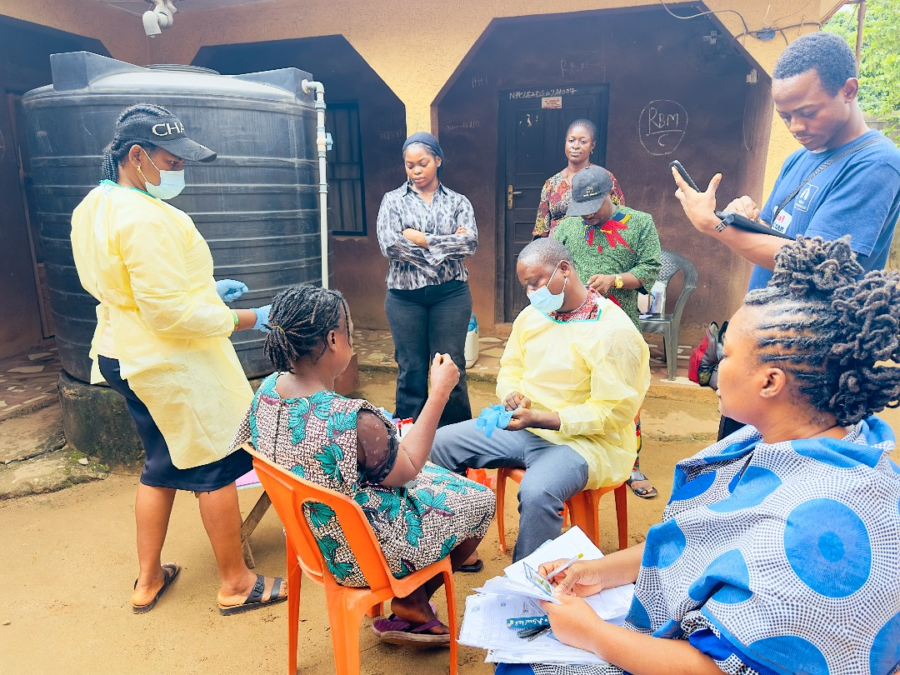
At Irrua Specialist Teaching Hospital in Edo State and the Federal Medical Centre in Owo, Ondo State, two of Nigeria’s treatment centres for Lassa fever, clinicians recognise the pattern all too well. A farmer arrives with a persistent fever that refuses to subside. A pregnant woman is rushed in from a rural community hours away. A child who often plays close to stored grains suddenly becomes critically ill.
For frontline health workers, these cases mark the familiar return of the Lassa fever season, a recurring public health challenge that continues to place communities and health systems under strain. But after more than half a century of outbreaks, Nigeria’s long battle with Lassa fever may also present an opportunity: to accelerate the development of the world’s first vaccine against the disease, protecting communities across West Africa.
Nigeria at the epicentre of the Lassa fever burden
Lassa fever remains one of West Africa’s most persistent infectious disease threats. The virus is transmitted primarily through contact with food or household items contaminated by infected rodents. It causes seasonal outbreaks that affect communities across the region. Each year, an estimated 100,000 to 300,000 infections occur across West Africa, with Nigeria consistently reporting the highest number of confirmed cases.
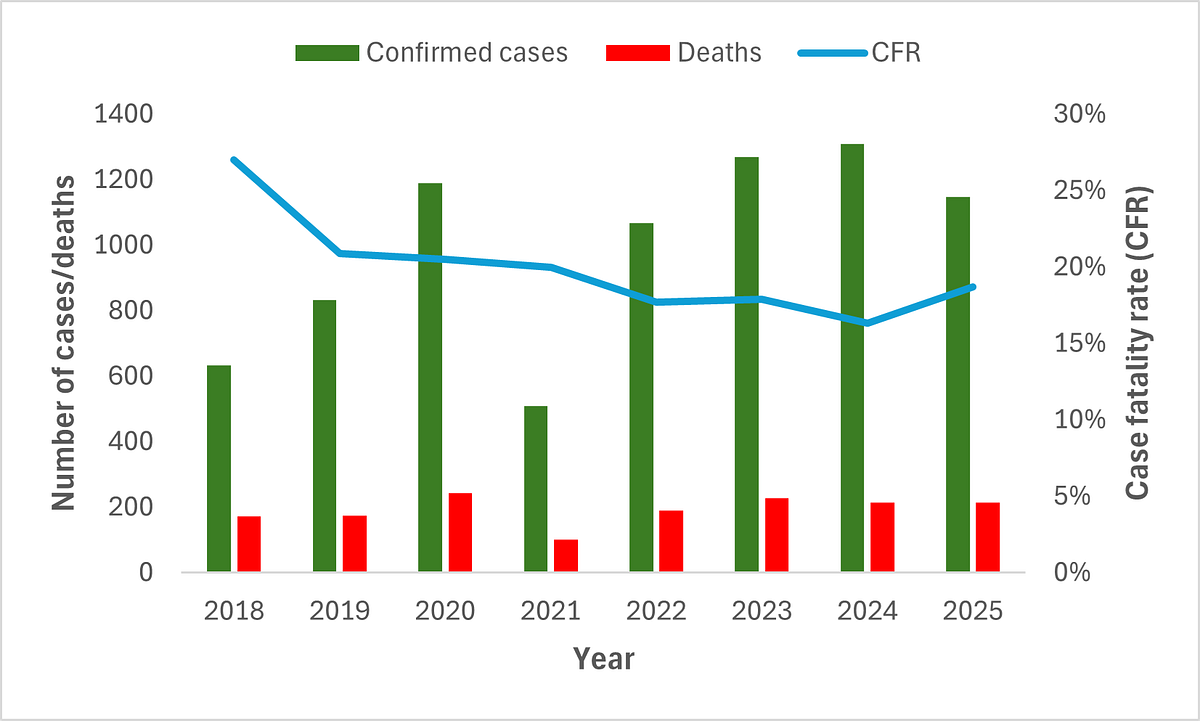
For many communities, the disease returns with the dry season, bringing renewed pressure on families and health workers and further straining already stretched health systems. Data from the Nigeria Centre for Disease Control and Prevention (NCDC) show that the country continues to record significant Lassa fever outbreaks each year. In the last eight years, the number of confirmed cases has steadily increased, except for a temporary decline in 2021. This trend reflects both continued circulation of the virus and important improvements in surveillance and diagnostic capacity that help detect and confirm cases more effectively.
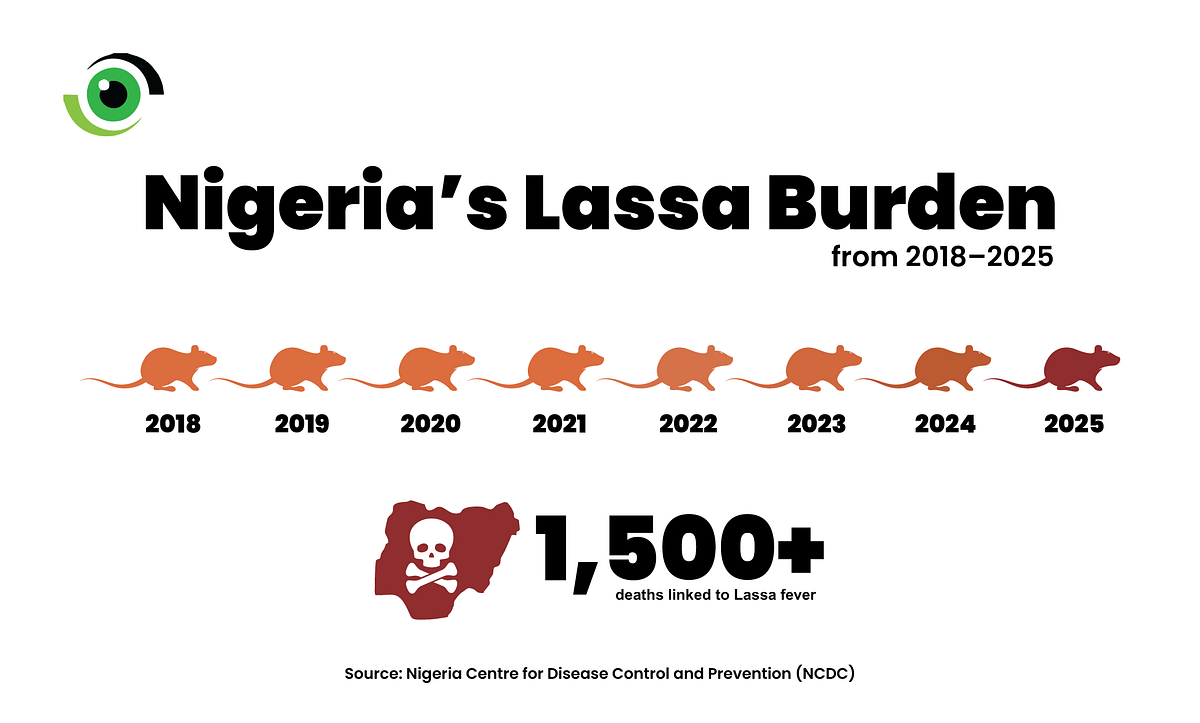
While improvements in case detection and clinical management have helped bring down the case fatality rate, the disease continues to claim hundreds of lives annually. Data from the NCDC indicates that more than 1,500 people have died from Lassa fever in the past eight years (2018-2025). As Nigeria enters the peak dry season, when transmission typically rises, the NCDC continues to warn of rising cases and is urging stronger state-level surveillance and response efforts. Despite decades of recurring outbreaks and growing scientific understanding of the virus, there is still no licensed vaccine to prevent Lassa fever.

Vaccine science is advancing
In recent years, efforts to develop a vaccine against Lassa fever have gained significant momentum. Advances in virology, immunology, and modern vaccine platform technologies have accelerated efforts to develop safe and effective vaccines against the virus.
Several Lassa vaccine candidates are now advancing through the global research pipeline, supported by international collaborations and partnerships. Among the most advanced is the rVSVΔG-LASV-GPC candidate, developed by the International AIDS Vaccine Initiative (IAVI) with support from the Coalition for Epidemic Preparedness Innovations (CEPI). The vaccine is now in Phase 2 trials across West Africa, including Nigeria, Ghana, and Liberia.
The Oxford ChAdOx1 Lassa vaccine is in early Phase 1 trials, marking another important step, with the first volunteer vaccinated in 2025 in a first-in-human trial. Other candidates in the pipeline from SK Bioscience, Institut Pasteur (MOPEVAC), and Thomas Jefferson University (LASSARAB) are also progressing. These efforts show momentum and investment towards a Lassa fever vaccine.
These developments represent an important turning point. More than five decades after Lassa fever was first identified, the prospect of an effective vaccine is moving closer than ever.
CEPI 3.0: A new era for epidemic preparedness
Progress in Lassa vaccine development is occurring as the global approach to epidemic preparedness evolves. In February 2026, the Coalition for Epidemic Preparedness Innovations (CEPI) launched an ambitious strategy: CEPI 3.0, a five-year investment plan to transform how the world prepares for and responds to epidemic and pandemic threats.
At the centre of this strategy is the 100 Days Mission, a global effort to enable the development of safe, effective, and accessible vaccines within 100 days of identifying a new pandemic threat. Building on nearly a decade of investment in vaccine innovation, CEPI 3.0 seeks to shift the global response from reacting to proactive prevention through faster vaccine development and stronger preparedness.
The strategy centres on three priorities:
(1) accelerating vaccines for known high-risk pathogens
(2) advancing rapid-response vaccine platforms for outbreak situations, and
(3) strengthening the global systems that support clinical trials, manufacturing, and regulatory readiness.

Nigeria’s role in the emerging Lassa vaccine ecosystem
For countries like Nigeria, which sits at the epicentre of Lassa fever transmission, CEPI 3.0 offers the most affected countries an opportunity to help shape the development of a future vaccine, including advancing Phase 3 trials and partnering with co-funders towards first vaccine approval by 2031, while reinforcing systems, regional collaboration, and political prioritisation that align with CEPI’s broader mission to transform how epidemics and pandemics are addressed.
Nigeria already occupies a pivotal position in the Lassa fever research and response landscape. The country consistently reports the highest number of confirmed cases in West Africa and hosts some of the region’s most experienced treatment and research centres, including Irrua Specialist Teaching Hospital in Edo State and the Federal Medical Centre in Owo, Ondo State. These institutions have become important hubs for clinical care, surveillance, and research that support vaccine development efforts.
Beyond national efforts, regional coordination is also strengthening. Through initiatives led by the West African Health Organization and supported by CEPI and national governments, countries across the region are working together to accelerate vaccine development and prepare for its eventual introduction. Together, these efforts position Nigeria as both a country affected by Lassa fever and a critical partner in the global effort to develop and deploy the first Lassa vaccine.
How Nigeria can turn its Lassa crisis into a vaccine opportunity
Nigeria carries the largest share of the global Lassa fever burden. Yet as a country most affected by the disease, it is not sufficiently in the driving seat when it comes to shaping vaccine research, clinical trials, and preparedness priorities. As the search for a Lassa fever vaccine accelerates, Nigeria has an opportunity to play a more decisive role in how that work unfolds.
• One immediate step is strengthening Nigeria’s role as a centre for Lassa vaccine clinical trials. With more experienced treatment centres, established surveillance systems, and long-standing research collaborations, the country’s ability to run clinical trials has been strengthened.
• Regulatory readiness will also matter. Nigeria’s National Agency for Food and Drug Administration and Control (NAFDAC), which has achieved WHO Maturity Level 3 status, is well placed to support faster and more predictable pathways for evaluating vaccines during public health emergencies.
• Local vaccine manufacturing will be critical. As Nigeria advances plans for local vaccine production, there is an opportunity to align these efforts with emerging regional production networks, so that future vaccines can be produced closer to the communities most affected.
• Finally, sustained engagement with global initiatives such as CEPI will be essential. Countries that experience diseases like Lassa fever most directly play a stronger role in shaping the research agenda, trial design, and the eventual rollout of vaccines.
For decades, Nigeria has carried one of the heaviest burdens of Lassa fever, with health workers repeatedly at the frontline of outbreaks, facing infection risks and, in some cases, losing their lives while providing care. As vaccine science advances and CEPI’s 3.0 strategy accelerates efforts to develop a Lassa fever vaccine, there is an opportunity to strengthen how research, development, and delivery are shaped with countries most affected by the disease.
Countries in West Africa that experience diseases like Lassa fever most directly are playing a stronger role in shaping the research and systems that will bring a vaccine to communities at risk through the leadership of regional institutions such as the West African Health Organization (WAHO), including through its convening role in the Lassa Fever Governing Entity, which brings together countries and global partners to steer decision-making and align priorities for vaccine development and delivery across the region.
Strengthening research capacity, regulatory readiness, manufacturing capacity, and regional collaboration will be critical. Taken together, this effort could help accelerate progress towards the licensure and timely deployment of the world’s first Lassa fever vaccine.