


Emeka Oguanuo (Lead writer)
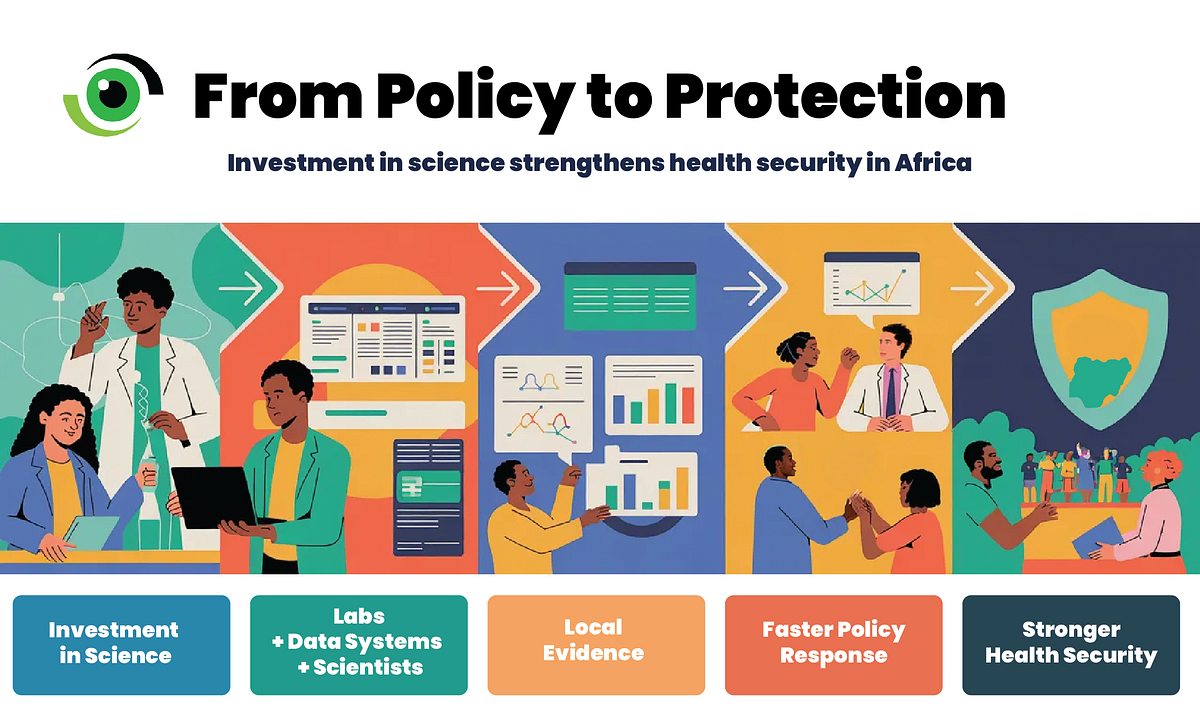
Health outcomes in Nigeria will only improve if the country invests more seriously in science and research. While the country has demonstrated scientific excellence, it continues to struggle to sustain the institutions, funding, and infrastructure needed to support high-quality research at scale. Without these foundations in place, building a health system that can respond to immediate needs while preparing for future threats becomes far more difficult. Speaking at the recent SPARK Translational Research Camp and Conference in Abuja, Nigeria’s Coordinating Minister of Health and Social Welfare, Professor Muhammad Ali Pate, stressed that stronger investment in science, research capacity, and evidence-led policy is essential if Nigeria is to improve health outcomes and compete globally. This is no longer just a Nigerian concern; it is now central to global health security.
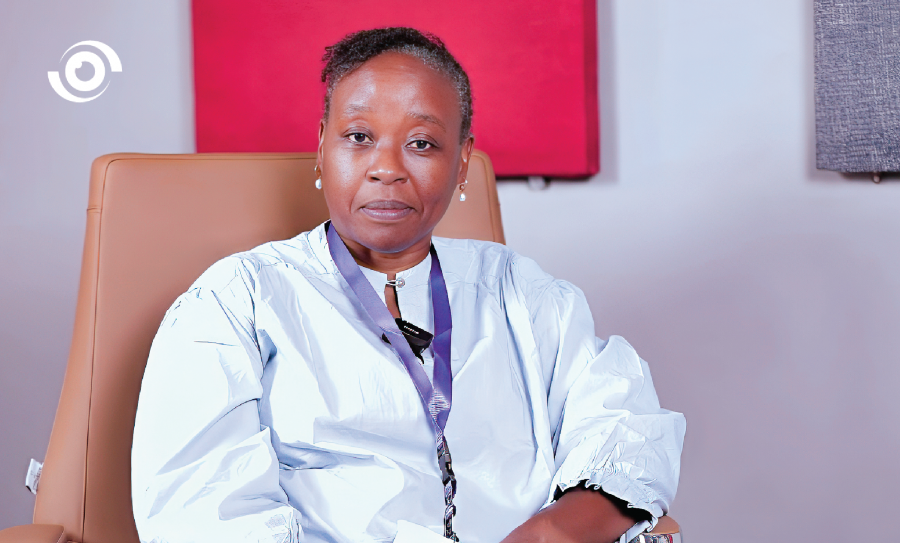
Nigeria’s globally recognised scientists have long argued that health security depends on investing in a resilient domestic research ecosystem. In a recent Curated Conversations’ interview with Nigeria Health Watch, Professor Iruka Okeke, a bacterial geneticist and professor of pharmaceutical microbiology at the University of Ibadan, reflected on what it will take to build lasting scientific capacity in Nigeria. Her central argument was clear: while Nigerian researchers continue to achieve international distinction, their success often persists despite fragile institutional systems, rather than being enabled by strong institutional support.
Why Nigeria matters in the global scientific ecosystem
A key insight from the conversation with Prof Okeke is that Nigeria remains a significant site of scientific discovery. “One of the things I know, which many young people may not know, is that the discovery potential is huge here. So, if you are doing science here, your chance of finding new things is extremely high,” noted “Prof” Okeke. She linked this to Nigeria’s large biodiversity and the fact that much of it has not yet been fully catalogued or studied. This is not due to a shortage of talent, but because many of its biological systems and disease patterns remain under-researched, creating opportunities for locally led research. In her view, this means Nigerian scientists are well positioned not only to participate in global research but to generate new knowledge from within their own context.
Nigeria’s scientific importance became especially visible during the COVID-19 pandemic. During this period, Nigeria’s public health and research laboratories, including the Nigeria Centre for Disease Control and Prevention (NCDC) and partner institutions such as the Nigerian Institute of Medical Research (NIMR) and the African Centre of Excellence for Genomics of Infectious Diseases (ACEGID), contributed SARS-CoV-2 genomic data to global repositories, such as the Global Initiative on Sharing All Influenza Data (GISAID). These contributions strengthened variant surveillance and fed into the global evidence base used for risk assessment and public health decision-making.
In March 2020, researchers at ACEGID, working with NIMR and other Nigerian partners, produced and released the first full SARS-CoV-2 genome sequence reported from Africa. That early demonstration of sequencing capacity positioned Nigeria as a serious contributor to genomic surveillance across the continent. These examples challenge the long-standing assumption that scientific innovation and evidence generation flow primarily from the Global North to the Global South. Nigeria’s experience suggests a more reciprocal reality, where knowledge production is distributed and locally driven. The more pressing question, then, is not whether Nigeria matters within the global scientific ecosystem, but whether the country will recognise and leverage its own strategic relevance.
Why Nigeria’s scientific capacity has not translated into national impact
Across the global scientific ecosystem, leadership is shaped not only by individual brilliance but also by sustained institutional investment. When countries rely heavily on external funding, domestic ownership of research priorities and innovation pathways often remains limited. Despite longstanding African policy commitments to increase national investment in research and development, most countries, including Nigeria, remain below agreed benchmarks. World Bank data continues to show Nigeria’s research and development expenditure at a very low percentage of Gross Domestic Product (GDP).
According to Prof Okeke, “What we need in Nigeria is a lot more domestic funding, so that Nigerian researchers will be writing grants to Nigerian funding agencies.” Her point is not simply about more money, but about building a functioning research ecosystem, one that rewards competitive grant writing, strengthens institutional incentives, and reduces overdependence on donors. Without these structural reforms, scientific excellence will struggle to translate into sustained national impact. While Nigeria has strong human talent and major research potential, its scientific ecosystem remains fragile. Prof Okeke’s comparison between working in Nigeria and in better-resourced environments highlights this structural gap. Researchers in Nigeria often shoulder substantial “extra work” simply to conduct routine scientific research, reflecting systemic weakness rather than individual limitations. In better-funded research systems, scientists are supported by protected research time, reliable laboratory infrastructure, and institutional support for grant development and publication. In Nigeria, by contrast, many researchers must navigate power outages, equipment breakdowns, and supply chain gaps before meaningful research can even begin. These constraints are not marginal inconveniences; they directly reduce research productivity, delay outputs, and limit the country’s ability to translate scientific talent into measurable public health gains.
Cultural attitudes, Prof Okeke observed in the interview, also shape the trajectory of Nigeria’s next generation of scientists. Many young people, she noted, are still steered toward a narrow set of professions seen as more prestigious. Many young people, she noted, are still steered toward a narrow set of professions seen as more prestigious. “Many of my students are still being given the same advice I was given. Go to medical school. Go into engineering. Go and do law,” she said, adding that disciplines such as mathematics, microbiology, or botany are often treated as second choices. This hierarchy of professional preference, she suggested, weakens the development pipeline for specialised scientific fields and ultimately limits the emergence of future scientific leaders. When combined with uncertain career pathways and weak institutional support, these dynamics help explain persistent challenges in retaining talented researchers. Drawing on her experience mentoring early-career scientists, Prof Okeke calls for more intentional investment in people, not only infrastructure. As she notes, “we need to think deliberately about how to retain and empower our talent if we truly want to make lasting change.”
The future of health security in Nigeria
The World Health Organization (WHO) describes antimicrobial resistance (AMR) as one of the top global public health and development threats. Nigeria’s ability to respond effectively depends heavily on domestic scientific capacity. As a bacterial geneticist whose work spans genomic methods and contributions to AMR surveillance, Prof Okeke brings both laboratory and systems-level insight to this challenge. Nigeria’s AMR response has become more structured in recent years, including the adoption of a second One Health Antimicrobial Resistance National Action Plan 2.0 (2024–2028) and continued efforts to strengthen surveillance and laboratory networks. Prof Okeke commended the development of the second plan as an important step forward. At the same time, she cautioned that planning alone is insufficient, noting that “we must expand the scope of what we do to implement those interventions that can bring antimicrobial resistance down.” This reflects growing political recognition of the threat, even if implementation remains uneven. Yet the fragility of Nigeria’s scientific ecosystem continues to constrain the country’s ability to translate national commitments into consistent, measurable impact at the community level.
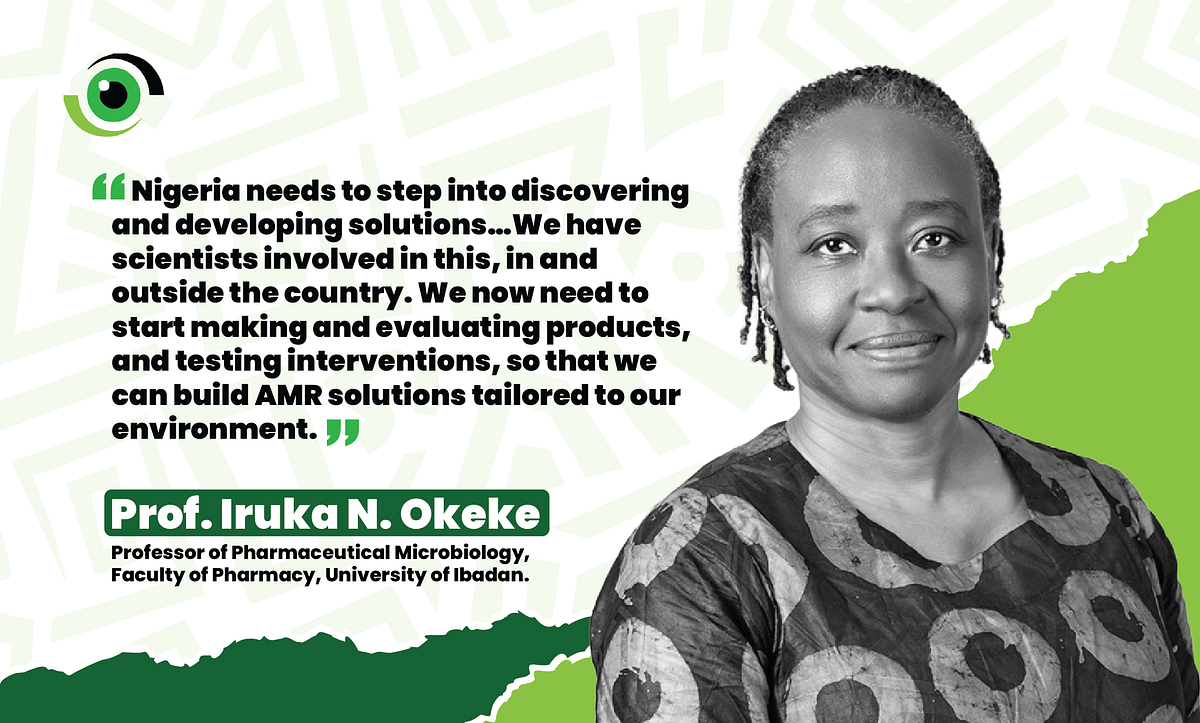
AMR exposes the real cost of weak science systems. Without strong local laboratories, reliable data systems, and sustained research capacity, national commitments risk remaining largely aspirational. Policies may be drafted, but implementation, learning, adaptation, and accountability often lag. As Prof Okeke put it, “Nigeria needs to step into discovering and developing solutions…We have scientists involved in this, in and outside the country. We now need to start making and evaluating products, and testing interventions, so that we can build AMR solutions tailored to our environment.” Scientific capacity is also a question of sovereignty. COVID-19 vaccine inequities demonstrated how dependence can translate directly into vulnerability. Nigeria cannot afford similar exposure in the era of AMR. Ultimately, the country’s future health security will not be determined by the number of strategies it announces, but by whether it builds the scientific systems required to implement, test, refine, and sustain them.
