




Mahdi Garba (Lead writer)
Ogwuche Thomas works as a facility manager at EHA Clinic, a private health clinic in Kano State. His job entails managing healthcare waste and keeping the hospital clean for the safety of health workers and patients who come to access care. Ogwuche was excited when the Kano Private Health Institutions Management Agency (PHIMA) invited him to learn about healthcare waste management. “This is a process we have been practicing, but we are always looking at ways of improving. I was excited to receive the invitation. It was an opportunity to see what is new in relation to what we have been previously implementing.”
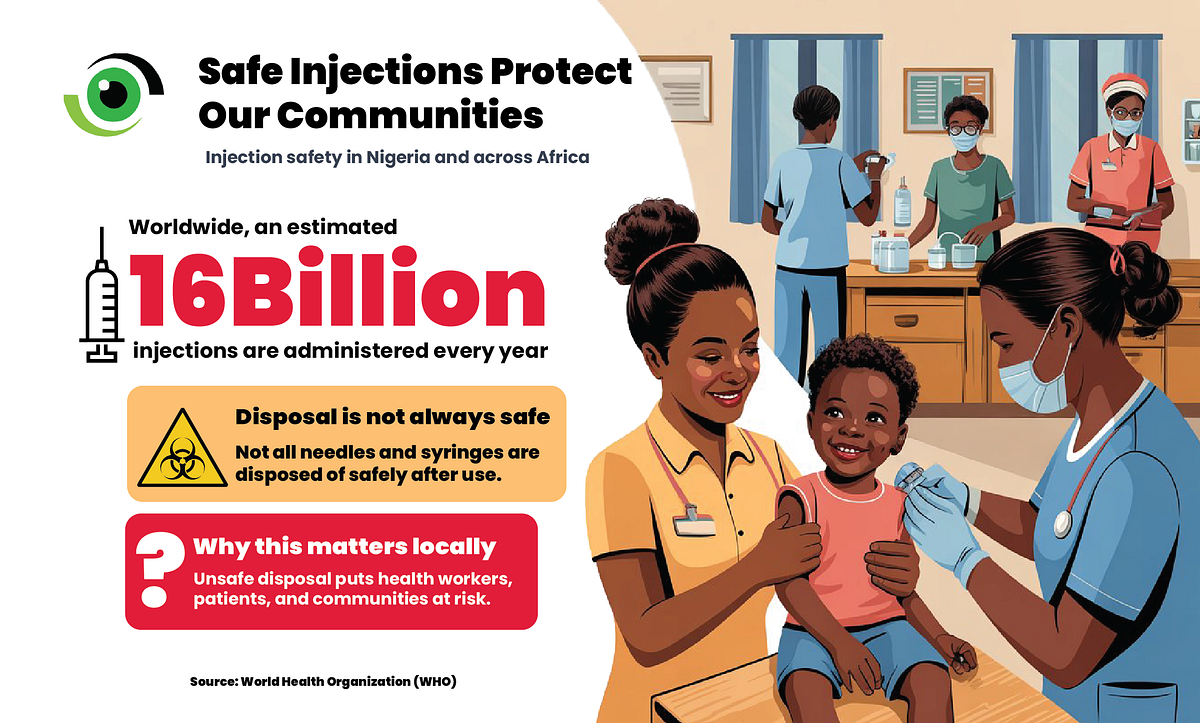
According to the World Health Organization (WHO), healthcare waste refers to “waste generated by healthcare activities, including infectious, hazardous, and general waste. The waste ranges from used needles and syringes to used dressings, body parts, diagnostic samples, blood, chemicals, pharmaceuticals, medical devices, and radioactive materials.” WHO estimates that at least 16 billion injections are administered each year globally; however, not all are safely disposed of. It further noted that while 85% of the waste generated from medical activity is non-hazardous, the remaining 15% may be infectious, toxic, carcinogenic, flammable, corrosive, reactive, explosive, or radioactive. Improper handling of such waste increases the risk of spreading diseases such as HIV, Hepatitis B, and Hepatitis C.

Strengthening waste management in Kano
Awareness of healthcare waste among Kano residents is generally low. In contrast, many health workers admitted having substantial knowledge of healthcare waste and its associated hazards; however, actual waste management practices remain suboptimal. Poorly managed healthcare waste or unsafe medical practices can signal broader problems in the health system. It can increase the risk of infection for patients and healthcare providers alike, especially in low-income settings, through improper waste segregation. Financing and Operational Revitalisation of Maternal Care (FOR M(om)), a programme funded by MSD for Mothers and implemented in Kano by Solina Centre for International Development, Helium Health, and Afrida, identified a gap in healthcare waste management following a SafeCare baseline assessment — a unique approach used to measure the quality of healthcare services in middle and low-income settings like Nigeria. Following the assessment, the team aligned with PHIMA to address this gap to enhance a safe health facility for maternal and child health.


Through the capacity-building component of the project, FOR M(om) in collaboration with PHIMA, identified waste management vendors in the state and facilitated their formal introduction to PHIMA. FOR M(om) convened health facility managers from 41 private health facilities to create awareness on proper waste segregation and the importance of safe disposal. Training was organised for designated waste-disposal focal persons from these facilities. PHIMA initiated a healthcare waste management pilot at selected private facilities across six LGAs in Kano, assigning waste management vendors to each facility to support proper waste disposal in compliance with state guidelines. This training, aimed at strengthening waste management in Kano, aligns with the Federal Ministry of Health’s agenda to enhance health security.
Living within our waste
Dr Bala Muhammad Tukur, the head of the Kano Indigenous Waste Management Association, noted that they collect healthcare waste from hospitals, research centres, and laboratories, and incinerate it at temperatures above 1,000 °C to decontaminate the bacterial load, following recommended safety procedures. A typical day for Dr Tukur starts by sending trucks of his company, Bioclean, to health facilities they serve to collect their soft waste, such as paper, plastics, and food wrappers, and transport it to their healthcare management plant. Upon arrival at the plant, Bioclean workers would immediately load the waste into their incinerator. Other non-soft waste, such as empty vials and glass bottles, is treated separately using specialised machines that pellet the glass, which is then sent to glass manufacturers for recycling. Dr Tukur recalled that, before the Association of Waste Managers began engaging with government stakeholders, people indiscriminately dumped their waste at illegal communal dump sites. By the time the rainy season begins, communities are flooded due to blocked drainage caused by indiscriminate refuse disposal. “All those dumps consist of hazardous materials and infectious agents. They get to the stream and shallow wells and pollute the underground and surface water, and of course, you know the implications on public health, people fall sick. We have seasonal diarrhoea, gastrointestinal infections all the time because we are living within our waste,” Dr Tukur explained.

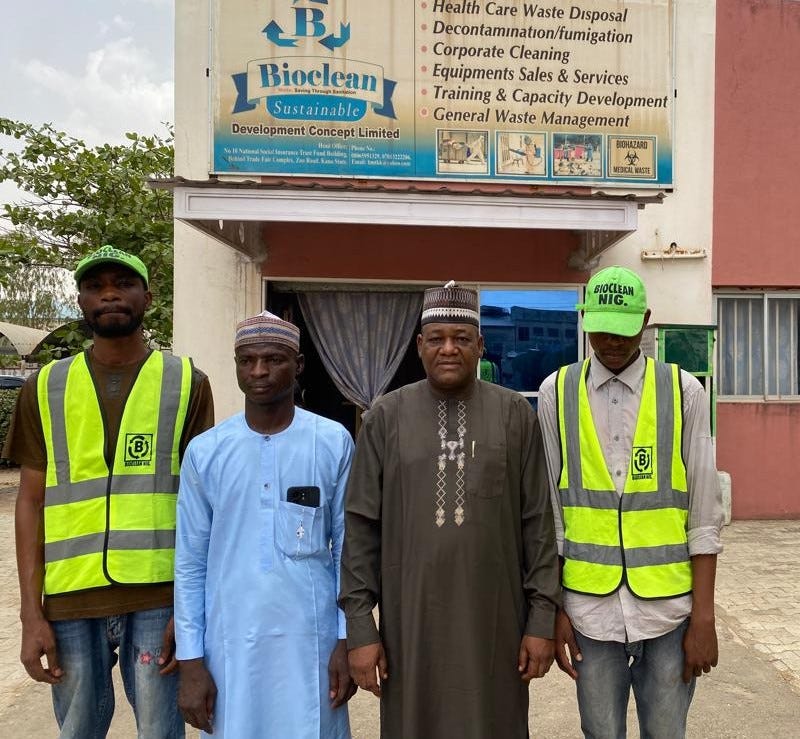
Image credit: Nigeria Health Watch
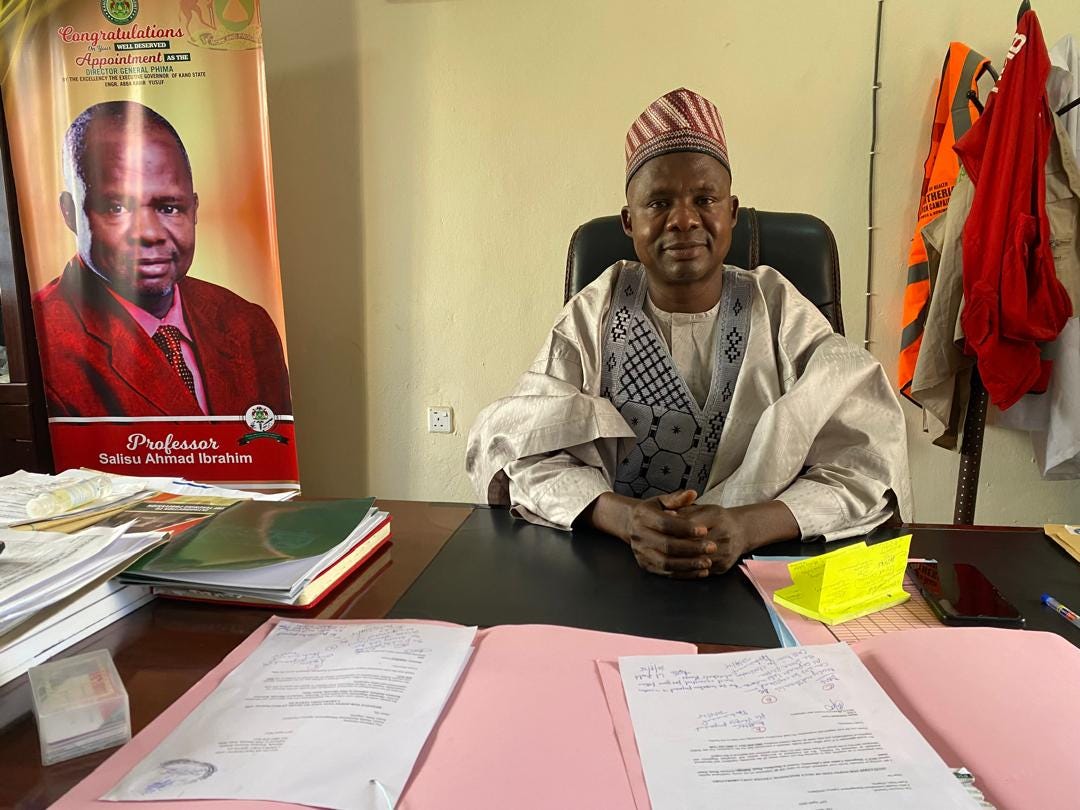
In Kano, there are two health plants owned by private companies that professionally process healthcare waste. According to Professor Salisu Ahmad Ibrahim, the Director-General of PHIMA, after the training exercise, facilities use colour-coded bins, red for highly infectious human waste like placenta, blue or sharp boxes for glasses, yellow for infectious waste like medical gloves or bodily fluid, and black for general waste like food leftovers, plastic bottles. The Director-General noted that PHIMA plans to increase coverage from 50 to 100 health facilities in the state following a review of the successes recorded during the pilot stage. He added that the institution plans to cover all the 650 registered private health facilities in the state. “When we started, we were thinking that they would not accept it, but we started with 50 health facilities and now have 56. And many facilities are asking when they can be added into our system,” Ibrahim explained, adding that “when you enlighten people, you are going to succeed.”

Challenges with segregation and payment
When the waste vendors began, they developed a healthcare waste management plan that required them to purchase colour-coded bins. In the plan, waste is segregated right from the generation process. “The challenge was to convince them to buy the colour-coded waste bins. But eventually, over time, they are now getting used to it, and they are doing very well in that aspect,” Bala added. He decried that, despite a series of training sessions on segregation, some health facilities still dispose of syringes, bottles, and soft waste in the same container, which threatens the safety of waste vendors, who risk being pricked by sharp objects that could infect them.
He also expressed concern about some healthcare facilities delaying payment for their services. “We use a lot of money. We transport from the facility, bring it down to the treatment plant, use our energy to do the incineration, and on top of that, we pay the staff,” he said. Nura Auwal, the Manager of BabanBola, a waste recycler in the state, also frowned at the noncompliance by some health facilities. According to him, probably because the recyclers charge ₦1,500 per kg to dispose of the waste, some facilities think it is too expensive.
What improved — and what it could take to scale statewide
However, another vendor, Dr Sani Usaini, the Managing Director of Sahcon Fumigation and Cleaning Services, while commending PHIMA and Solina for their efforts to mitigate the problem of healthcare waste in the state and strengthen health systems, pointed out that his company has never had any payment issue with all the health facilities it provides services for. He recalled that when they conducted their first audit of 50 health facilities, all fell below standard, as the facilities did not have designated waste dump sites, colour-coded bins, or trained personnel who would handle the waste properly.
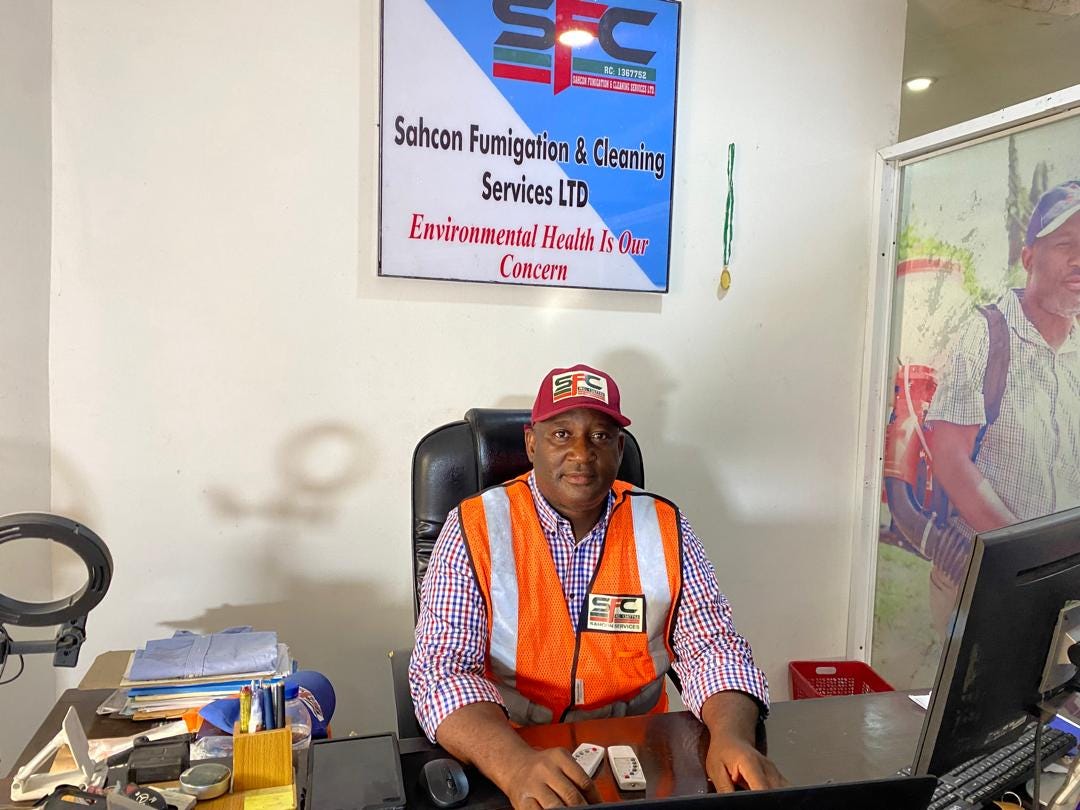
Image credit: Nigeria Health Watch
After the training, the facilities have moved from 0% to 50% by adhering to the waste management protocols. Usaini underscored the importance of capacity building as he noted, “indiscriminate waste disposal is becoming rare as a result of trained licensed vendors who now collect waste for destruction.” He emphasised that compliance will not only keep the environment clean but would also protect even health workers from hospital-acquired diseases, reiterating that with training and proper awareness, people can change.
While urging the Kano State Government to spread this knowledge across all government-owned facilities. It is important to note that knowledge sharing through capacity building, such as the FOR M(om) programme implemented in Kano, can lead to cleaner health facilities and improved experiences and health outcomes for clients accessing maternal and child health services and other essential care. Other states across Nigeria can replicate this practice within their waste management sectors, given the inextricable link between waste managers and health workers.