

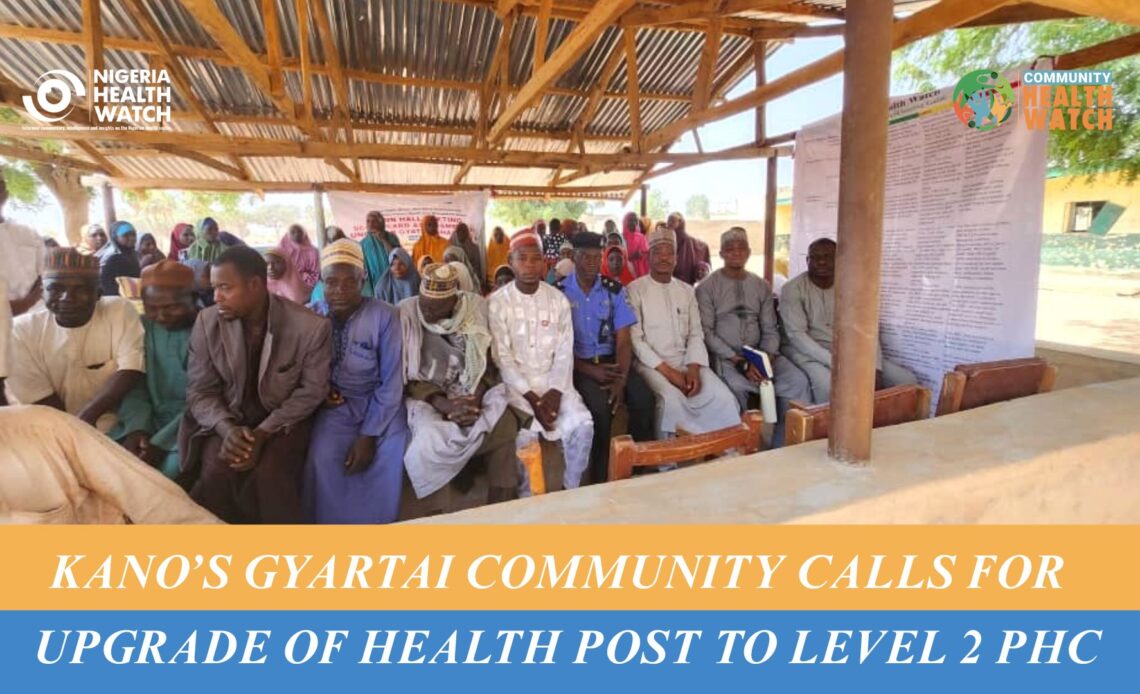
Residents in Gyartai community in Kano are demanding a PHC upgrade. A single health post serving over 10,000 patients, a number beyond the capacity of 500 patients, has been struggling to meet even the most basic care services, especially for pregnant women and children, who often have to navigate not just distance, but a system stretched beyond its limits.

These concerns about the state of the facility came to the forefront during a town hall meeting held in February 2026, organised by Nigeria Health Watch in collaboration with the Akin Savvy Awareness initiative. The health post, located in Bamai Ward of Ghari Local Government Area (LGA), is a Basic Health Care Provision Fund (BHCPF) focal facility serving four districts. It is meant to provide essential services, including antenatal care, immunisation, family planning, nutrition, and outpatient consultations.
Despite its importance, the facility is overwhelmed. It operates with only 11 staff, including guards and a cleaner, but just two are permanent health workers. “We need this health post to be upgraded to a proper PHC so that women can even deliver here,” Fureira Abdullahi, a resident, noted.
The town hall meeting brought together community members, health workers, traditional leaders, and local officials to openly discuss the challenges affecting healthcare delivery in Gyartai.
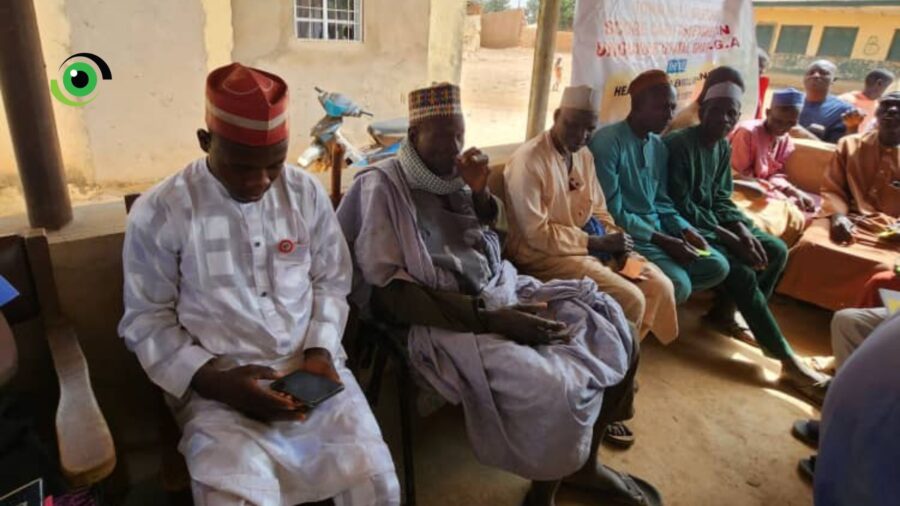
Image credit: Nigeria Health Watch
Infrastructure gaps further complicate care. The absence of a borehole forces patients, many of them pregnant women, to fetch water from outside the facility. For residents, these challenges are deeply personal. Nuhu Isma’il, another resident, added that, “Water is very important, especially for pregnant women. Our women must leave the facility to fetch water.”
Although 602 residents are enrolled under BHCPF, awareness and utilisation remain low, and many residents are unaware of complaint or accountability channels.
The Officer-in-Charge, Yau Haruna, emphasised the staffing crisis at the meeting: “We have about 11 staff, but only two are permanent health workers. The rest are temporary.”
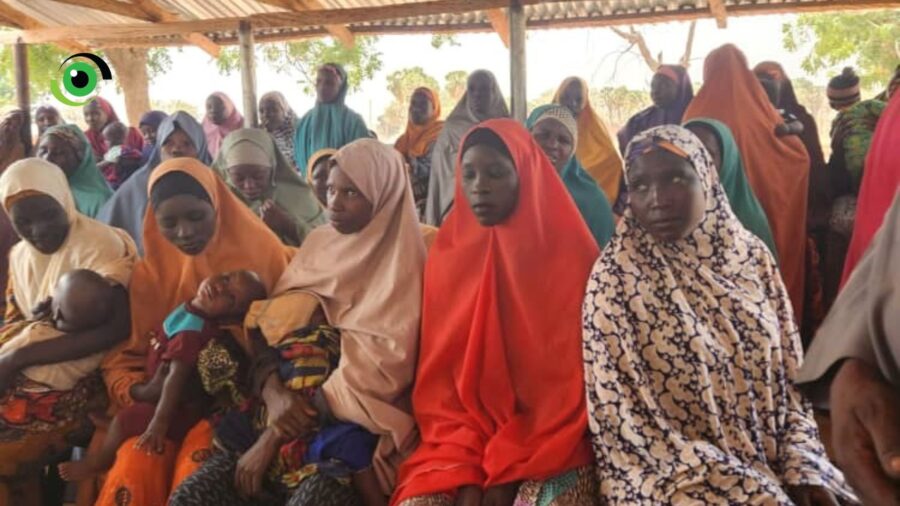
Image credit: Nigeria Health Watch
Such shortages increase workload, limit service quality, and affect maternal and child health outcomes. Poor infrastructure and staffing gaps also discourage health-seeking behaviour, increasing the likelihood of home deliveries.
While BHCPF has provided some relief for vulnerable groups, the facility still struggles to meet demand. Many residents remain underserved, and preventable health risks persist, particularly for pregnant women and children.
The issues raised during the Gyartai town hall highlight the urgent need to translate Nigeria’s Health Sector Renewal Plan into real impact at the grassroots. Strengthening PHCs is critical to achieving an efficient, equitable, and quality health system.
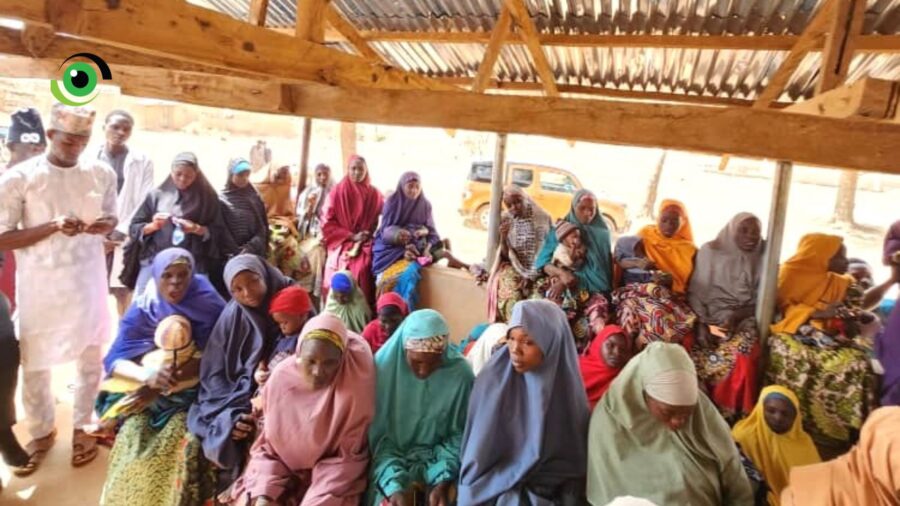
Image credit: Nigeria Health Watch
Stakeholders and policy should therefore act on the community’s demands by:
- Upgrading Gyartai Health Post to a functional level 2 PHC
- Deploying more skilled health workers
- Providing water and essential infrastructure
- Strengthening community awareness and accountability systems
- Expanding BHCPF enrolment and utilisation
“We have written to the councillor for support so that this facility could be upgraded. Assessments have been done, but we are still waiting for action,” the Ward Development Committee (WDC) Chairman Abdu Ladan stated.
For Gyartai residents, the town hall was more than a conversation; it was a collective call for action, and a hope that their voices would finally lead to lasting change.