


Onyinye Oranezi and Yasir Jamal Bakare (Lead writers)
On Valentine’s Day, when conversations about intimacy and relationships are more visible, access to clear, stigma-free information remains important for informed health decisions. In this short Vox pop, Nigerians share their lived experiences and perceptions around contraceptive use, explaining how social attitudes, concerns about confidentiality, distance to services, cost barriers, and inconsistent commodity supply can shape access to sexual and reproductive health care.


The patterns behind the opinions
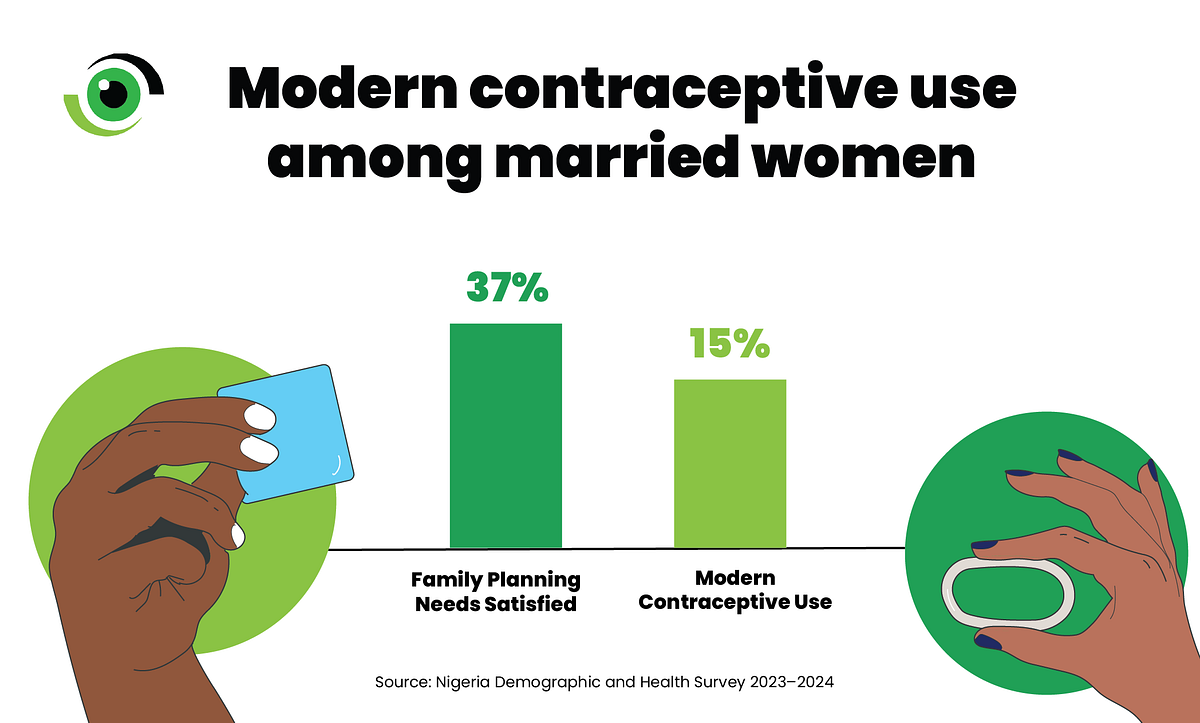
Modern contraceptive use among currently married women is 15%, and the proportion of women whose family planning needs are satisfied is 37%, still below what Nigeria needs for faster health and economic gains. So, if young people feel confused, stigmatised, or pushed away from services, the cost is predictable, with more unintended pregnancies and more unsafe choices.
The loudest barrier was not religion or lack of interest. It was fear often fuelled by incomplete information. “It will make me bleed”, “I will add weight”, “It will spoil my body”, “I won’t be able to have children later.” These fears are what happens when counselling is weak, follow-up is rare, and people rely on friends’ experiences as medical guidance. The World Health Organization (WHO) is clear that misinformation and fear of side effects commonly discourage contraceptive use, especially where services feel judgmental or unreliable. Many young people described the social risk of being seen as more terrifying than the health risk of unprotected sex. Big cities and small towns have networks of campuses, churches, mosques, estates, offices, and markets where “someone knows someone.” If seeking contraception equals gossip, then privacy becomes the real price.

In many responses, contraception was negotiated rather than freely chosen. A partner refuses condoms; another doubts pills; yet another interprets contraception as promiscuity. Power dynamics, financial consideration, level of commitment, age differences, and social pressure all influence decisions related to sexual and reproductive health. This is why sexual and reproductive health should not be seen as just an individual choice. There are pharmacies, chemists, and health clinics across states, cities, and towns. Still, many respondents were unsure where to go for confidential, respectful counselling or what questions to ask, so they leave feeling more anxious than when they arrived. Access without confidence is not true access.
Six clarity panels: what is true, and what to ask
Contraceptives do not cause infertility. Some hormonal methods may temporarily delay the return of regular ovulation after stopping, but that delay is not permanent infertility. There are many contraceptive options, including reversible and permanent methods. “Best” depends on your health, preferences, and lifestyle, not what worked for a friend. Prevention works better when responsibility is shared through contraceptive methods, including barrier methods, honest communication, and support for a partner’s chosen method. WHO also notes that gender inequality and fear of stigma can block access.
Condoms are the only contraceptive method that can prevent both pregnancy and the transmission of sexually transmitted infections, including HIV. What matters is counselling, follow-up, and switching safely if a method does not suit you, rather than abandoning protection out of fear. WHO emphasises that method choice should be guided by individual needs, and health worker advice can help identify appropriate options. You deserve respectful care and confidentiality. When services feel judgmental, myths fill the gap. Trust, accurate information, and non-judgmental counselling are central to improving uptake.

A simple decision guide (so the choice feels doable)
If you are overwhelmed, start with practical preferences, not pressure:
- If you want STI protection: condoms matter.
- If you struggle with daily routines: ask about the options you do not need to remember every day.
- If privacy is your biggest concern: ask about discreet options and where confidential counselling is available.
- If future fertility worries are the barrier: ask directly about return to fertility and what to expect after stopping.
- If side effects scare you: ask what is common, what is not, and what follow-up looks like.
Walking into a health facility can feel like walking into judgment. Expect questions about your health and preferences. You have the right to ask questions and to decline a method you are not comfortable with. If you are not treated respectfully, you can leave and seek care elsewhere. You are not asking for a favour, you are seeking a health service. If you are in a relationship, contraception should not be a battlefield. You can tell your partners, “I care about us, and I want us to plan well; let’s choose what protects us,” or “This is about my health and my future. I need us to take protection seriously.” Respect matters. Pressure is not love. If a partner refuses any shared responsibility, you can still protect your health by seeking confidential counselling and choosing what is right for you.
The point of this season is not just romance. It is care. Care looks like accurate information, respectful services, and decisions that protect your health and your future.