



Olubunmi Oyebanji (Lead writer)
In early 2025, the United States announced a temporary pause in foreign aid that affected several health programmes in Nigeria. In Lagos, a young mother arrived at her clinic for a routine viral load test only to learn that community testing teams had been withdrawn. In Benue, a peer educator supporting key populations was informed that his programme had been “paused until further notice”. These are not isolated incidents. They reflect the real-life consequences of a system that remain dependent on external funding and vulnerable to shifts in foreign policy.
These disruptions come at a time when the world is closer than ever to ending AIDS as a public health threat, yet still off track to meet the 2030 global targets. Globally, an estimated 40.8 million people are living with HIV globally, 1.3 million people acquired HIV last year, while 630,000 people died from AIDS-related illnesses. While new infections have declined by 40% and AIDS-related deaths have reduced by 54% reduction since 2010, progress is not fast enough to reach the 2030 targets.
The Eighth Replenishment: a warning signal for Nigeria
The Eighth Replenishment of the Global Fund to Fight AIDS, Tuberculosis and Malaria is the fundraising cycle for 2026–2028. The Global Fund called for US$18 billion, noting that this level of investment could save 23 million lives, prevent about 400 million infections or cases, and reduce deaths from HIV, TB and malaria by roughly 64 percent compared to 2023. Nigeria is one of the Fund’s largest partner countries, receiving about US$933 million for the 2024–2026 grant cycle for HIV, TB, malaria and health systems strengthening. Nigeria’s 2026–2028 allocation will be determined by the Eighth Replenishment, so a weaker global pledging outcome will almost certainly result in tighter grants and more difficult choices about essential services.


At the Eighth Replenishment conference in Johannesburg in November 2025, governments and other partners pledged about US$11.34 billion. This reflects commitments made at this event only, as not all countries have announced their pledges, and the replenishment process continues. There is still room for additional pledges and innovative financing to strengthen the final outcome. These efforts can help protect essential programmes and maintain progress against HIV, TB and malaria in countries such as Nigeria during the next grant period.
Who is still being left behind?
Globally, progress remains uneven and deeply inequitable. HIV prevalence among key populations is many times higher than in the general population. Across countries reporting between 2020–2024, median estimates show prevalence at 7.6% among men who have sex with men MSM), 7.1% among people who inject drugs, and 2.7% among sex workers, compared with 0.7% among all adults aged 15–49.
Nigeria reflects this global pattern. National surveys and surveillance consistently show that HIV prevalence is significantly higher among key populations than in the general population. The 2021 Integrated Biological and Behavioural Surveillance Survey (IBBSS) reported HIV prevalence of about 25% among men who have sex with men, with 28% prevalence among transgender people and 15% among female sex workers.
For adolescent girls and young women (AGYW) aged 15–24, the risk also remains unacceptably high. In sub-Saharan Africa, AGYW account for about 25% of all new HIV acquisitions, and in 2024 there were about 570 new HIV infections every day globally in this age group. These figures are a reminder that any HIV response which does not centre key populations, adolescent girls and young women will miss the very people most at risk.
Nigeria’s HIV burden and the limits of donor-driven progress
Nigeria remains one of the countries most affected by HIV globally, with about 2 million people living with the virus and an adult prevalence of around 1.3% among those aged 15–49 years, giving the country the fourth-highest number of people living with HIV worldwide. Beneath these averages lie deep inequities. Prevalence is significantly higher in several South-South and North-Central states and lower elsewhere. Women and girls bear a disproportionate burden accounting for 65% of adults living with HIV in Nigeria due to gender and power imbalances, economic vulnerability, and gender-based violence.

Over the past two decades, foreign partners have supported much of Nigeria’s progress. Between 2021 and 2025, Nigeria received more than US$4.6 billion in international health grants from the Global Fund and USAID, and lawmakers note that PEPFAR contributed an additional US$6 billion over the same period. This external funding has been vital, but recent events show it is no longer sufficient or reliable as the basis for a sustainable response.
At the same time, domestic HIV funding globally now accounts for about 52 percent of total spending, and UNAIDS recommends that two-thirds should come from domestic sources by 2030. Nigeria cannot afford to lag behind.
Why domestic funding, transparency and community leadership matter
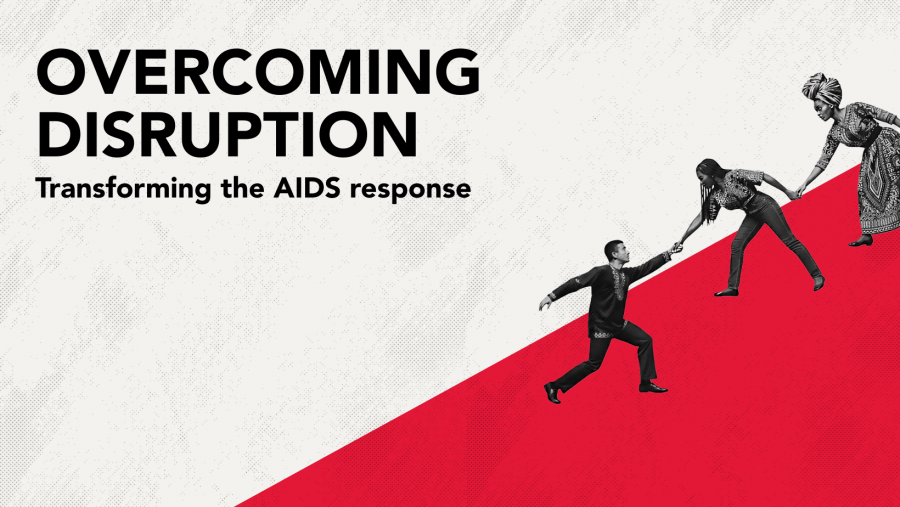
In light of this, World AIDS Day 2025, themed ‘Overcoming disruption, transforming the AIDS response’ is a crucial moment for Nigeria. The country stands at a crossroads between maintaining a donor-dependent architecture that remains vulnerable to external decisions and building a stable, domestically funded and community-led response capable of withstanding political and economic shocks.
The Federal Government of Nigeria has already taken an important step with the launch of the N62 billion HIV Trust Fund of Nigeria (HTFN) in 2022, a private-sector-led initiative designed to support prevention of mother-to-child transmission and sustain the national response. However, the Trust Fund must be fully capitalised, transparently managed and integrated into a broader medium-term national HIV funding plan that aligns with UNAIDS’ recommended path towards two-thirds domestic funding.
Nigeria’s 2025 disruption shows that when funding is paused, community workers and key-population-led services that are hit first and hardest. More than 95% of PEPFAR-funded community workers received “stop-work” orders, and over 80 One-Stop Shops faced service disruptions. This is concerning because community-led organisations are essential for reaching those most at risk. In eight countries, including Nigeria, 89% of funding for community-led HIV organisations comes from bilateral donors, 10.9% from multilateral donors and less than 0.1% from domestic sources.
Nigeria should commit to progressively increasing domestic allocations to community-led and key-population-led organisations, using multi-year funding agreements that are protected from short-term political changes. Sustainability also requires that HIV services no longer operate in isolation. Nigeria’s universal health coverage (UHC) agenda, the Basic Health Care Provision Fund (BHCPF), health insurance expansions and social protection schemes must explicitly integrate HIV prevention, testing and treatment. These platforms should also include sexual and reproductive health services, particularly for adolescent girls and young women, mental health and psychosocial support for people living with HIV.
A final choice in Nigeria’s next budget cycle
World AIDS Day 2025 finds Nigeria at a pivotal moment. Global HIV infections and deaths are declining, but progress is uneven, and funding gaps are widening. For Nigeria, the disruptions of early 2025 are a warning of what could become normal without stronger, long-term domestic leadership of the HIV response.
The next federal and state budget cycles will signal which path the country chooses. By prioritising domestic HIV funding, strengthening accountability mechanisms and directing resources to community-led organisations, Nigeria can safeguard its HIV response and demonstrate a clear commitment to resilience and health sovereignty in an uncertain global landscape.