

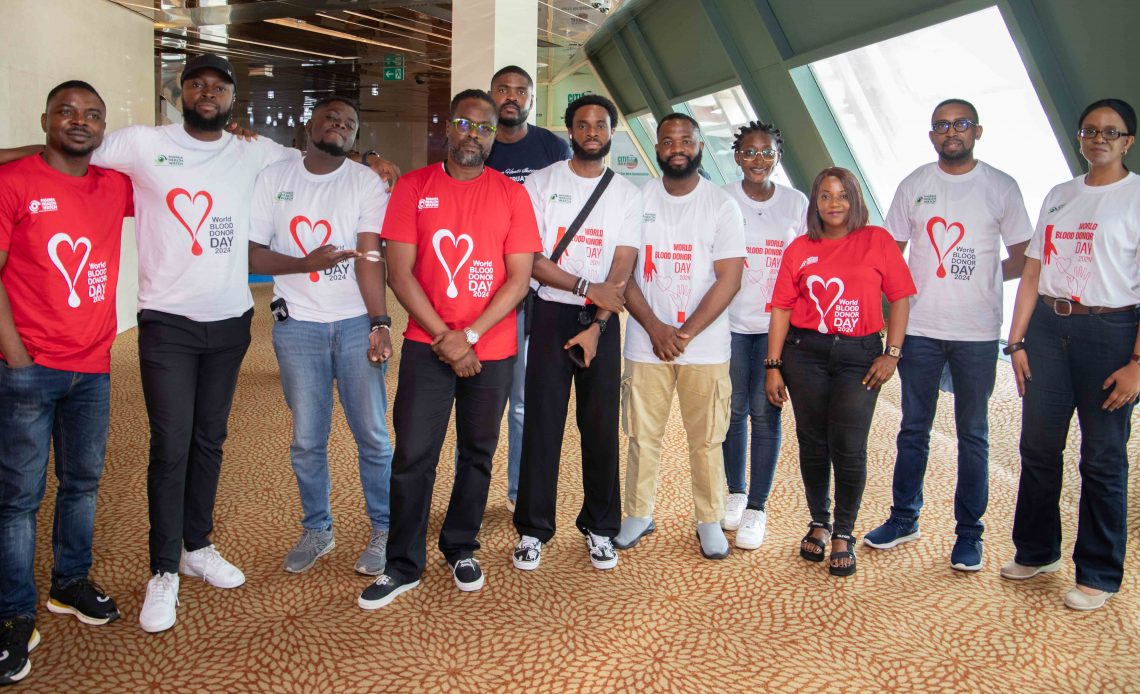
Adanna Opara (Lead Writer)
Every pint of blood donated comes with a story of kindness from family, friends and in some cases even strangers in Nigeria. As a result, this year’s World Blood Donor Day themed “20 Years of Celebrating Giving: Thank You Blood Donors,” commemorated globally, emphasises the importance of safe blood donations, celebrating the unsung heroes who selflessly donate blood, and whose life-saving gifts improve the health and well-being of millions of people.
Blood transfusions are a common medical procedure required for a wide range of health conditions, including anaemia, complications during pregnancy and childbirth, severe injuries from accidents, and surgical procedures. According to the National Blood Service Commission (NBSC), only 500,000 pints of blood are collected annually from voluntary blood donors, leaving a shortfall of about 73.3% in blood supply need each year.
This raises concerns about the sustainability of the blood supply. The significant dependence on commercial donors, who might donate blood for financial benefit, increases the burden on families, who must often seek emergency finances to get emergency blood supplies, placing unnecessary pressure on families to locate eligible donors on short notice.
Another key difficulty is a lack of awareness about the benefits of blood donation, so there is a need to sensitise relevant stakeholders. In addition, there is a prevalence of myths and misconceptions about blood donation, which often discourages prospective donors. Many Nigerians believe in various myths about the negative health impacts of blood donation, and these beliefs are often strongly ingrained in cultural and social norms. Additionally, the inefficiency of pairing blood demand to blood supply at blood donation facilities, caused by insufficient database management systems, exacerbates the problem. These challenges highlight the need for public awareness campaigns to improve Nigeria’s blood donation systems.
Blood Donors are Heroes for Mothers
Blood donors especially deserve special recognition since they may be saving the lives of pregnant women and their unborn children. Nigeria has a very high maternal mortality rate at 1,047 per 100,000 live births. Postpartum haemorrhage (PPH) is one of the leading causes of maternal mortality, making blood donations even more important and critical in preventing maternal deaths, by providing the necessary blood supplies required to treat PPH. When pregnant women experience severe bleeding during or after childbirth, a prompt blood transfusion can be lifesaving, preventing deaths and improving outcomes for mothers.
Giving blood is an act of altruism and compassion that helps mothers survive childbirth. There is an urgent need for blood donations in Nigeria owing to the high number of traffic accidents and surgical operations, requiring blood transfusions. The selfless act of donating blood may mean the difference between life and death in many situations. As a result, every blood donation directly contributes to saving mothers’ lives and improving maternal health across the country.
In view of this year’s theme, it is important to spotlight the invaluable contributions of the millions of voluntary blood donors worldwide and suggest five ways individuals and organisations can show appreciation for their selfless acts.
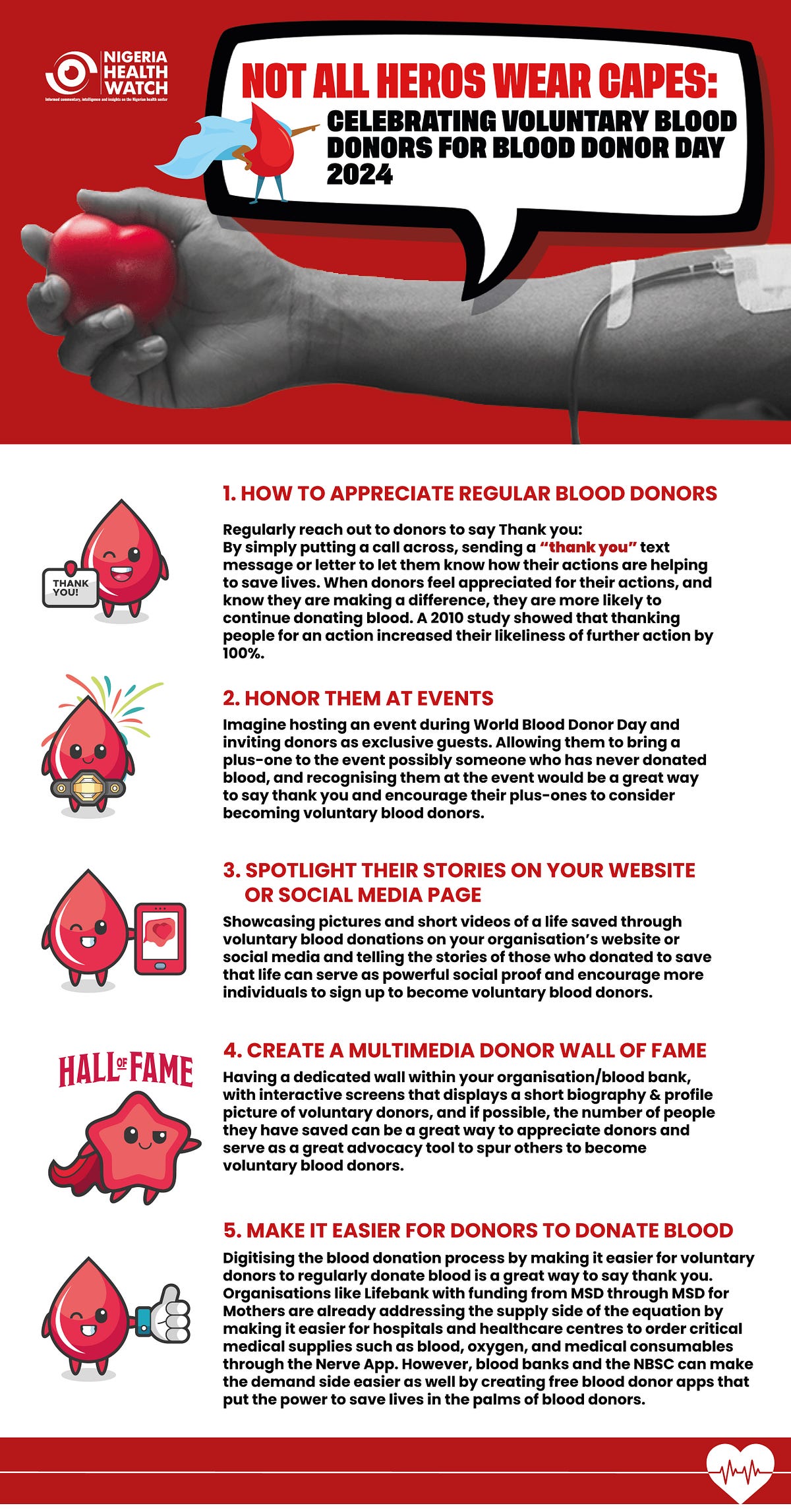
Do you know anyone who has donated blood voluntarily before? Let us know in the comments how you will be thanking them for this World Blood Donor Day.
I am a donor and I motivate blood drive. How can we work together for National Blood Donor Day in Ibadan.
I am a Rotarian, appointed as Oyo State Blood Donor Committee Chair