


Orode Doherty (Guest Writer)
Traditional Birth Attendants (TBAs) have long served as primary caregivers for pregnant women in many parts of Lagos. Their popularity stems from cultural familiarity, accessibility, and community trust. In response to their widespread use, the Lagos State Government established the Lagos State Traditional Medicine Board (LSTMB) to regulate TBA practices. The Board enforces standards related to safe delivery, waste management, and referral systems.
Despite these efforts, compliance remains a challenge. A 2023 assessment by Project Aisha found that up to 50% of practicing TBAs were either not registered with the LSTMB or not submitting required data.
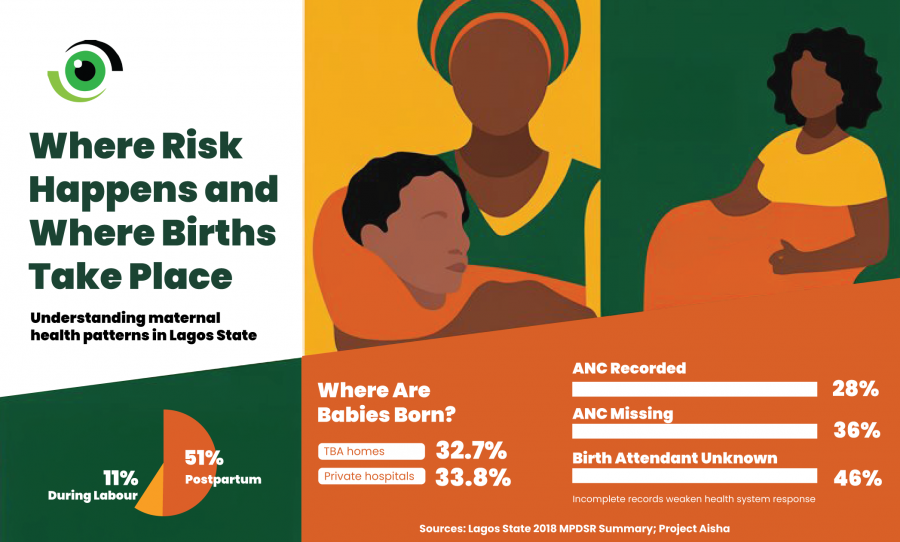
In the state, the 2018 Maternal and Perinatal Death Surveillance and Response (MPDSR) report revealed that 63% of maternal deaths occurred during labour or the post-partum period. Most of these cases concerned women who had not accessed skilled antenatal care and were referred by TBAs or other unqualified personnel. This lack of oversight raises concerns about adherence to safety protocols.

In early 2024, the LSTMB reaffirmed its commitment to enforcing compliance among all traditional, complementary, and alternative medicine practitioners.
Project Aisha, funded by MSD for Mothers, launched a three-year intervention implemented in Lagos and Kaduna States to guide the overarching goal of reducing maternal mortality and obstetric complications by 20% from 2022 to 2025.
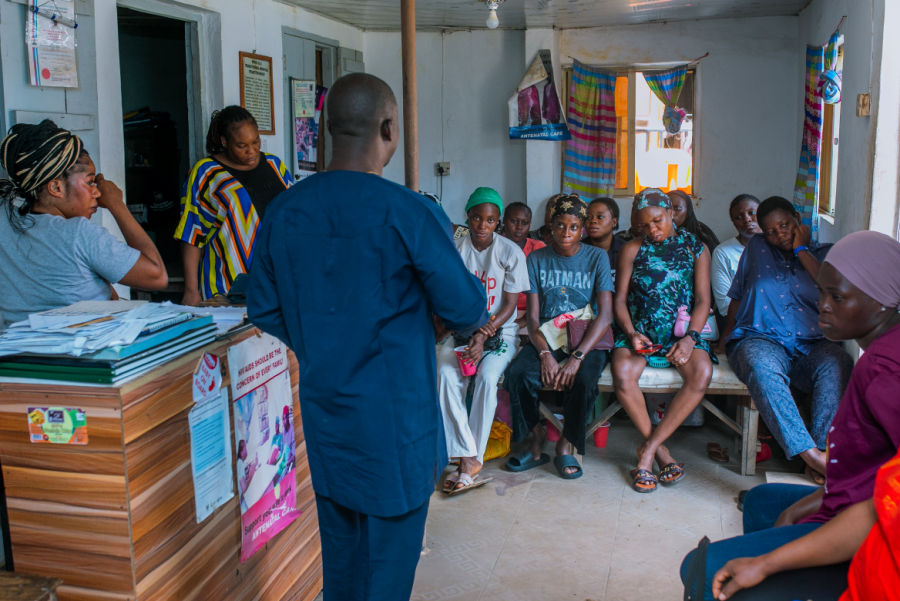
To kick off implementation, Project Aisha conducted a baseline assessment in 23 communities across the Epe and Ifako-Ijaiye Local Government Areas (LGAs) in Lagos, where 33% of deliveries occurred at TBA facilities, while another 34% took place in private hospitals. Women cited the influence of family members, specifically husbands and mothers-in-law; fear of medical interventions; negative experiences with public healthcare providers, such as mistreatment or neglect, and cultural preferences; and beliefs as reasons for choosing TBAs and private providers over public health facilities.
These insights highlight the need for culturally sensitive, respectful maternity care in public facilities to rebuild trust and encourage the use of skilled services.
Regulating private nurse-midwife practice
In Lagos State, the Health Facility Monitoring and Accreditation Agency (HEFAMAA) oversees the registration of private healthcare facilities, including those operated by nurse practitioners. These facilities fall into two main categories: (1) Nursing/Convalescent Homes, which require a nursing license, and (2) Maternity Centres, which require a midwifery license.
While both facility types are subject to regulation, maternity centres face stricter oversight due to the inherent complexity and risks involved in childbirth. Nurses who hold midwifery qualifications are authorised to manage maternity centres independently, without the need to incorporate Nursing or Convalescent Home services.
In contrast, nurse-midwives working within registered nursing or convalescent homes are generally required to refer expectant mothers to primary health centres (PHCs), hospitals, or accredited maternity homes for antenatal care and delivery—except in urgent situations, such as when the baby’s head is already crowning at the time of presentation.
A persistent challenge in maternal healthcare is the widespread confusion between professionally trained midwives and unqualified personnel, such as ‘auxiliary nurses.’ These individuals often lack formal education and operate outside established regulatory frameworks, posing significant risks to maternal and newborn health.

Project Aisha’s interventions and global alignment
Project Aisha has established a referral network linking maternity homes, public and private hospitals, and TBAs. It also supports continuous professional development for midwives in private practice, ensuring alignment with global best practices. At the community level, Project Aisha is working to identify and register TBAs, bringing them under the oversight of the LSTMB.
Globally, there is a growing call for a transition to midwifery-led models of care, where licensed midwives provide continuous, respectful, and high-quality care from pre-pregnancy through the postnatal period.
This model:
- Promotes person-centred care.
- Values the woman-midwife relationship.
- Optimises physiological and cultural processes.
- Uses interventions only when medically indicated.
Project Aisha supports this shift by spotlighting the role of Registered Nurse-Midwives, expanding their visibility, and advocating for continuity of care in communities.
Policy recommendations
To further strengthen maternal health systems in Lagos and in states with mixed health systems, we recommend the following actions:
- Increased Funding and Support for Nurse-Midwives
Provide grants and financial models to support private nurse-led and midwife-led facilities, including their professional association, the Association of General Private Nurse Practitioners. - Encourage Maternity Centre Registration
Support midwives currently operating nursing homes to register as maternity centres to focus on skilled birth attendance. - Equip Facilities with Modern Technology
Provide essential equipment and digital tools to improve service quality and client engagement. - Raise Awareness Through Media Campaigns
Use traditional and social media to increase public awareness of nurse-midwives and their services. - Adopt Midwifery Models of Care
Encourage the Nursing and Midwifery Council to promote midwifery-led care and integrate it into health insurance schemes. - Regulate Auxiliary Nurses
Identify and regulate auxiliary nurses, encouraging them to pursue formal training or register as TBAs. - Policy Support for Expanded Practice
Allow nursing homes to expand services by employing Registered Nurse/Midwives and Community Health Extension Workers (CHEWs), in line with the Primary Health Care Under One Roof (PHCUOR) policy. - Support Co-location and Collaboration
Encourage nurse-midwives to co-locate in larger facilities to share resources and offer comprehensive primary healthcare services. - Integrate into Health Insurance Schemes
Enroll financially viable, co-located nurse and midwife-led facilities into the Lagos State health insurance scheme to expand access.
These proposed actions represent a crucial step toward improving maternal health outcomes in Lagos. By supporting the establishment of safer, more equitable, and respectful maternal healthcare practices, we can reduce maternal and newborn deaths and promote health equity for women and children.