


Mahdi Garba (Lead writer)
When Umar Adamu, the Disease Surveillance and Notification Officer (DSNO) for Aliero Local Government Area in Kebbi State, received a report of an 11-year-old girl in Rafin Bauna village with acute flaccid paralysis, he knew the case required urgent investigation. According to World Health Organization (WHO) guidelines, any child under 15 with acute flaccid paralysis is treated as a suspected polio case and investigated through stool sample collection and laboratory testing.
Adamu said the alert was identified through Kebbi’s surveillance network and escalated for investigation. The case was later confirmed as a circulating vaccine-derived poliovirus type 3 (cVDPV3), one of the poliovirus types recently reported in Kebbi by the Global Polio Eradication Initiative (GPEI). He credited the early detection to the state’s surveillance system, which enabled quick identification and follow-up in line with established protocols.

When Low Immunisation Leaves Communities Exposed
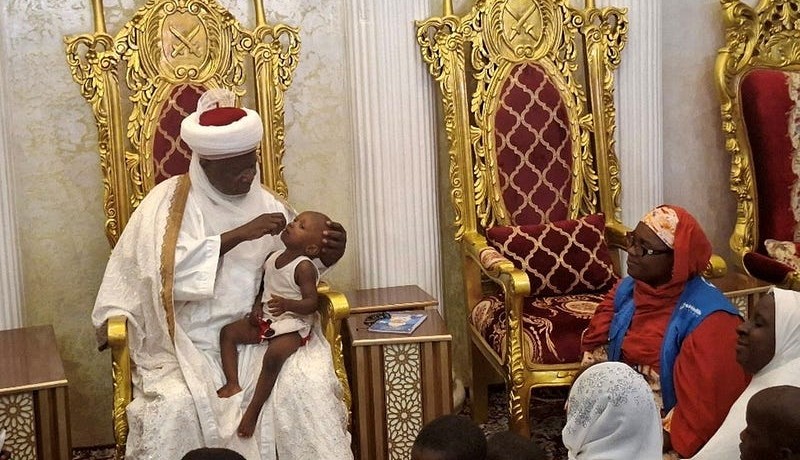
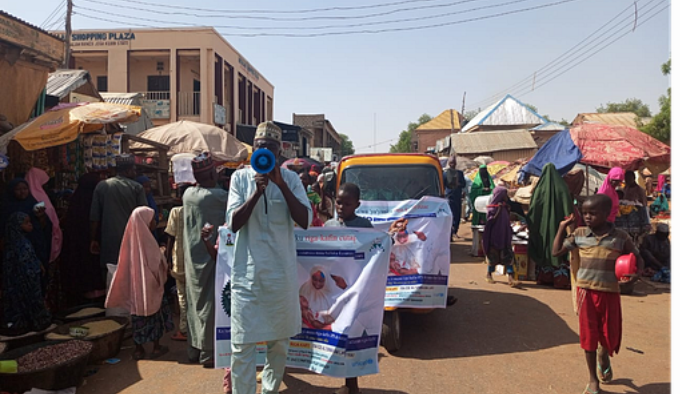
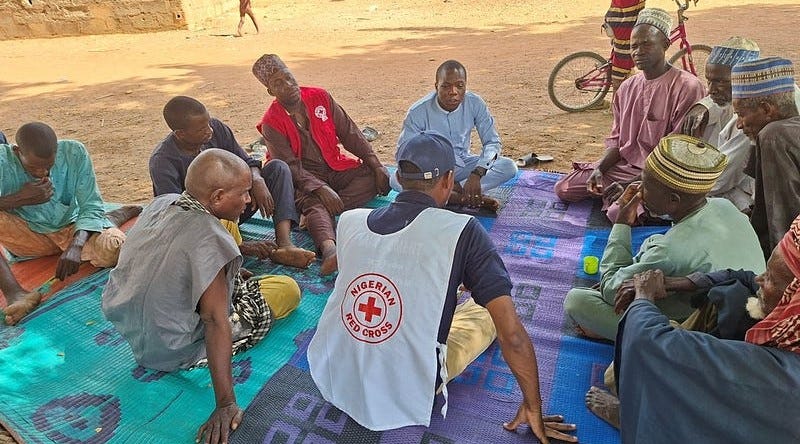
Usman Auwal, the district head of Rafin Bauna and Chairman of the Ward Development Committee, says he has spent the past four years working with health workers to address vaccine hesitancy in the community. In his role as a traditional ruler, he mobilises other community leaders to promote immunisation. He said awareness is built through everyday community platforms, from mosques during daily prayers to gatherings such as naming ceremonies and weddings. By using these spaces to explain the value of immunisation, community leaders help build trust and encourage families to cooperate with vaccinators.
Auwal says he regularly intervenes during immunisation campaigns when health workers encounter resistance, helping to resolve concerns through dialogue. He said that by explaining the value of vaccination and countering myths and misinformation, many families are eventually convinced to vaccinate their children. Still, he raised concerns about women in remote areas who cannot always afford transport to health facilities for immunisation. He also said the laboratory at Rafin Bauna Primary Health Centre is too small to cope with rising demand, especially as more women now attend antenatal clinics after sustained community advocacy. He called for the facility at Rafin Bauna to be expanded.

How Trusted Local Voices Are Breaking Through Hesitancy
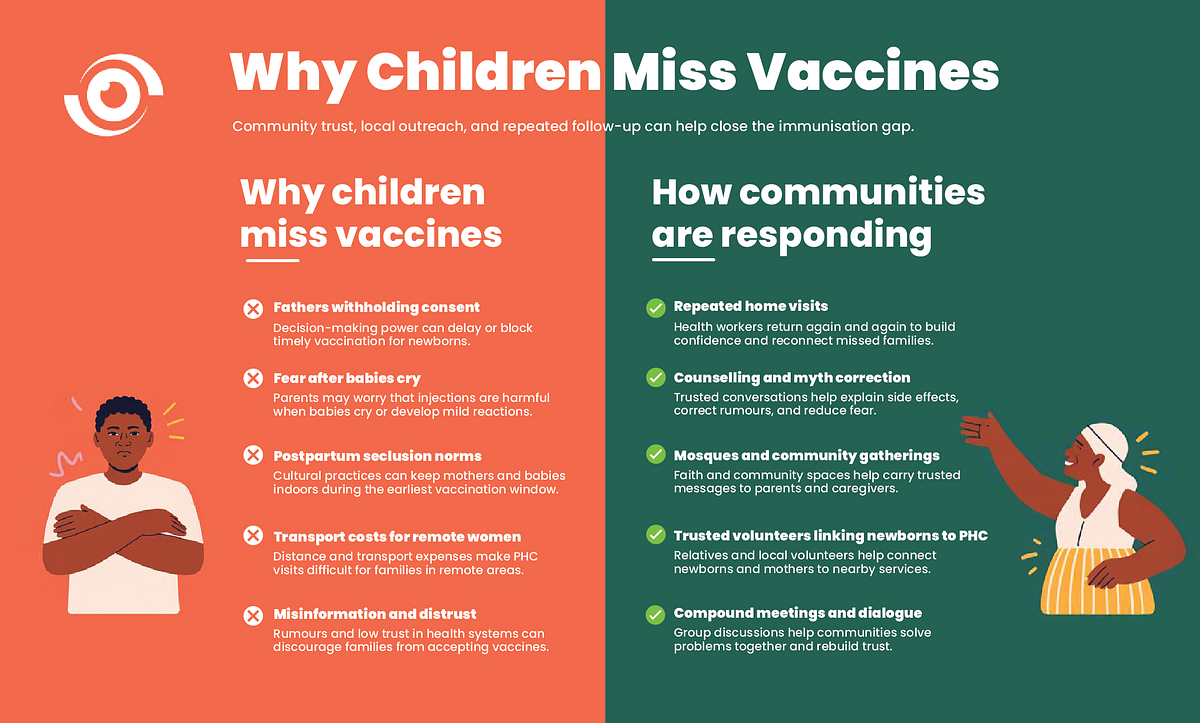
For Rashida Abdullahi, a volunteer with Lafiya Jari, known in the state as Volunteer Community Mobilisers (VCMs), advocacy work often exposes barriers to childhood immunisation within the home. She recalled instances where mothers were willing to vaccinate their children, but fathers withheld consent. She added that the volunteers also raise awareness about environmental sanitation and exclusive breastfeeding. Although some women are initially unresponsive during home visits, Abdullahi said they rely on patience and consistency to build trust. She also noted that some mothers stop taking their children for subsequent doses after seeing them cry following injections such as the pentavalent vaccine. To address this, volunteers carry out follow-up visits and counselling to help caregivers complete the full vaccination schedule.
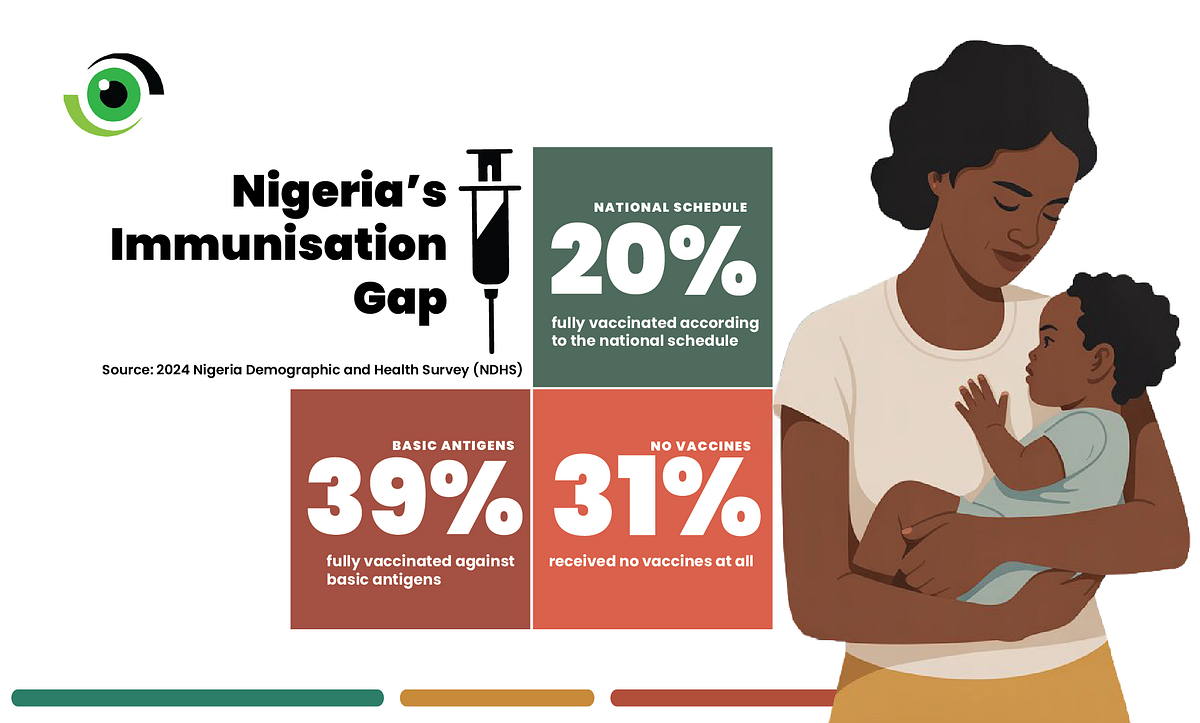
That work matters in a country where routine immunisation gaps remain wide. At the official launch of the 2024 Nigeria Demographic Health Survey (NDHS) Report, the Federal Government said 39% of children aged 12–23 months were fully vaccinated against basic antigens, 20% were fully vaccinated according to the national schedule, and 31% had received no vaccines at all. Published state summaries show deep disparities across the country, with Kebbi among the lowest-coverage states. Kebbi’s 2025 health operational plan presents different immunisation indicators, reporting 10.6% diphtheria–pertussis–tetanus-containing vaccine (DPT/Penta) coverage among children aged 12–23 months and 62.7% for routine immunisation coverage overall.
To Sustain Progress, Kebbi Must Back Trust With Services
In some communities in Kebbi, cultural norms discourage new mothers from leaving the house until 40 days after childbirth. Abdullahi said that after explaining the importance of immunisation for both mother and child, some families allow volunteers to take newborns to the nearest clinic for vaccination. In other cases, babies are taken by sisters or other close relatives who accompany the volunteers. Yusuf Sawwa, the State Health Educator, said this reflects the trust many women in Kebbi place in Volunteer Community Mobilisers such as Rashida Abdullahi, who are often allowed to present newborns for immunisation until the mothers are able to go out again. He stressed that communities are central to reducing vaccine hesitancy, noting that all four emirs in the state — Argungu, Gwandu, Yawuri, and Zuru — play an important role, alongside village heads, district heads, community leaders, and religious leaders. Kebbi’s 2025 health operational plan explicitly places primary health care (PHC) at the centre of the state’s approach and includes monthly sensitisation activities across 21 LGAs, alongside materials for the four emirs and 225 traditional birth attendants.
Similarly, Nafiu Umar, a civic engagement leader in Kebbi, said the activities of community-based organisations have helped reduce non-compliance in many communities. Through compound meetings, community dialogues, and advocacy visits, he said, they raise awareness about the importance of vaccination, especially polio, sometimes using entertainment to make the message more engaging. Umar, who works with the Youth Advancement Reorientation Council and Advocacy and leads the Association of Kebbi Non-Governmental Organisations, said the compound meetings involve gathering women in selected households to discuss immunisation. He said the approach has delivered positive results. Noting the importance of their compound meetings, he said, “It is an opportunity to speak with people across communities and hear their reasons for hesitancy.” These programmes, if sustained, will increase vaccine uptake in Kebbi.

The greater concern is sustainability. In 2025, the WHO warned that cuts to international funding were already putting vaccination programmes worldwide at risk. In places such as Kebbi, where community follow-up depends on repeated visits, transport, and supervision, any disruption in support could quickly weaken the systems that help identify and contain threats such as cVDPV3. The risk became more immediate in January 2026, when UNICEF disengaged VCMs who play a central role in linking families to immunisation services. Without alternative support, fewer children may be reached, leaving immunity gaps that allow variants such as cVDPV3 to continue circulating in communities.