

(By Rahima Shehu Dokaji)
When labour begins at night, and health centres are shut, mothers are forced to travel long distances in pain, risking their lives and those of their unborn children. Yet for many pregnant women in Kano Municipal, this remains a frightening reality.
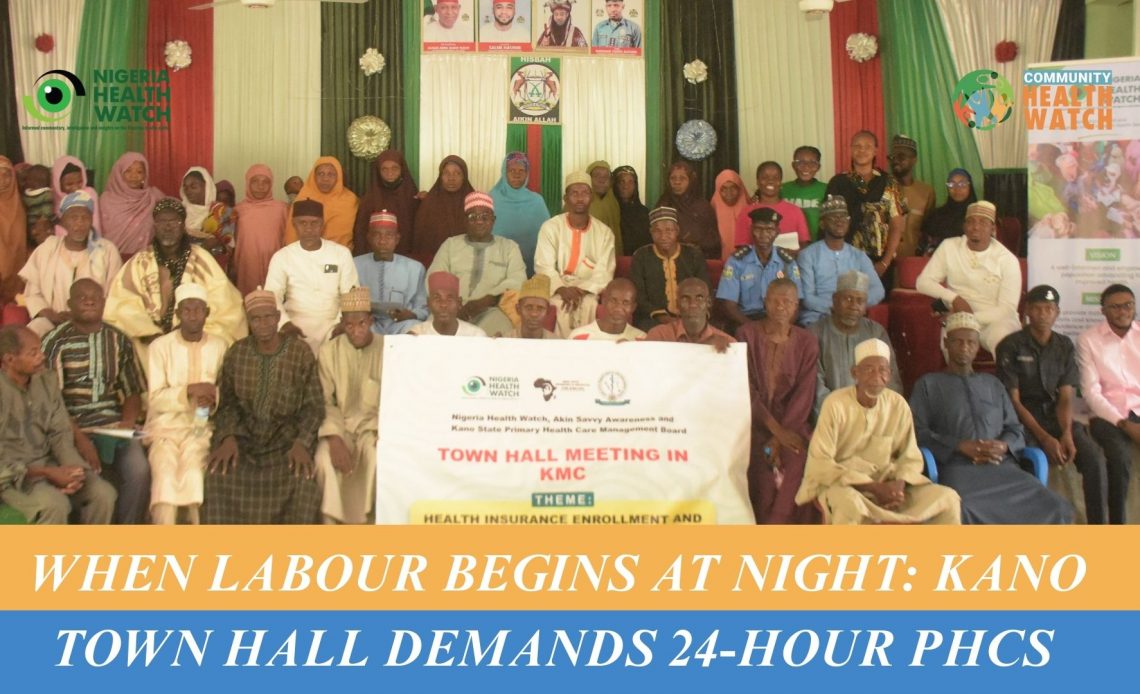
These concerns, among others, were raised during a town hall meeting held in Kano Municipal LGA in October 2025, organised by Nigeria Health Watch in collaboration with Akin Savvy Awareness and Initiative for Africans and the Kano State Primary Health Care Management Board under the Global Policy and Advocacy Project. The meeting brought together mothers, traditional leaders, health workers, Ward Development Committees (WDCs), civil society organisations, and policymakers to discuss access to primary healthcare services and the Health Insurance Scheme coverage.
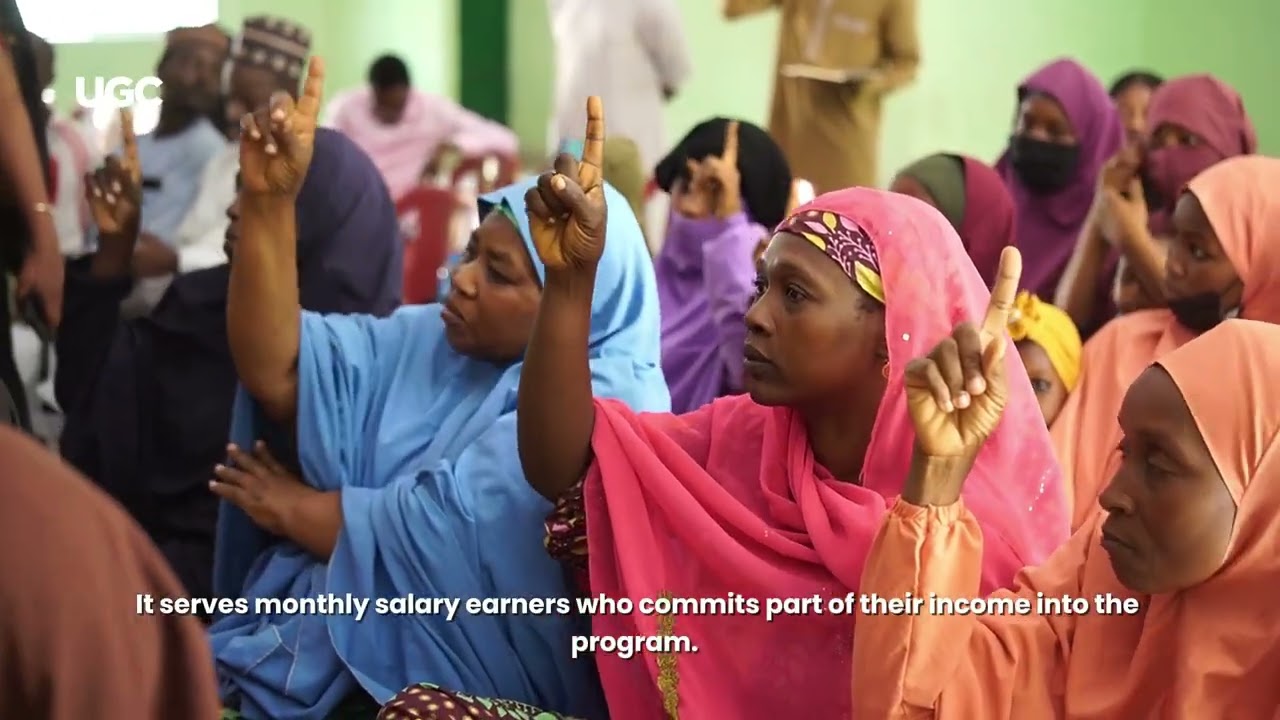
Participants highlighted challenges, including limited operating hours at Primary Health Centres (PHCs), inadequate staffing, poor awareness of health insurance enrolment, and insecurity at night, all of which discourage facility-based deliveries.
Khadija Abubakar Muhammad, a resident of Yakasai community, shared her experience, “When labour starts in the evening, the PHC is closed. They only refer us to another facility far away. We need our centre to run 24 hours so that no woman gives birth on the road.”
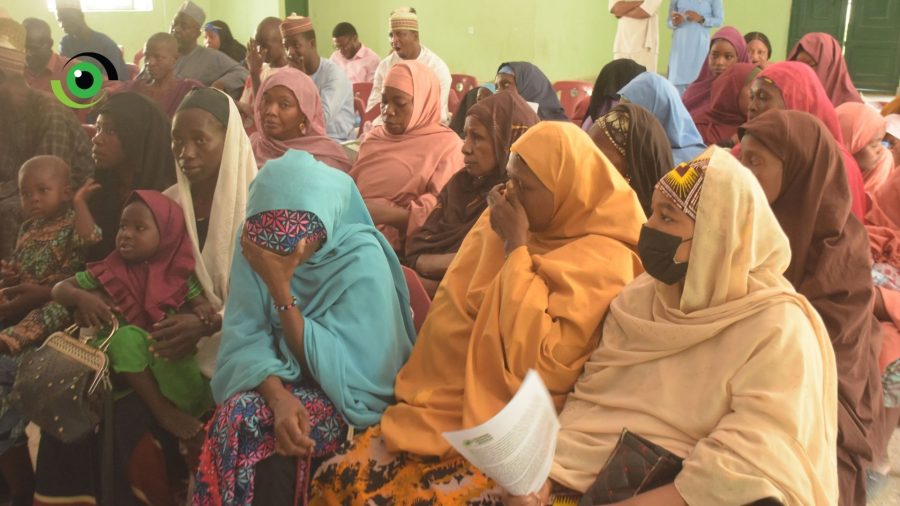
Image credit: Nigeria Health Watch
Other women echoed similar fears, noting that nighttime referrals and lack of transport often leave pregnant women stranded during emergencies.
Ali H. Adam, Health Educator for Kano Municipal, acknowledged these gaps. He said that “the government is currently working to upgrade Yakasai Zumunta and Gandun Albasa PHC facilities. We will work with the Ward Development Committees to engage and deploy more staff where needed.”

For many present at the town hall, it was their first time learning how to enrol in the Kano State Health Insurance Scheme.
“Most people didn’t even know where to begin,” said Bolarinwa Akinoluwa, of Akin Savvy. “But this town hall helped bridge that gap as staff of the Kano State Contributory Health Care Management Agency (KSCHMA) were present to clarify how the scheme works and how they can be accessed at their Primary Health Centres.”
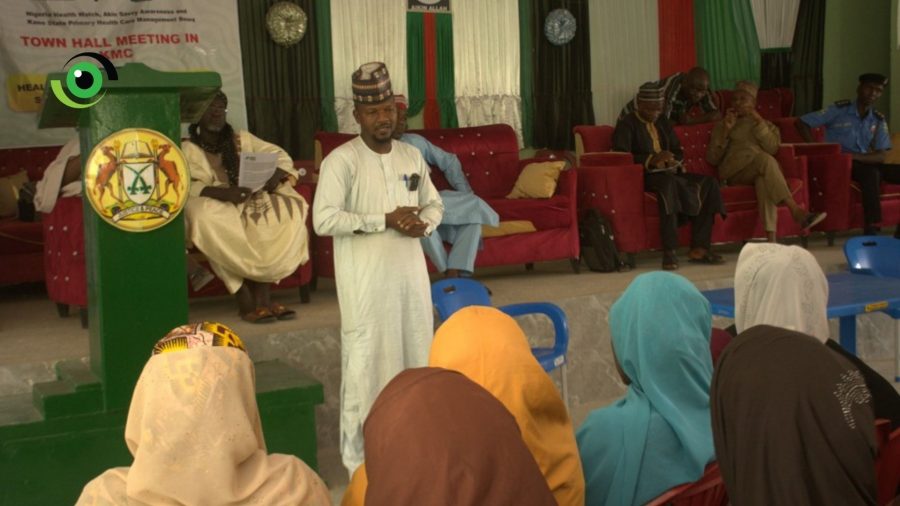
Image credit: Nigeria Health Watch
Despite ongoing reforms, PHCs in Kano Municipal face pressure from high patient demand, limited manpower, and infrastructure gaps. Although some facilities are benefiting from BHCPF support, inconsistent staffing and weak community awareness limit the full impact of these investments.
Sheriff Gbadamosi, Advocacy and Community Engagement Manager at Nigeria Health Watch said the gathering was a model of people-driven reform. “Our goal at Nigeria Health Watch is to empower communities with the right information and build trust in primary healthcare. This is how health systems become stronger, from the ground up,” he said.

The experiences shared at this town hall highlight the urgent need to translate policy commitments into reliable, round-the-clock primary healthcare services. This is in line with what the Nigerian government seeks to achieve through the second pillar of the Nigeria Health Sector Renewal Plan for 2023-2027.
Stakeholders must therefore:
- Intensify PHC staffing to ensure round-the-clock services,
- Improve facility security, and
- Intensify community sensitisation on health insurance enrolment.
“If our PHC works day and night, every mother will feel safe to deliver at the facility, not on the way there,” Khadija said, a reminder that safe motherhood begins with accessible primary healthcare.