


The absence of female health workers at the Gwarjiko Primary Healthcare (PHC) facility has become a major barrier to maternal healthcare. Maryam Salihu, a pregnant woman, recounts how she lost her baby due to this issue. “I only visit this facility with my husband. If I go alone, it means I am disobeying him, and he might divorce me. Even though healthcare is free, he refuses to let me go alone because the health workers are male.”

The Gwarjiko PHC located in Wushishi Local Government Area (LGA) of Niger State, was established in 1982 and recently benefited from the Basic Health Care Provision Fund (BHCPF) and the Niger State Contributory Health Agency (NiCARE). It serves eleven communities, including internally displaced persons fleeing banditry. Yet, it operates with just one male Community Health Extension Worker (CHEW) and a volunteer.

While free healthcare services are available, married women like Maryam struggle to access care without male consent, highlighting the intersection of healthcare access and cultural norms.
Similarly, Salamatu Dauda, another resident, noted that she has never utilised the PHC. “My husband is mostly not around, and as a Muslim woman, I cannot go out alone without his consent. Our religion forbids us from attending gatherings with men without our husbands.”
The government has made efforts to renovate the facility, however, the absence of female health workers makes the facility underutilised by women.
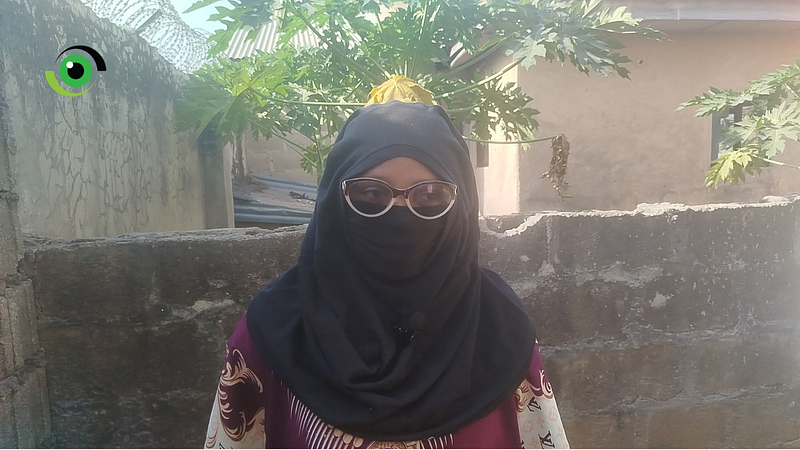
Image credit: Nigeria Health Watch
Mohammed, the Officer-in-Charge, explained that the facility has previously provided care to 34 pregnant women and facilitated 12 successful deliveries but currently the facility primarily serves more men for malaria, typhoid, and hypertension treatment. “We have seen increased patronage since the renovations, but cultural barriers remain a challenge.”
Pharm. Abdul Musa, Director of Planning, Research, and Statistics at Niger State Contributory Health Agency (NiCARE), also discussed the government’s commitment to addressing the barriers. “We prioritise advocacy within Emirate councils and key stakeholders to reduce the impact of restrictive practices on healthcare access,” he said.

Image credit: Nigeria Health Watch
However, the issue extends beyond the surface-level advocacy of spousal permission and dives deeper into addressing gender disparities in the health workforce and improving health outcomes especially for women with regards to maternal health.
To improve healthcare access at Gwarjiko PHC, stakeholders recommend:
- Expanding sensitisation efforts targeting men to promote women’s health seeking behaviour.
- Employing female health workers to encourage more women to seek health care at the facility.
Healthy mothers mean healthy communities. Nigeria’s Health Sector Strategic Plan (2023-2026), particularly its second pillar, prioritises equitable and high-quality healthcare. However, to sustain this progress there is a need to ensure women feel safe and supported at healthcare facilities. This will save lives and improve maternal and child health outcomes in rural areas.