

Prudence Enema and Chinwendu Iroegbu (Lead writers)
Dr Aisha Mustapha had spent years carrying out cervical examinations, counselling women, and caring for patients with cancer. Trained in gynaecology, public health, and radiotherapy, she understood cervical cancer in detail; how it begins, how it progresses, and how early detection and treatment can save lives. What she did not expect was to become a patient herself. Suddenly, she was navigating the same hospital corridors where she taught medical students and treated others. She now found herself walking into an examination room two doors away from her office. Dr Mustapha’s story is unsettling because it exposes a critical gap in prevention. She was medically informed, professionally embedded in the health system, and surrounded by specialists; yet she met cervical cancer at diagnosis, not at prevention. For women without those advantages, the cost is worse. Cervical cancer is often detected late or not detected at all.
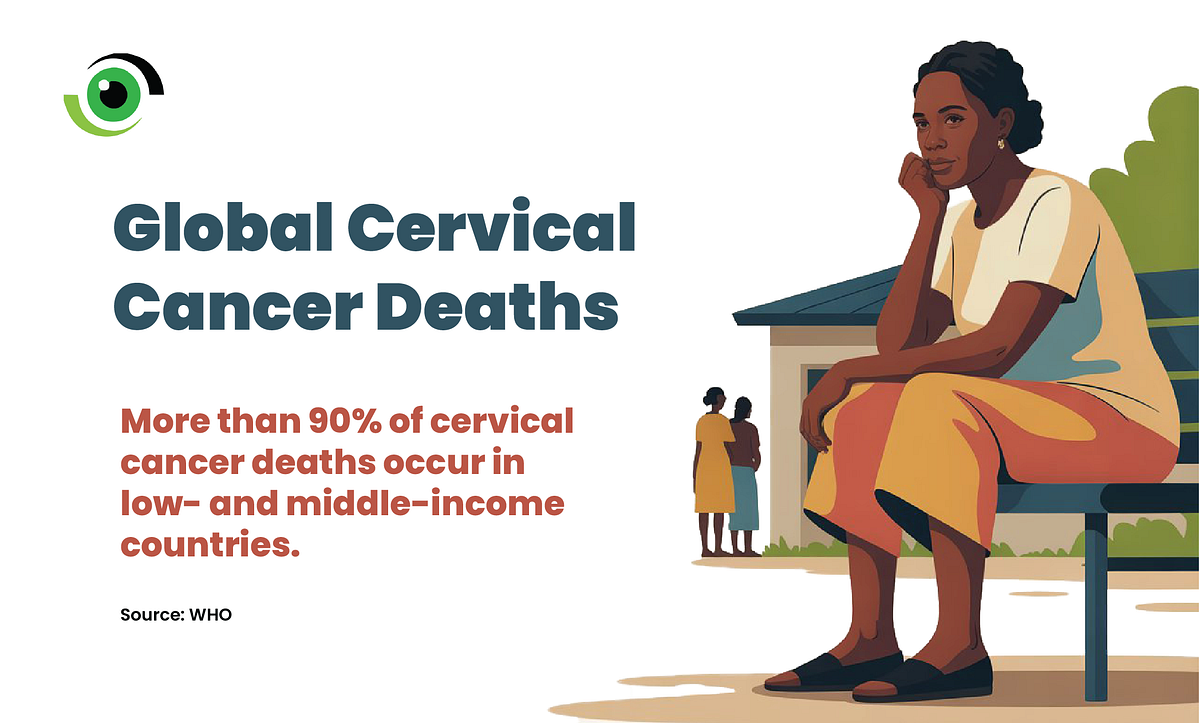
That critical gap sits at the heart of World Cancer Day 2026, and its theme, ‘United by Unique’. People face cancer risks across different ages, incomes, and geographies, but prevention should not be personalised by privilege. Women and girls are ‘unique’ in risk and circumstance, but prevention must be designed so that the hardest-to-reach are not the last-to-protect. Cervical cancer exposes what happens when prevention depends on individual awareness rather than strong, routine systems, despite being one of the most preventable cancers. Globally, persistent infection with high-risk human papillomavirus (HPV) causes nearly all cervical cancers, and HPV types 16 and 18 account for about 70% of cases. Safe and effective HPV vaccines have existed for over a decade. The global goal to eliminate cervical cancer through vaccination, screening, and timely treatment is clear. Yet more than 90% of deaths occur in low- and middle-income countries, where coverage and access remain low.
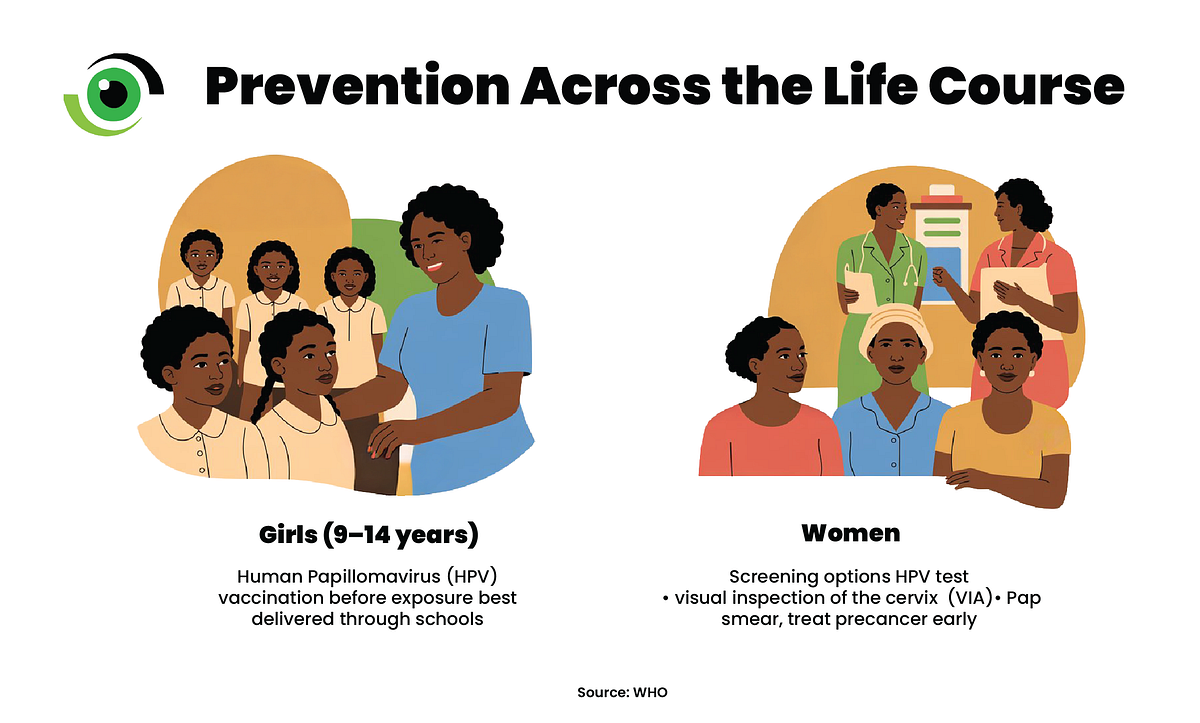
Prevention works at two key points in life. For girls, prevention starts with HPV vaccination before exposure, best delivered through schools as an embedded health service. For women, prevention means regular HPV testing where available, or visual inspection with acetic acid (VIA) and Pap smears to find and treat precancer early. When either pathway is weak, cervical cancer fills the gap. In Nigeria, this failure point is not only about vaccine supply. It is shaped by how vaccination is delivered, how consent is managed, and how communities understand or misunderstand the vaccine itself. Screening must be available at the primary health care level, with referral pathways that actually work. Persistent myths, especially claims that the vaccine causes infertility or encourages early sexual activity, continue to affect coverage. Delivery is also fragmented, with weak coordination between the health and education sectors. The absence of structured school-based vaccination programmes, joint planning, and shared accountability makes scale difficult.
Routine delivery is policy in practice
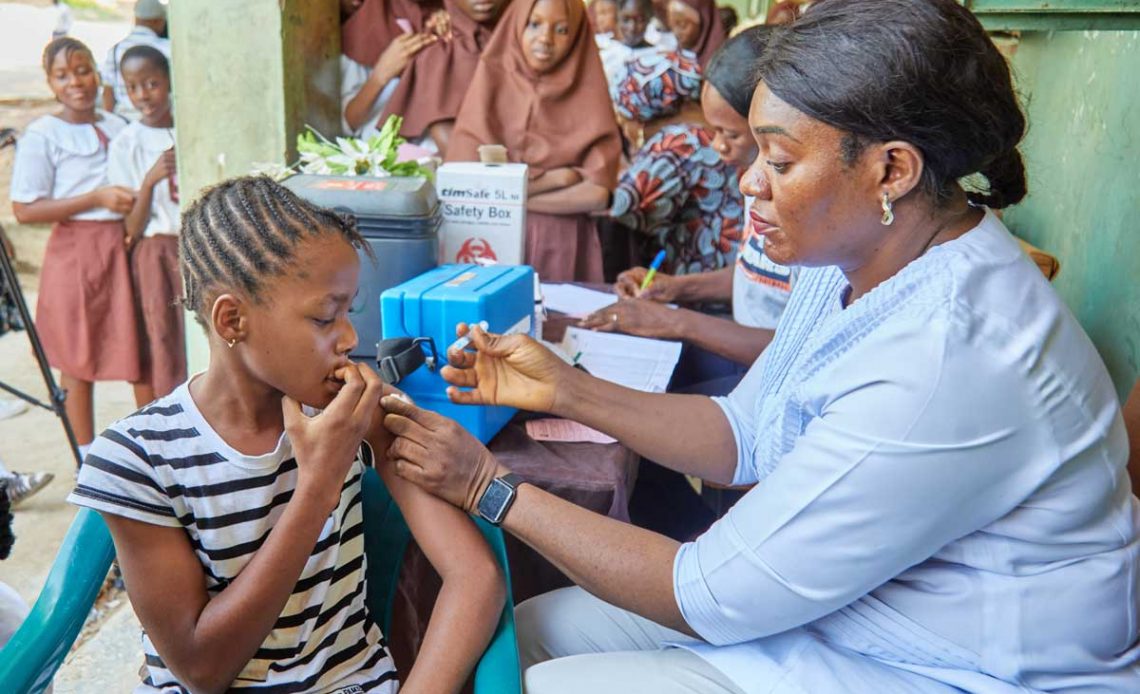
In 2023, Nigeria added HPV vaccination to the routine immunisation schedule for girls aged 9–14. It aligned Nigeria with the global elimination agenda, and it mattered. Yet, implementation has been uneven across states. Some states moved early while others struggled with rollout planning, staffing, and school access. Coverage varies sharply by state and by urban–rural access. School health programmes, the natural platform for adolescent vaccination, remain under-funded, thinly staffed, and inconsistently run. In many areas, HPV vaccination is delivered through short-term campaigns rather than embedded systems.
Consent for HPV vaccination is still too often treated as paperwork rather than clear communication. A caregiver survey shows the “consent gap” in Nigeria. Fewer than half of caregivers know the correct age group, and only about one-third strongly know where to get the vaccine, while recent message exposure strongly predicted uptake. In practice, parents consent without full understanding, schools are unclear on mobilisation roles, and vaccinators battle infertility and promiscuity rumours amid uneven campaign reach.
Country experience shows that school-based HPV vaccination, treated as standardised care, improves uptake and equity. Rwanda has reported HPV coverage above 90% by embedding vaccination in school health, backed by political leadership, clear consent, and sustained community engagement. South Africa has also shown that a national school-based programme can outperform facility-based delivery, even in a complex health system. School delivery lowers access barriers, reaches girls before exposure, and signals that the vaccine is ordinary, expected care, not a controversial add-on.
For Nigeria and other countries with a high cervical cancer burden, the cost of failing to scale routine delivery could be high. It could mean more late-stage disease, more catastrophic household spending, and more preventable deaths. Routine delivery requires routine financing, budgeted outreach, trained teams, commodity security, and publicly tracked coverage data. As Dr Mustapha puts it, “I had the earliest possible stage of cervical cancer. There is no stage earlier than that.” Her early diagnosis meant she avoided chemotherapy and radiotherapy entirely. “I had a 100% chance of cure, an absolute cure,” she said. Many women never get that chance.
A call to make prevention the norm
Reducing cervical cancer deaths means treating HPV vaccination as system-led, funded, and measured, expected care, not an occasional campaign. In practice, that means:
- A funded, nationwide school-based delivery plan
- Clear consent guidance agreed by the education and health ministries, departments, and agencies (MDAs)
- Trained, supported primary health care workers with simple scripts to counter myths
- Reliable cold-chain and stock management
- Coverage data tracked by state, published, and acted on.
Trusted, community-led communication is equally critical through teachers, women’s groups, faith leaders, and local champions. Survivors like Dr Mustapha can strengthen trust, but they should not be the strategy. The strategy is a system that makes prevention easy. Her experience is a reminder that expertise does not protect women; systems do. As she reflects on moving through the same corridors where she once treated patients, her message is clear. Prevention should not depend on luck, proximity, or professional status.
On World Cancer Day 2026, United by Unique must be more than a theme. Making HPV vaccination and regular screening routine is not just an intervention; it is a public health imperative and a clear test of health-system governance.